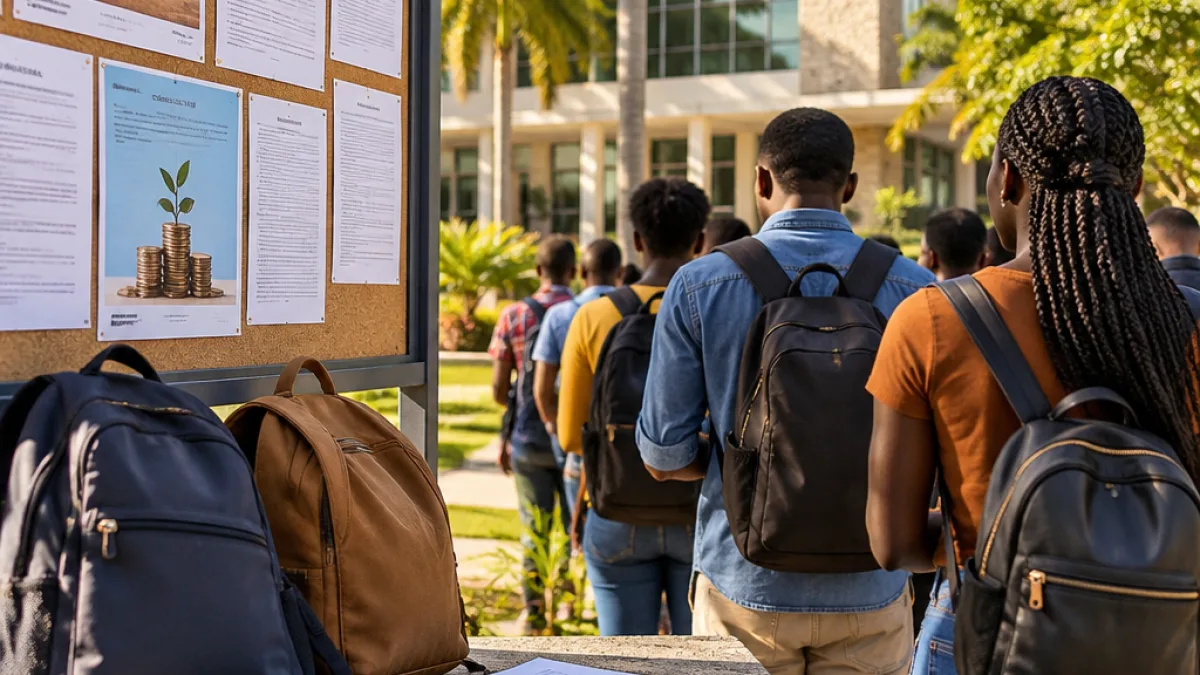
Tanzania has increased funding for student loans and grants to 1.06 trillion shillings for the 2026/2027 academic year, as the government seeks to expand access to higher and middle-level education.
The allocation represents an increase of about 15.6% on the previous academic year and is expected to provide financial support to at least 300,000 students at higher education institutions. The policy is aimed particularly at young people from families unable to meet the costs of further study.
More support for students
The expansion of student financing forms part of President Samia Suluhu Hassan’s efforts to link education investment with national development. The approach is based on the expectation that wider access to study will help build a workforce with the skills required by an economy undergoing rapid change.
Education investment is also being presented as a means of improving productivity and creating opportunities for young Tanzanians to participate in economic and social activity. For students, the loans and grants can determine whether academic ambitions become possible when household finances are limited.
The government’s measures include higher funding for the Higher Education Students’ Loans Board, broader eligibility for diploma students, stronger special scholarship programmes and changes intended to improve the delivery of services. These measures address both the scale of financial assistance and the way students access it.
| Academic year | Loans and grants | Students supported |
|---|---|---|
| 2025/2026 | 916.7 billion shillings | 289,932 |
| 2026/2027 | 1.06 trillion shillings | At least 300,000 expected |
Funding growth and system pressures
Figures from the loans board show that 916.7 billion shillings was allocated for loans and grants in 2025/2026. That funding assisted 289,932 students across various higher education institutions.
The latest increase takes the allocation above the one-trillion-shilling mark and raises the projected number of beneficiaries. The change indicates a continued effort to use public financing to bring more students into post-school education, including diploma-level study.
At the same time, the loans board is continuing work on the sustainability of the student loans fund and on improvements to its service systems. This places the emphasis not only on providing additional money, but also on ensuring that the financing process can support a growing number of applicants and beneficiaries.
Access for disadvantaged families
The policy has particular importance for young people from financially disadvantaged households. Without loans, grants or scholarships, the cost of higher education can restrict the choices available to students who qualify academically but lack the resources to continue studying.
By extending eligibility to diploma students and strengthening scholarship programmes, the government is broadening the routes through which learners can receive assistance. The measures are intended to support students across higher and middle-level education rather than focusing on a single category of qualification.
- Funding for loans and grants will rise to 1.06 trillion shillings in 2026/2027.
- At least 300,000 students are expected to receive support.
- Diploma students are included in the expanded eligibility framework.
- Special scholarships and service-delivery systems are also being strengthened.
The government’s stated objective is to equip young people with knowledge and skills for participation in the economy and wider society. The scale of the allocation suggests that student finance remains a central part of that strategy, particularly as demand for further education grows.
For Tanzania’s education system, the immediate measure of the policy will be whether the additional funding reaches the intended students and whether the loans board can manage the larger programme effectively. The increase in resources provides a stronger platform for access, while the focus on service delivery and fund sustainability will shape how far that opportunity can be maintained.