Accessibility is moving from the margins of tourism strategy to the centre of the visitor experience, with destinations, airlines, airports and accommodation providers increasingly viewing inclusive travel as both a quality benchmark and a commercial opportunity.
The issue was highlighted on the opening day of WTM London 2026, where representatives from the Spanish Tourist Office argued that accessible tourism should no longer be treated as a niche category. Their message was that the sector can attract a wider market by making travel information clearer and facilities easier to use, while improving the experience for all visitors.
Clearer information is part of accessibility
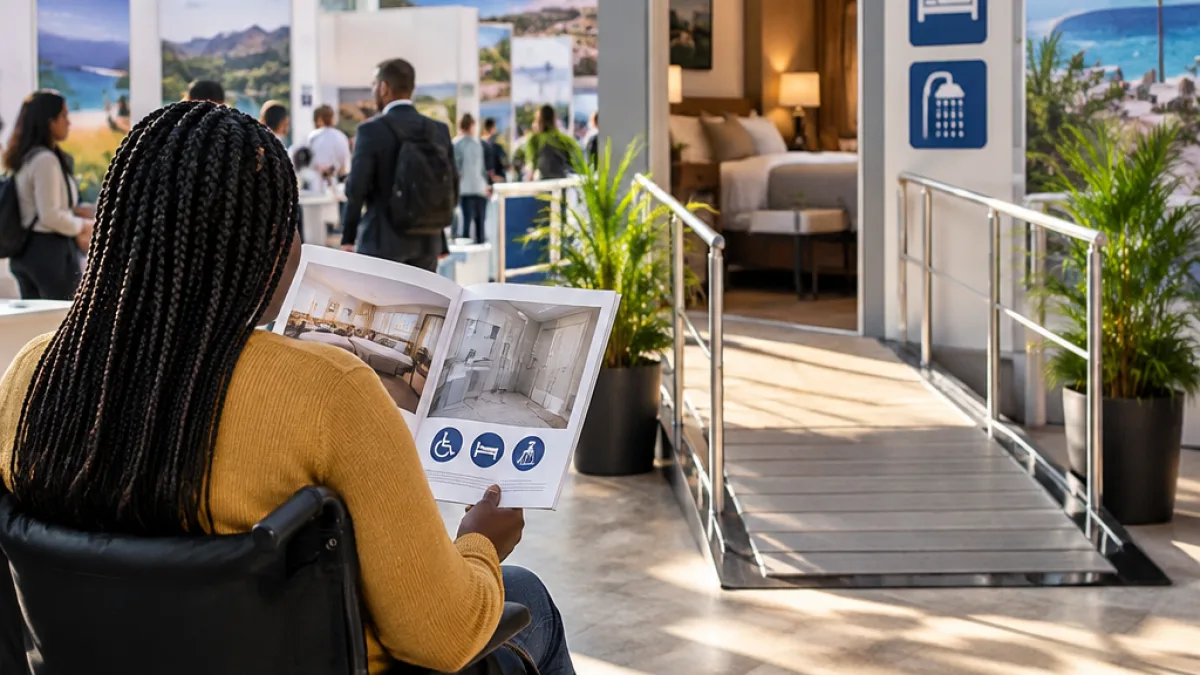
As part of Spain’s “Spain for All” programme, the Spanish Tourist Office launched a new hotel advisory guide and a social media campaign. The initiative has been developed over three years with industry stakeholders and disability advocates, reflecting a focus on collaboration between tourism businesses and the people the changes are intended to serve.
The new guidance is designed to help accommodation providers explain their accessibility features more accurately to prospective guests. José Manuel de Juan González, UK director of the Spanish Tourist Office, said the report was intended to give hotels in Spain and elsewhere practical tools for communicating their level of accessibility.
“Today we're publishing a report which gives hotels in Spain and around the world the tools they need to communicate how accessible they are.”
That emphasis on communication is significant. A hotel may have accessible facilities, but travellers still need reliable information before making a booking. Details about a property’s layout, services and available support can influence whether a guest feels confident enough to plan a trip. The guidance therefore places communication alongside physical access as part of the wider hospitality offer.
A broader definition of better tourism
The discussion at the international travel event also challenged the idea that accessible tourism is a separate product for a small group of travellers. Miguel Carrasco, director of tourism and chief operating officer for a group of accessibility organisations involved in the project, described inclusion as a standard that should inform the quality of tourism more broadly.
“Accessible tourism is not a different kind of tourism, it is what better tourism looks like.”
This approach places the focus on how journeys work in practice, from the first search for information to the experience at a destination. It also suggests that accessibility should be considered across the full travel chain rather than addressed only by individual hotels or attractions.
- Accommodation: properties are being encouraged to communicate their accessibility features in a more useful and transparent way.
- Transport: airlines and airports are among the industry players being urged to treat inclusion as part of future planning.
- Destinations: tourism strategies are increasingly connecting accessibility with visitor growth and overall service quality.
- Marketing: campaigns such as “Spain for All” aim to make inclusive travel more visible to potential visitors.
From compliance to competitiveness
The shift discussed at WTM London reflects a changing understanding of the business case for accessible travel. Instead of being viewed mainly as a regulatory obligation, accessibility is increasingly being presented as a way for tourism businesses to distinguish themselves and respond to changing traveller expectations.
The Spanish initiative illustrates how this change can be supported through practical resources, public-facing campaigns and cooperation with disability advocates. Its stated purpose is not simply to promote a destination, but to help businesses provide information that allows visitors to make better-informed decisions.
| Area of focus | Purpose highlighted at WTM London |
|---|---|
| Hotel guidance | Help accommodation providers describe accessibility more effectively |
| Social media campaign | Raise the visibility of inclusive travel |
| Industry collaboration | Bring tourism stakeholders and disability advocates into the process |
For the travel industry, the message is increasingly straightforward: accessibility is not only about meeting a requirement after a product has been designed. It is becoming part of how destinations build trust, how hotels present themselves and how the sector defines a high-quality experience.
As the conversation moves forward, the emphasis is likely to remain on practical information and consistent standards across the journey. The WTM London discussion indicates that inclusive tourism is being treated less as a specialist offering and more as an essential part of the industry’s future growth.