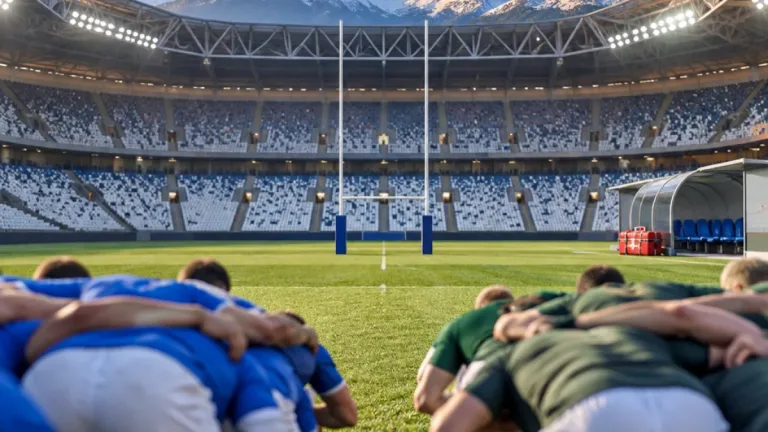

The Springboks are preparing for more than a conventional battle at the halfback positions when they face France in Paris on Friday night. France’s decision to move renowned scrumhalf Antoine Dupont to flyhalf has created a tactical complication, but South Africa expects Dupont and captain Maxime Lucu to exchange roles during general play.
Dupont has been shifted to No 10 after injuries disrupted France’s flyhalf options, with Lucu named at scrumhalf. The positional change gives the hosts flexibility in attack, as both players have experience operating in the other position. South Africa’s challenge will be to defend against movement rather than simply reacting to the numbers printed on the team sheet.
Preparing for a fluid halfback pairing
Springboks captain Siya Kolisi said the coaching staff had studied how Dupont performs at flyhalf, but had not created an entirely separate defensive plan for the change. South Africa believes the roles could alter naturally once the match begins, particularly because Dupont is expected to seek frequent involvement in the game.
“Antoine wants to be on the ball a lot and he creates a lot of play on the field, so for him to go to scrumhalf will also be natural, and they’ll be able to adjust.”
Kolisi added that Lucu has also played flyhalf for Bordeaux, meaning the French pair can exchange duties without necessarily disrupting their attacking structure. The Springboks’ system, he said, is designed to deal with that form of uncertainty, regardless of which player is operating in either channel.
For South Africa, the danger lies in allowing the two playmakers time to decide where they want to stand and how they want to attack. Dupont may appear at breakdowns in a scrumhalf role, while Lucu could move forward to act as the first receiver. That movement could draw defenders out of position or create space for France’s outside backs.
Physical contest remains central
Assistant coach Mzwandile Stick said the altered pairing would not fundamentally change South Africa’s defensive priorities. France is still expected to bring a powerful forward effort, with the contest at the gain line likely to shape the amount of room available to the halfbacks.
“When it comes to physicality, we know one thing for sure, France will always bring it.”
Stick identified the area between the No 9 and No 10 positions as the most difficult part of the French attack to read. He expects Dupont to have freedom to move between the two roles and believes the Springboks must prevent the pair from receiving the ball with the time and space required to build pressure.
- Dupont is set to start at flyhalf after France’s injury problems in that position.
- Lucu will begin at scrumhalf and has previous experience at flyhalf for Bordeaux.
- The Springboks expect the two players to switch positions during open play.
- France’s outside backs are also viewed as a major attacking threat.
South Africa’s defensive test
The tactical contest will therefore extend beyond stopping one individual. South Africa must identify where the attacking threat is developing while maintaining the defensive discipline needed to cover both the middle of the field and France’s wider channels. A defence that follows the players too closely could open gaps; one that holds its shape too conservatively could give Dupont and Lucu the freedom they are seeking.
| Match detail | Information |
|---|---|
| Venue | Paris |
| Kick-off | 22:10 South African time |
| Key tactical issue | France’s halfbacks switching between No 9 and No 10 |
Kolisi’s assessment is that the Springboks are ready for the positional changes, but that preparation will matter only if it is matched by pressure on the ball-carriers. Stick’s warning is similarly direct: France’s combination can punish South Africa if it is allowed to play on its own terms.
With kick-off scheduled for 22:10 South African time, the match will test whether the Springboks can impose their defensive system on a French side capable of changing its shape in real time. The unfamiliar alignment may offer France attacking variety, but South Africa’s response will be built around denying the halfbacks the space to turn that variety into decisive opportunities.