
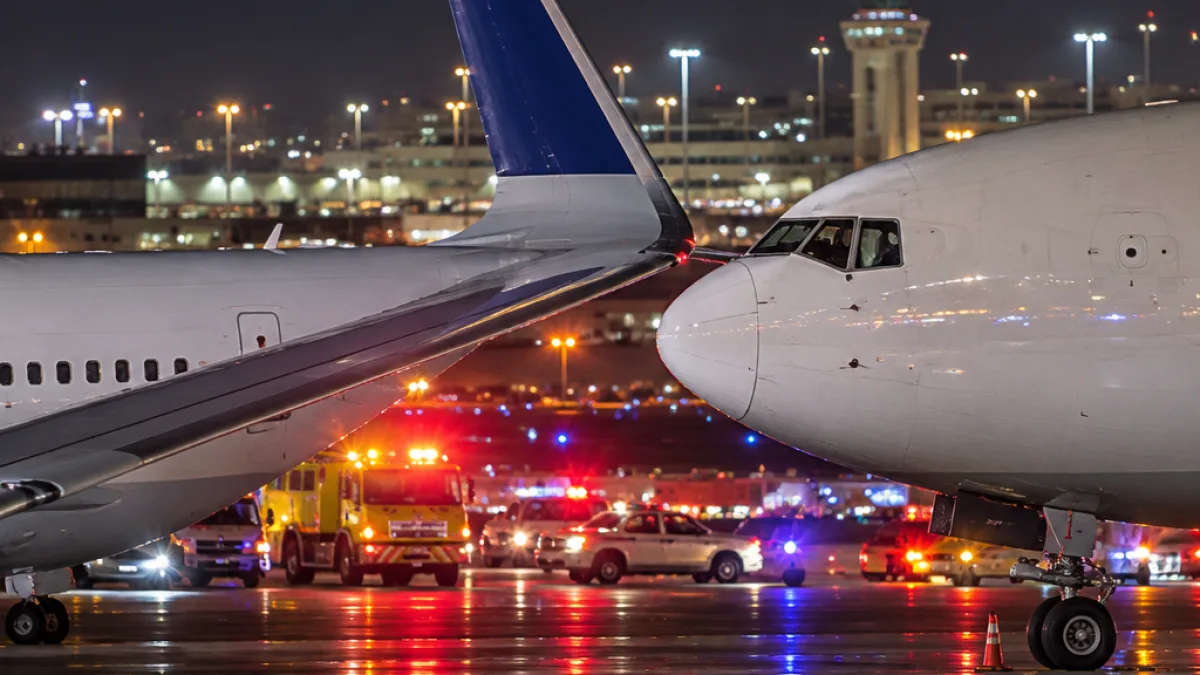
Two aircraft collided while moving on the ground at Miami International Airport on Saturday night, leaving two people with minor injuries and prompting an investigation by the United States aviation regulator.
The incident occurred at about 9.15pm on 14 November, when the wingtip of a Copa Airlines Boeing 737 struck the nose of a UPS Boeing 767 cargo aircraft. Both planes were using the airport’s taxiways when the collision took place.
The Copa aircraft had arrived from Panama City with 166 passengers and six crew members on board. The UPS aircraft was preparing to leave for Bogotá, Colombia, when the two planes came into contact. The available information does not indicate that the aircraft were taking off or landing at the time.
Emergency response and airport operations
Emergency crews attended the scene and treated two people for minor injuries. Airport officials said neither person required hospitalisation. No further details were provided about the identities of those injured or whether they were passengers, crew members or airport personnel.
Despite the collision, airport operations continued. Other taxiways remained available for aircraft movements, allowing flights to continue while the damaged aircraft and the circumstances surrounding the incident were assessed. The collision nevertheless highlights the tightly managed environment on the ground at a busy international airport, where passenger aircraft, cargo planes, service vehicles and airport personnel operate in close proximity.
| Aircraft | Operator | Flight status | Details |
|---|---|---|---|
| Boeing 737 | Copa Airlines | Arriving | From Panama City; 166 passengers and six crew |
| Boeing 767 | UPS | Preparing to depart | Scheduled for Bogotá |
Regulator examines ground movements
The Federal Aviation Administration, which oversees civil aviation in the United States, said air-traffic controllers had instructed the UPS crew to give way to the arriving Copa aircraft. Recordings of communications with air traffic control indicate that a UPS pilot acknowledged the cargo aircraft had travelled too far before the impact.
That information has not resulted in an official finding of responsibility. The FAA is investigating the sequence of events, including the instructions issued to the aircraft and how the two crews interpreted or acted on those instructions. Until that examination is complete, the available account describes the circumstances of the collision without assigning blame.
- The collision involved a Copa Airlines Boeing 737 and a UPS Boeing 767.
- Two people suffered minor injuries and were treated at the airport.
- The FAA is investigating, and no official determination of responsibility has been announced.
- Miami airport continued operating using other available taxiways.
Ground incidents such as this one are examined separately from accidents involving aircraft in flight, but they can still carry substantial safety implications. Taxiways are essential links between runways, terminals and parking areas, and aircraft may be moving under instructions from controllers while crews monitor markings, signs and other traffic. A collision can therefore require investigators to consider both cockpit decisions and the wider traffic-management process.
For passengers, the immediate consequence in this case was limited by the availability of alternative taxiways and the absence of reported serious injuries. For aviation authorities, however, the investigation will be important in establishing how an arriving passenger aircraft and a departing cargo aircraft came into conflict, despite the reported instruction for the UPS plane to yield. The final findings could clarify whether the event resulted from a communication problem, a misunderstanding of movement instructions, or another operational factor. The source information does not yet provide that conclusion.