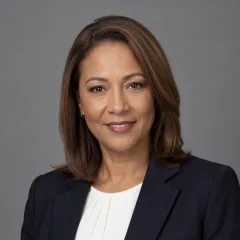
Dr Gevorg Tamamyan, a candidate for director-general of the World Health Organization, has appointed Alejandra Mendez, president of Childhood Cancer International, to the international advisory board of his campaign.
The appointment places childhood cancer care at the centre of Tamamyan’s proposed global health agenda and brings a major patient-support organisation into the campaign’s advisory structure. CCI represents more than 200 organisations in nearly 100 countries, according to information released with the announcement.
Tamamyan is a professor and chairs the Department of Paediatric Oncology and Haematology at Yerevan State Medical University. He is also the editor-in-chief of a medical news platform. In announcing Mendez’s appointment, he described childhood cancer as a test of whether health systems are able to provide coordinated, reliable care for vulnerable patients.
“Childhood cancer will be one of the flagship priorities of my platform,” Tamamyan said.
Why childhood cancer is being used as a health-system measure
The campaign’s argument is that effective treatment for children with cancer depends on much more than oncology specialists or medicines. Tamamyan linked outcomes to the availability and performance of several parts of the health service, including primary care, pathology, radiology, infection control and blood banks.
That framing makes childhood cancer a wider measure of health-system readiness. A health service that can identify disease, confirm diagnoses, manage infections, provide blood products and sustain specialist treatment is likely to have stronger links between primary and advanced care. Conversely, weaknesses in any of those areas can affect a child’s treatment even where individual clinicians and hospitals are capable.
The announcement did not set out a detailed programme for financing or delivering these services, nor did it provide a timetable for the WHO leadership contest. It did, however, identify patient participation as an important part of the campaign’s approach. Tamamyan said the involvement of patient organisations would be critical to addressing the challenge.
Patient advocacy brought into the campaign
Mendez leads CCI, described as a global, patient-centred non-profit organisation focused on support for children with cancer and their families. Its membership spans approximately 100 countries and includes more than 200 organisations, giving it an international network through which patient concerns can be represented.
Her work also includes involvement in paediatric oncology initiatives connected to the International Society of Paediatric Oncology. She serves on the organisation’s Women Leaders in Pediatric Oncology Network and its PARC Committee, and previously co-chaired its Patient, Family, and Stakeholder Engagement Working Group.
Mendez also contributes to initiatives linked to St Jude Children’s Research Hospital, including a patient-navigation research programme and a Latin American culture and communication working group. The announcement further identified her as a member of an expert committee for the My Child Matters initiative, although the available information did not provide additional details about that role.
| Campaign development | Details |
|---|---|
| Advisory appointment | Alejandra Mendez joins the international advisory board |
| Organisation represented | Childhood Cancer International |
| CCI reach | More than 200 organisations in nearly 100 countries |
| Stated priority | Childhood cancer and stronger health-system capacity |
Potential significance for global health policy
The appointment reflects an effort to connect international health policy with the practical experience of patients and families. It also signals that the campaign intends to discuss childhood cancer not as a narrowly specialised concern, but as part of broader questions about access, diagnosis, hospital capacity and continuity of care.
For countries with uneven access to specialist services, that approach could have relevance beyond paediatric oncology. The systems named by Tamamyan—laboratory diagnosis, imaging, infection prevention, blood services and primary care—are also essential to many other areas of medicine. The campaign’s stated position is therefore that improving care for children with cancer can strengthen the wider health service.
The announcement was limited to Mendez’s appointment and the campaign’s stated priorities. It did not indicate what other members would serve on the advisory board or how the proposed platform would be implemented if Tamamyan were selected as WHO director-general.