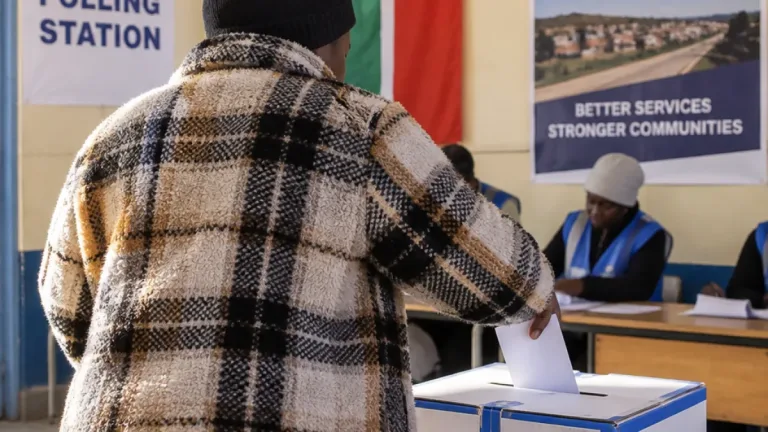
The 2026 US midterm elections are set to test President Donald Trump’s political standing and determine whether his Republican Party retains control of Congress. Although Trump is not on the ballot, he has urged voters to approach the contest as if they were deciding his own political future.
The outcome could have a direct impact on the balance of power in Washington. Democrats are seeking majorities in both the House of Representatives and the Senate, which would give them greater authority to scrutinise the administration and limit the President’s ability to advance his agenda after two years in which Republicans have controlled Congress with few effective restraints on him.
“pretend I’m on the ballot.”
That appeal reflects the central question facing voters and political parties: whether Trump’s coalition remains strong enough to protect Republican lawmakers from the losses that have historically faced the party occupying the White House during midterm elections. In nearly every modern midterm contest, the governing party has surrendered congressional seats, although the scale of those losses has varied.
Economic pressure and foreign policy in focus
Democrats are entering Election Day with confidence based on Trump’s poor approval ratings and voter concerns about the war with Iran. The rising cost of petrol and other everyday necessities is also expected to shape the vote. These issues have provided Democrats with an opportunity to frame the election as a judgement on the administration’s performance, rather than simply a contest between individual congressional candidates.
Republicans, however, are relying on the continued support of the white working-class voters who played an important role in Trump’s victories in 2016 and 2024. The party’s prospects will depend heavily on whether those voters turn out in large numbers. Early indications suggest Democrats may be more motivated to vote against Trump and his party, but the final result will depend on participation across several important voter groups.
| Election factor | What is at stake |
|---|---|
| House and Senate control | Democratic majorities could curb Trump’s power and increase congressional scrutiny. |
| Governor’s races | Several key state executive offices are also being contested. |
| Early voting | More than 50 million Americans had already cast ballots before Election Day. |
Concerns over the voting process
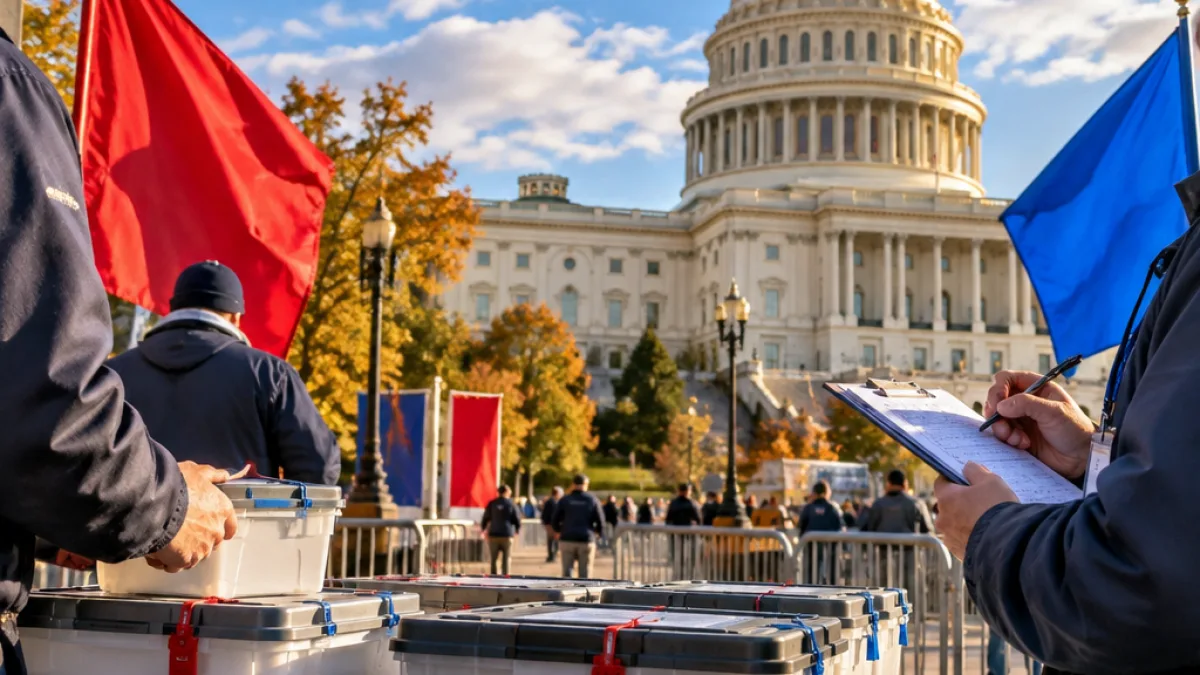
The election is taking place against a backdrop of concern about potential disruption at polling places. Government watchdog groups have warned that Trump and his supporters could interfere with the voting process. In response to those fears, Democrats and non-partisan monitoring organisations have trained tens of thousands of volunteers to observe polling stations and report problems.
Those concerns add an important layer to an election already shaped by polarisation and uncertainty. The result may not be known immediately, particularly if close contests require further counting. The political map may also limit Democratic gains, while new rounds of gerrymandering could affect how efficiently votes translate into congressional seats.
Attention will therefore extend beyond the overall vote totals. Analysts will be watching turnout among Hispanic and Black voters, as well as younger voters, alongside the participation of Trump’s core supporters. The strength of those groups could determine whether Republicans withstand the historical midterm trend or whether Democrats secure the congressional majorities they are pursuing.
Whatever the final balance, the election will provide the clearest public measure yet of how Americans assess Trump’s first two years of his second term. A Republican victory would reinforce his influence over Congress, while Democratic control of either chamber would create a more confrontational political environment and impose a stronger check on the administration.