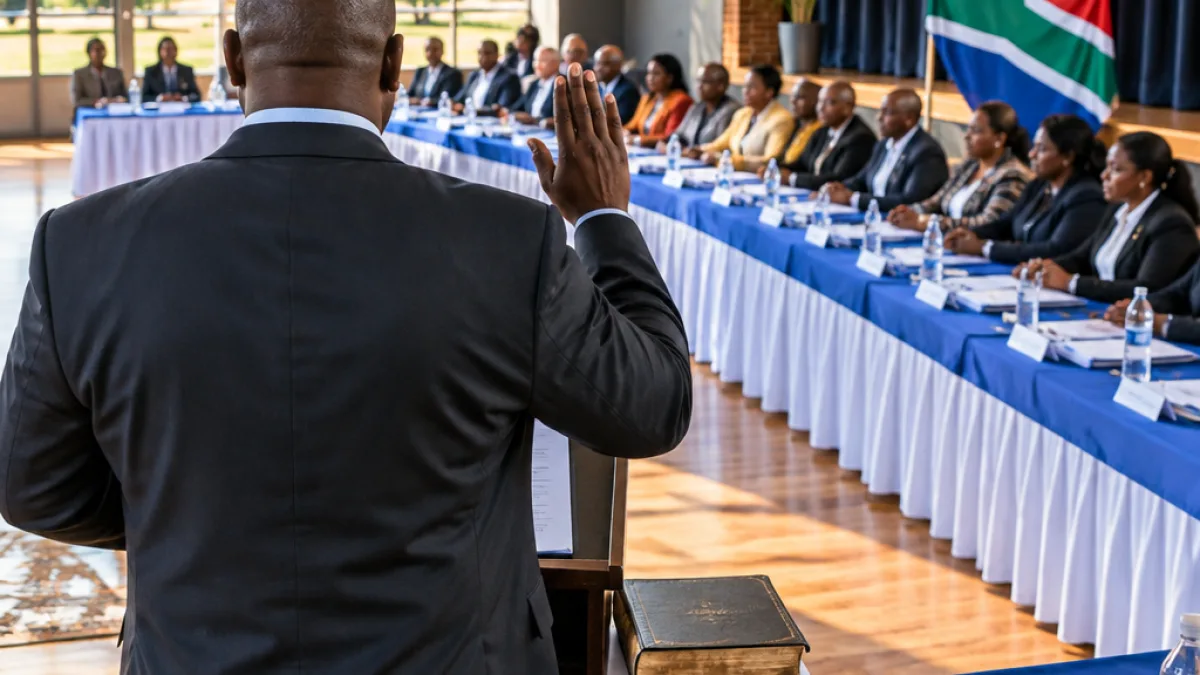
Chris Pappas has started a second term as mayor of uMngeni Local Municipality, following the swearing-in of the municipality’s new council at the Howick West Community Hall on Friday.
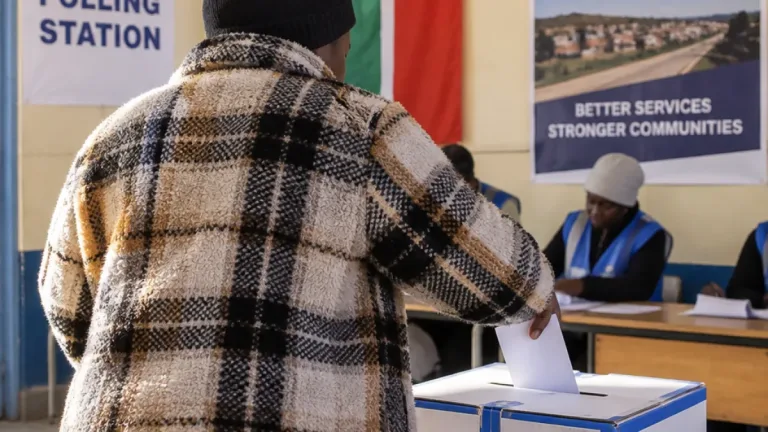
The sitting was the first post-election municipal council meeting to take place in KwaZulu-Natal. It formally established the leadership of uMngeni after the Democratic Alliance secured an outright majority in the 2026 Local Government Elections.
Pappas took the oath of office alongside the municipality’s councillors. A total of 25 councillors were sworn in during the sitting, marking the beginning of the new council’s term and the return of the previous mayor to the municipality’s top political office.
A clear mandate for the DA
The DA received 61% of the vote in uMngeni, giving it 15 of the 25 seats on the council. The result preserves the party’s control of the Midlands municipality after it first won an outright majority there in the previous municipal elections five years ago.
| Municipal detail | Position after the election |
|---|---|
| DA share of the vote | 61% |
| DA council seats | 15 of 25 |
| Mayor | Chris Pappas |
| Deputy mayor | Sandile Mnikathi |
| Speaker | Kate Janse van Rensburg |
The numbers give the governing party a straightforward route to forming the municipal administration, without the coalition negotiations that are now unfolding elsewhere in the province. The new council must nevertheless translate the electoral outcome into day-to-day municipal work across the uMngeni area.
New council takes over
Joining Pappas at the ceremony were newly elected Deputy Mayor Sandile Mnikathi, Speaker Kate Janse van Rensburg and Democratic Alliance KwaZulu-Natal provincial leader Sithembiso Ngema.
The swearing-in gives the council its formal mandate to begin its work after the local government elections. Its responsibilities include building on the previous administration’s work while responding to the needs and priorities identified by communities in the municipality.
- Chris Pappas has returned for a second term as mayor.
- The DA holds 15 of uMngeni’s 25 council seats.
- The council is expected to continue the municipality’s existing work while addressing community priorities.
For residents across uMngeni, the significance of the meeting lies in the transition from an election result to a functioning council. The new administration now has to set its priorities, maintain municipal programmes and account for the decisions taken during its term.
Contrast with eThekwini
The political picture in uMngeni stands in contrast to that of eThekwini, where no party won an outright majority in the recent elections. The metro has a hung council, and political parties are negotiating over the formation of a governing arrangement.
City Manager Musa Mbhele has urged incoming eThekwini councillors to remain focused on development priorities while those negotiations continue. The differing outcomes underline the varied political landscape produced by the elections across KwaZulu-Natal: one municipality has a single-party majority, while the province’s largest metro faces coalition talks.
uMngeni is currently the only municipality in KwaZulu-Natal governed by the DA. Pappas’s re-election therefore places the municipality at the centre of the province’s post-election political landscape, with the new council’s performance likely to be closely watched during the term ahead.
What comes next
The immediate task for the council is to move from the formalities of the inaugural sitting to the practical work of municipal government. That includes continuing the previous administration’s programmes and dealing with the priorities of communities across the uMngeni area.
The election has supplied the governing party with a clear numerical majority, but the council’s performance will ultimately be measured by how effectively it responds to local needs. With the mayor, deputy mayor, speaker and councillors now sworn in, uMngeni’s post-election administration is formally in place.