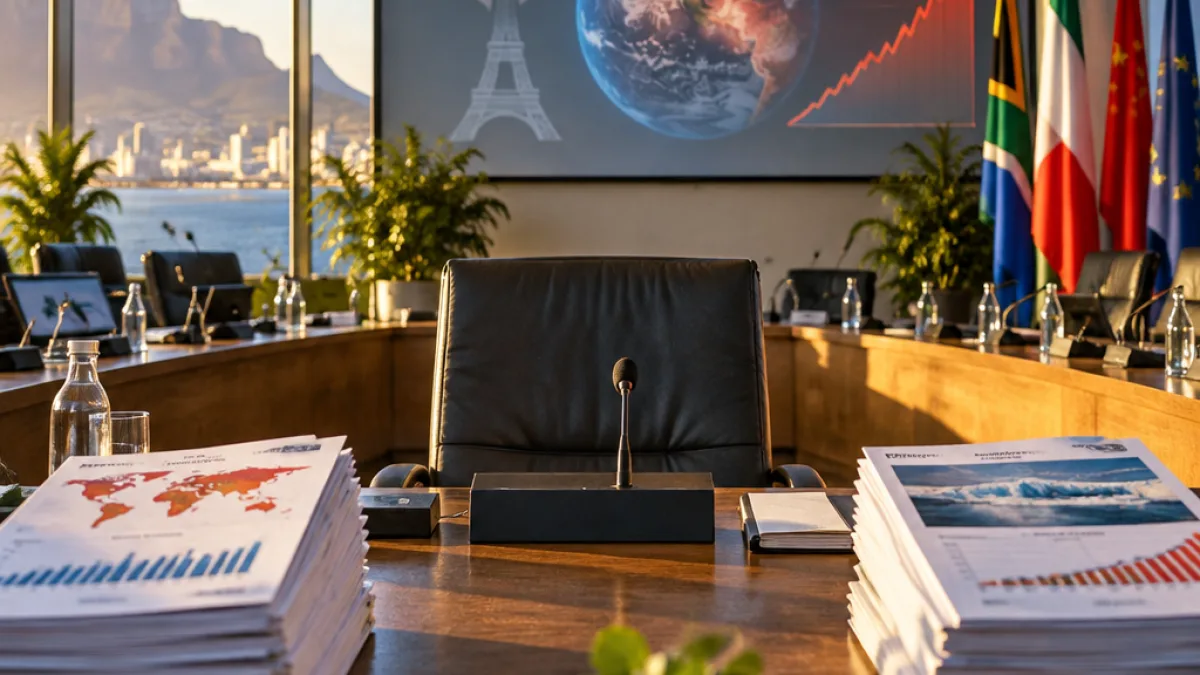
Delays to the next major assessment by the Intergovernmental Panel on Climate Change could undermine international efforts to confront global warming, according to Johan Rockström, director of the Potsdam Institute for Climate Impact Research.
Rockström said the IPCC’s work was essential to the Paris Agreement and to the wider global response to climate change. He warned that the organisation must be permitted to complete its next comprehensive review of climate science as quickly as possible, amid disagreements between countries over its role and the representation of developing nations.
Why the assessment matters
The IPCC brings together established research from scientists around the world and produces assessments used by governments when developing climate policies. Its findings also inform the annual climate conference of parties held under the United Nations Framework Convention on Climate Change.
“The IPCC is objective, evidence-based science, and it’s the only thing that we can reliably stand on as a basis for our policymaking,” Rockström said.
He described the organisation’s reports as a synthesis of work carried out voluntarily by researchers in both the global South and the global North. His comments came as countries continued to debate the process for preparing the IPCC’s seventh assessment report, known as AR7.
A dispute over process and representation
The AR7 assessment is already under way and had been expected to be completed in 2028. However, some countries are delaying elements of the work in a dispute over the IPCC’s responsibilities and the participation of developing countries in its processes.
One group has argued that some of the panel’s recommendations are shaped by racist assumptions. Rockström rejected that characterisation, saying the reports were fair and based on the collective assessment of established scientific knowledge.
- AR7: the IPCC’s seventh comprehensive assessment of climate science;
- Paris Agreement: the international framework whose central goal is to limit warming to 1.5°C above pre-industrial levels;
- Global stocktake: the process used to measure progress towards that goal and assess whether national action is sufficient.
Consequences for climate targets
The timing of AR7 is important because its findings are expected to contribute to the second global stocktake under the Paris Agreement. That process is scheduled to be considered when nations meet for Cop33 in the autumn of 2028.
The stocktake is expected to examine whether countries’ existing promises to reduce greenhouse-gas emissions are strong enough. The United Nations has already estimated that current commitments put the world on a path towards 2.8°C of warming. Earlier IPCC assessments have found that such a level would bring severe consequences, including the melting of ice caps and glaciers, with some effects potentially irreversible.
| Assessment or process | Role | Timing mentioned |
|---|---|---|
| AR7 | Seventh IPCC assessment of climate knowledge | Expected completion in 2028 |
| Second global stocktake | Reviews progress towards the Paris goal | Due for consideration at Cop33 |
| Current pledges | Existing national emissions commitments | UN path estimate: 2.8°C warming |
The dispute comes at a point when governments are under pressure to strengthen their climate plans. A delayed or weakened assessment could make it more difficult to establish a shared scientific basis for decisions on emissions, adaptation and the consequences of rising temperatures.
Rockström’s warning also highlights the political importance of scientific review. The IPCC does not set national policy, but its assessments provide the evidence against which governments measure risks and the adequacy of their actions. For developing countries, the debate over representation is particularly important because climate impacts and the resources available to respond to them are unevenly distributed.
At the heart of the disagreement is therefore not only the publication date of another scientific report, but the credibility of the process used to define the global response. Rockström said the IPCC must be allowed to continue its work without unnecessary delay, so that the next review can support cooperation based on evidence rather than competing political claims.