
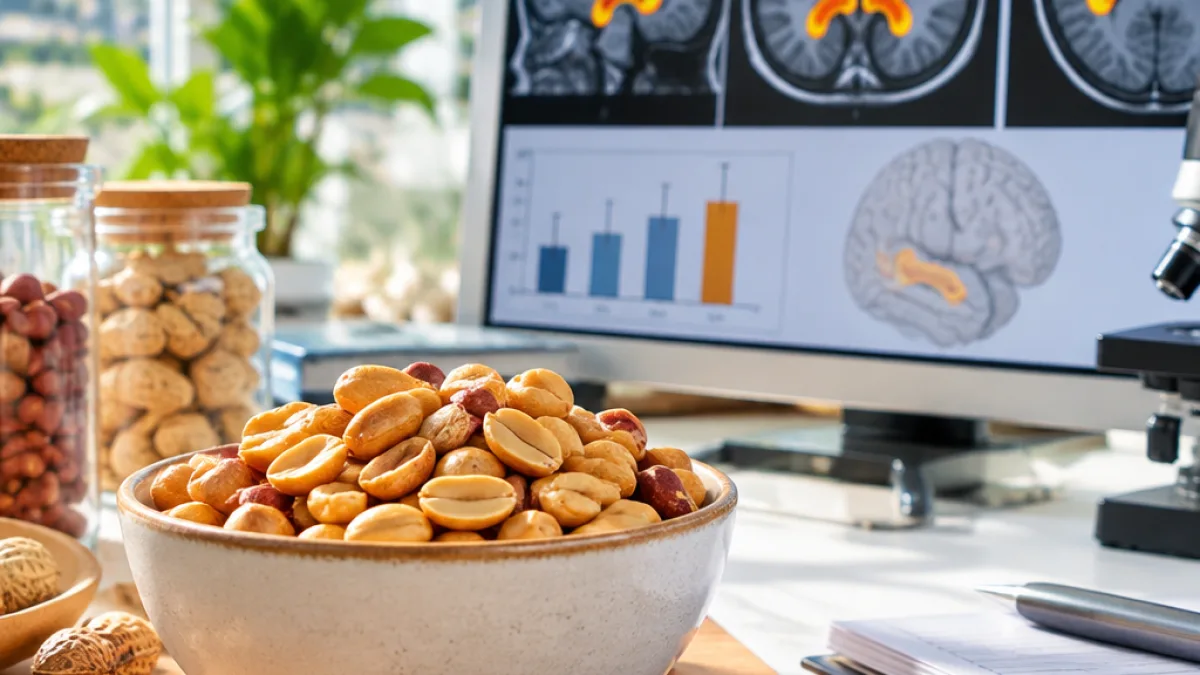
Eating about 60 grams of unsalted, skin-roasted peanuts a day was associated with improved insulin responsiveness in several memory-related brain regions among older adults in a small study conducted by researchers at Maastricht University Medical Center in the Netherlands.
The findings, produced through the institution’s Institute of Nutrition and Translational Research in Metabolism, were published in the peer-reviewed journal Food & Function. They add to research examining how nutrition may influence the ageing brain, while stopping short of showing that peanuts can prevent dementia or other forms of cognitive decline.
What the researchers measured
The study involved 31 healthy adults aged between 60 and 75. Participants consumed approximately two servings of peanuts every day for 16 weeks during the peanut-intake phase. The researchers used a randomised, controlled crossover design, allowing comparisons between participants’ responses during different phases of the research.
Rather than focusing only on blood-sugar control, the team examined how the brain responded to insulin. The hormone is widely recognised for helping regulate glucose in the body, but it also has functions in the central nervous system. According to the research, insulin supports the growth, survival and communication of nerve cells, processes that are important for memory and other cognitive abilities.
| Study feature | Reported detail |
|---|---|
| Participants | 31 healthy adults |
| Age range | 60 to 75 years |
| Daily peanut intake | 60 grams, or about two servings |
| Intervention period | 16 weeks |
| Peanut type | Unsalted and skin-roasted |
Brain regions showed a stronger response
After the daily peanut-eating period, improved insulin responsiveness was observed in a group of regions in the brain’s right hemisphere. These included parts of the lingual gyrus, hippocampus, parahippocampal gyrus and posterior cingulate gyrus.
Those structures are involved in memory-related processes. The hippocampus, in particular, is central to the formation and retrieval of memories, while the other regions contribute to processing and connecting information. The result therefore provides a biological signal that may help explain why food patterns are being studied in relation to brain health.
“Our study found that daily peanut consumption beneficially affected insulin responsiveness in memory-related brain regions in older adults.”
Peter Joris, the study’s senior author and an associate professor in the Department of Nutrition and Movement Sciences at Maastricht University Medical Center, said ageing can make the brain less responsive to insulin. That reduced responsiveness has been linked to age-related cognitive decline, according to the researchers.
A promising finding, not a prescription
The study’s results should be interpreted within their limits. The sample was small, all participants were described as healthy, and the intervention lasted 16 weeks. A finding that brain tissue responds differently to insulin does not by itself establish that a person’s memory will improve in everyday life, or that the diet will reduce the risk of Alzheimer’s disease.
The research does, however, point to a question with wider relevance: whether ordinary foods can influence biological pathways involved in ageing. Insulin signalling in the brain is one such pathway because it is connected to the functioning and communication of nerve cells. Healthy signalling may also help protect against processes associated with Alzheimer’s disease, although this study does not demonstrate such protection.
- The research involved a small group of 31 older adults.
- The participants ate 60 grams of peanuts daily for 16 weeks.
- The measured improvement concerned insulin responsiveness in brain regions linked to memory.
- The study does not establish that peanuts prevent dementia or guarantee better memory.
For the public, the most defensible interpretation is that unsalted, skin-roasted peanuts may form part of a healthy eating pattern, while further research is needed to determine whether the observed brain changes are sustained and whether they translate into measurable cognitive benefits. The study supports continued investigation rather than a simple claim that one food can protect the ageing brain.