South Africa’s economic outlook remains constrained by weak growth and global shocks, but a combination of political stability, infrastructure reform and improving business-government cooperation offers grounds for cautious optimism, according to Standard Bank political economist Simon Freemantle.
Freemantle delivered the assessment to members of Exporters Western Cape in Cape Town. He said South Africa’s underlying economic position was stronger than recent headlines suggested, although the country remained exposed to significant risks. The comments are particularly relevant for exporters, whose prospects depend on domestic infrastructure, international demand, financing costs, energy security and the stability of key trading routes.
“Our structural fundamentals still look fairly good.”
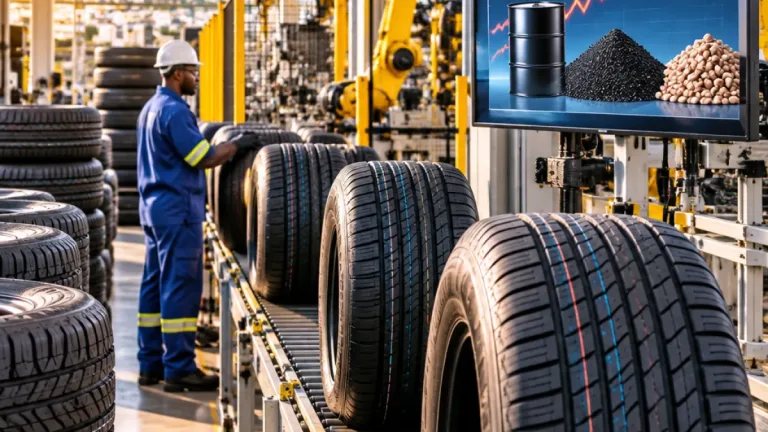
Standard Bank has reduced its forecast for South Africa’s growth this year from 1.8% to 1%. Freemantle attributed almost all of the downgrade to geopolitical developments rather than a deterioration caused by domestic policy failures. The main transmission channel has been the oil price, which has added pressure to inflation and contributed to a very different interest-rate outcome from the one the bank had expected.
At the start of the year, Standard Bank had anticipated two interest-rate reductions. Instead, rates increased twice. Higher borrowing costs put pressure on households and companies, while also making it more difficult for businesses to commit to new investment and expansion. For exporters, the impact can extend across working capital, equipment purchases, logistics and the cost of maintaining production capacity.
A slower recovery path
The bank expects growth of approximately 1.3% next year and about 2% by 2028. Freemantle described the latter pace as the minimum required to support fiscal consolidation over the longer term. The forecast points to a recovery that is expected to be gradual rather than strong, leaving limited room for policy mistakes or renewed external shocks.
| Indicator | Standard Bank outlook |
|---|---|
| Current-year growth forecast | 1%, down from 1.8% |
| Next-year growth forecast | About 1.3% |
| Growth forecast by 2028 | About 2% |
| Expected rate moves this year | Two increases, rather than two cuts |
Political stability and reform
Freemantle identified the Government of National Unity as one of the reasons for a more positive assessment. He said many observers had not expected the ANC and DA to form a working arrangement, and that some had predicted it would not last. In his view, the incentives supporting the partnership remain in place, and the arrangement is likely to continue through this year and next year.
That stability matters for business because it provides a more predictable political setting while reforms are being pursued. Freemantle described the GNU’s “runway” as a source of underlying stability that should be protected. He did not present the coalition as a guarantee of faster growth, but as a condition that can help sustain economic changes over time.
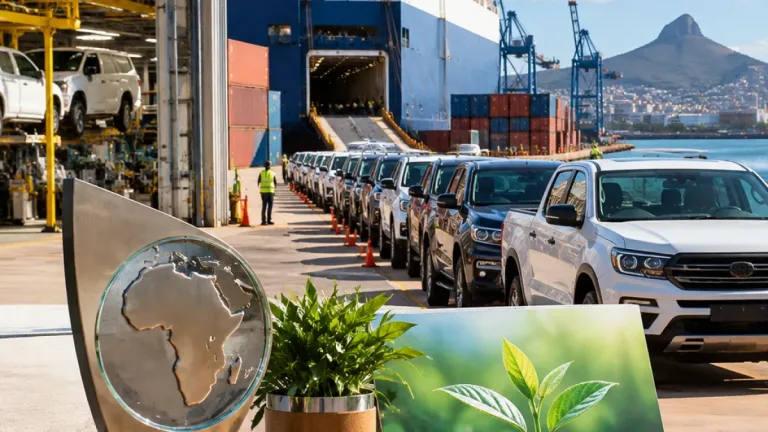
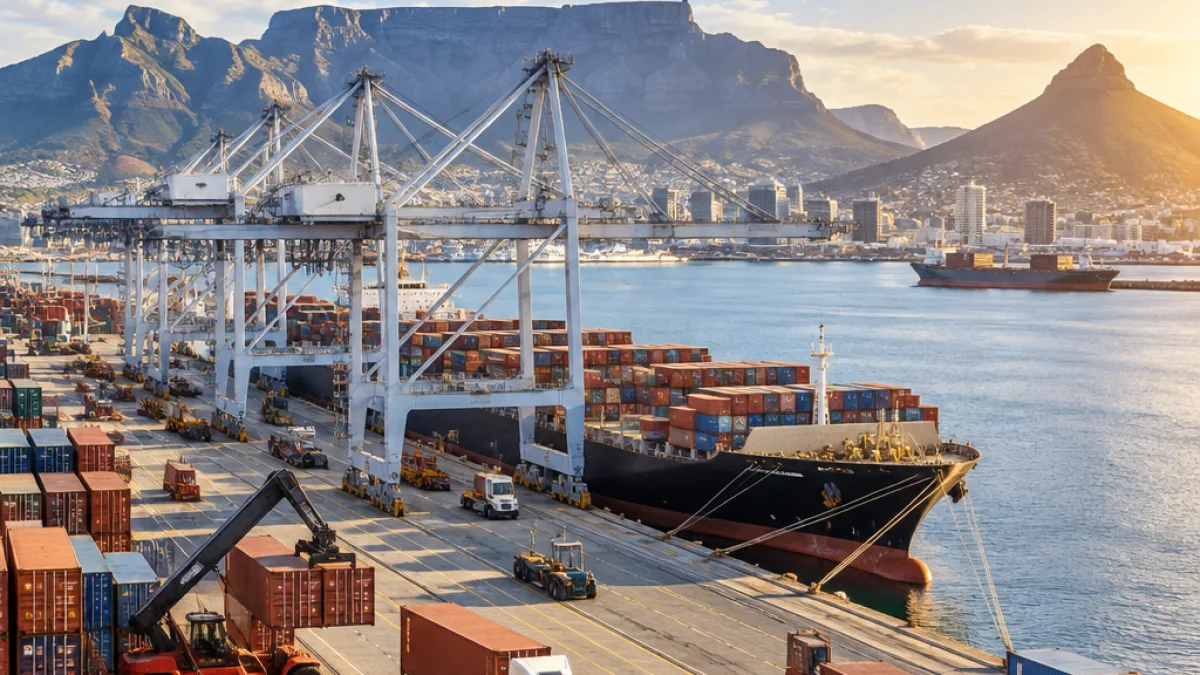
Structural reform was another central part of the outlook. Freight activity has risen by 25% from the low point reached by Transnet three or four years ago. It is, however, still 25% below its level a decade ago. The figures suggest meaningful progress from the recent trough, while also highlighting how much capacity remains to be recovered. Efficient freight movement is essential to exporters because delays and unreliable logistics can affect delivery schedules, costs and competitiveness.
- The Government of National Unity is viewed as a source of political continuity.
- Freight activity has improved from its recent low, although it remains below its level a decade ago.
- Business-government cooperation is described as stronger than at any point in the democratic era.
- Rating agencies have begun upgrading South Africa.
Freemantle said the partnership between government and business was in better condition than at any point since the start of democracy. Rating agencies have also begun upgrading the country. He cautioned, however, that restoring electricity and rail services would largely return the economy to a stable baseline. Further improvements would still be needed to generate stronger growth.
For companies, the message is therefore mixed. South Africa has not been insulated from international instability, and the combination of weaker growth, oil-price pressure and higher interest rates will continue to weigh on decisions. At the same time, progress in freight activity, cooperation between the public and private sectors and the durability of the GNU provide a basis for measured confidence. The immediate business priority is likely to be navigating a low-growth environment while watching whether reforms translate into sustained improvements in infrastructure and economic performance.