German automotive supplier Continental has raised its 2026 profitability outlook after stronger demand for high-margin tyres helped the group outperform market expectations in the third quarter. The upgrade comes despite rising costs for the oil-derived materials used in synthetic rubber, highlighting the competing pressures facing manufacturers as demand holds up but input prices become less favourable.
The Hanover-based company now expects a full-year operating profit margin of 13.4% to 14%, excluding its discontinued ContiTech operations. Its previous forecast was between 12% and 13.5%. The revised range points to continued confidence in the tyre division, particularly in larger and high-performance products, even as the company warns that the effect of more expensive raw materials will become more visible later in the year.
Continental reported adjusted third-quarter earnings before interest and taxes of €514 million, ahead of the €480 million consensus estimate. Its shares rose by about 6% in early trading on 4 November 2026, putting them on course for their strongest daily performance since May and among the leading performers on Germany's DAX blue-chip index.
Tyres remain the central earnings driver
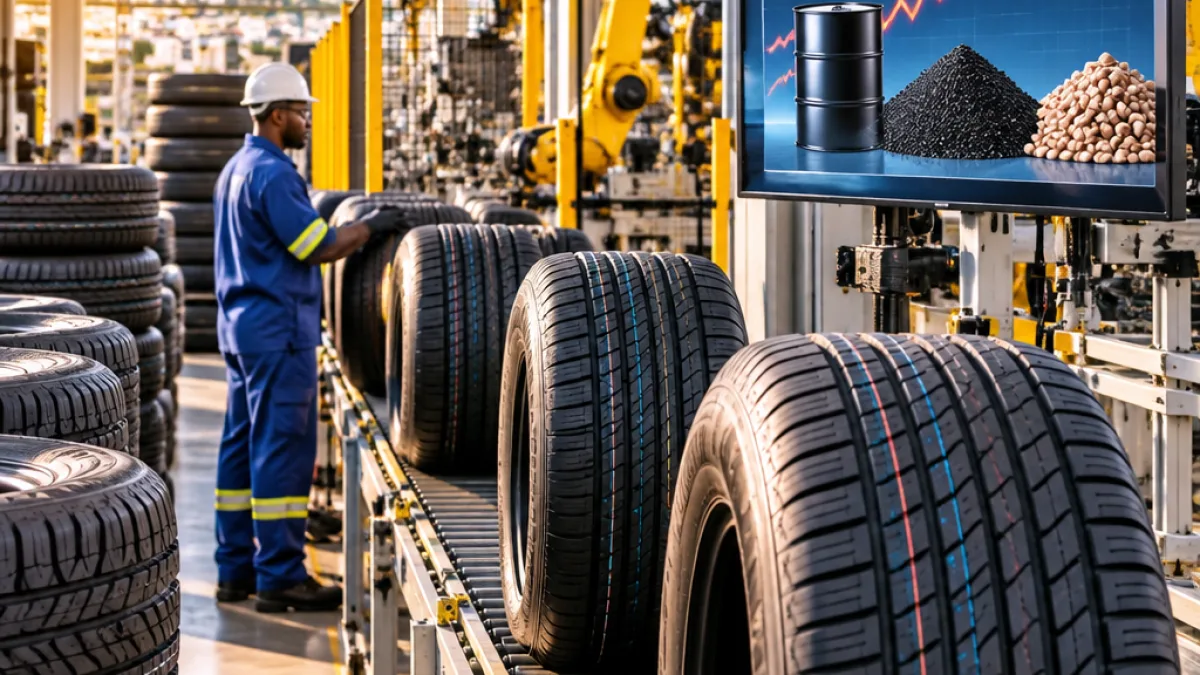
The company said demand for larger, high-performance tyres had supported its results. These products generally carry higher margins than standard offerings, making the mix of products sold as important as overall production volumes. Continental's chief financial officer, Roland Welzbacher, said the segment was a key contributor to the business, but cautioned that higher raw-material prices were increasingly weighing on earnings.
“Higher raw-material prices are increasingly affecting our earnings and will impact us even more in the fourth quarter,” Welzbacher said.
The company relies on oil-derived inputs to produce synthetic rubber for its tyres. That leaves profitability exposed to movements in oil prices, although the impact on earnings does not necessarily occur immediately. Continental said cost changes can affect financial results with a delay, while positive movements in the value of inventory may partly offset the pressure.
Oil outlook adds pressure to the second half
Continental had previously warned that a sustained increase in oil prices, linked to the war in the Middle East, would raise its production costs. The company is now forecasting an oil price above $90 a barrel by year-end, compared with the $85-a-barrel assumption it cited in May. Welzbacher said the anticipated decline in prices during the fourth quarter had not materialised so far, although the revised oil view would not change the company's existing cost assumptions.
The timing of the cost pressure is important for investors and customers across the automotive supply chain. A rise in tyre production costs can eventually affect supplier margins, pricing decisions and negotiations with vehicle manufacturers and distributors. Continental's results suggest that strong demand for premium products can provide some protection, but they also show that this cushion is not unlimited when raw-material inflation persists.
- New operating-margin forecast: 13.4% to 14%, excluding discontinued ContiTech operations.
- Previous forecast: 12% to 13.5%.
- Third-quarter adjusted EBIT: €514 million, above the €480 million consensus.
- Year-end oil forecast: above $90 a barrel, compared with $85 previously.
Production volumes were lower than Continental had initially anticipated, adding another complication to the outlook. Lower volumes can increase the importance of product mix and pricing because fixed costs are spread across fewer units. In Continental's case, the performance of high-margin tyres helped offset some of that volume weakness and the initial impact of higher input costs.
In August, the company said favourable raw-material effects worth a low-to-mid triple-digit amount in millions of euros during the first half of 2026 were expected to reverse completely in the second half. The latest guidance therefore reflects a more demanding cost environment, even though the full-year margin target has been lifted. For stakeholders, the main question will be whether premium tyre demand remains strong enough to absorb further oil-related increases as the year progresses.