Concor’s entry into voluntary business rescue has put several major infrastructure projects in the Eastern Cape under renewed scrutiny, raising questions about construction schedules, employment and the survival of businesses supplying the work. The company’s difficulties affect projects ranging from the Msikaba Bridge on the N2 Wild Coast Road to wind-energy facilities and the rehabilitation of the R75.
The construction group began the business rescue process on 6 October. Four companies within the group — Concor Holdings, Concor (Pty) Ltd, Concor Construction and Concor Mining Services — are now operating under the supervision of joint business rescue practitioners Nndingeni Moses Singo and Paula Anna-Mart Müller.
Projects facing uncertainty
Concor has a role in a number of large Eastern Cape developments. These include the Msikaba Bridge, the Wolf Wind Farm, the Phezukomoya Wind Energy Facility near Noupoort and the upgrading of the R75 between Gqeberha and Kariega.
The immediate concern for workers and contractors is whether the affected projects will continue without interruption, and whether existing arrangements with Concor will remain in place. The business rescue announcement does not, on the information available, establish that any of the projects has been cancelled. It does, however, introduce uncertainty into work already affected by delays and financial pressure.
| Project | Information available |
|---|---|
| Msikaba Bridge | Being constructed by a joint venture involving Concor and Mota-Engil Construction South Africa |
| Wolf Wind Farm | Listed among Concor’s major Eastern Cape projects |
| Phezukomoya Wind Energy Facility | Located near Noupoort |
| R75 rehabilitation | Work involves the route between Gqeberha and Kariega |
Msikaba delay adds pressure
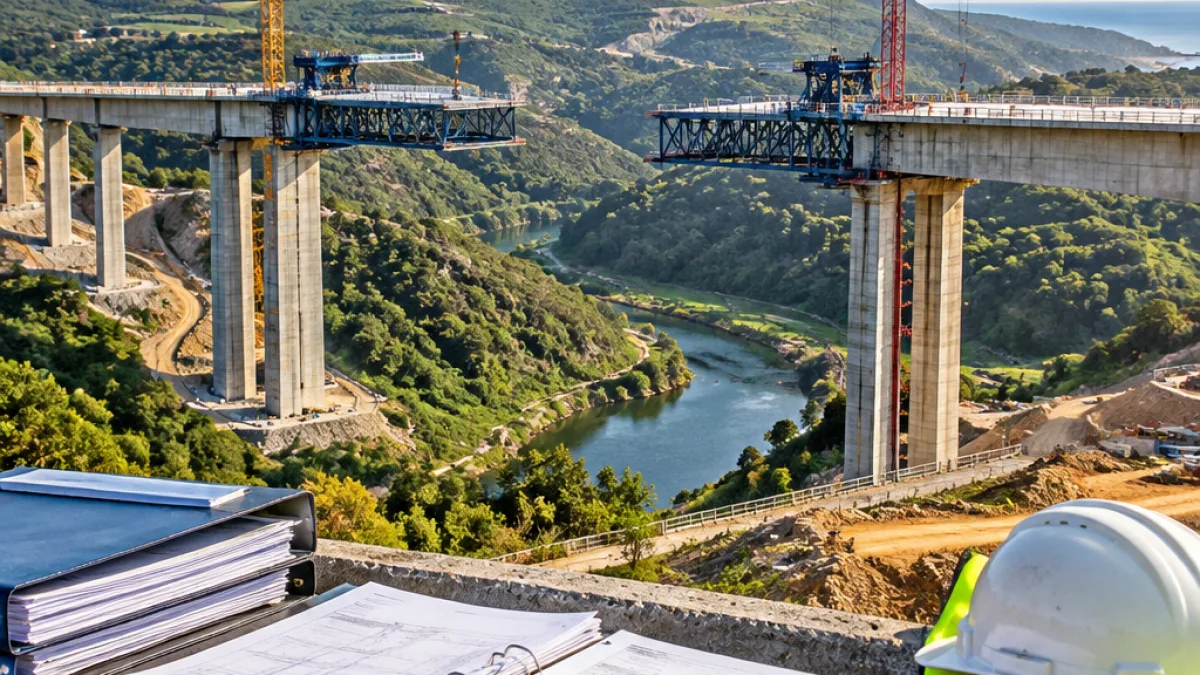
The Msikaba Bridge is the most prominent of the projects in the group’s Eastern Cape portfolio. The planned structure is 580 metres long, with a 260-metre main span, and will cross the Msikaba gorge without piers being placed in the river below. It forms part of the N2 Wild Coast Road and is intended to be one of the route’s defining engineering features.
The bridge was initially expected to be completed in 2022. More recent reporting has placed the anticipated completion date in 2029, underlining the extent to which the project has already moved beyond its original schedule. Its design is intended to carry the road high above the gorge while limiting the structure’s impact on the river environment.
In March, before the rescue proceedings started, SANRAL said construction was continuing and that the contract remained valid and binding. The roads agency also said adequate funding had been allocated. At the time, delays were linked to cash-flow and production constraints, including problems with manufacturing the bridge’s steel deck.
Impact beyond the main contractor
For the Eastern Cape, the issue extends beyond the financial position of a single construction company. Large infrastructure projects support employment on site and create demand for smaller firms involved in transport, materials, equipment, maintenance and other services. Any interruption or change in the way contracts are administered could therefore affect a wider network of businesses.
The same applies to the energy projects associated with Concor. Wind farms require extensive construction, logistics and civil works before they can contribute to electricity generation. A delay in the companies responsible for those activities could affect the timing of work and the income of workers and suppliers, although the available information does not specify the current position of each facility.
The practitioners will now oversee the process involving the four Concor entities. Their work will be closely watched by project partners, employees, contractors and public-sector agencies seeking clarity on how existing commitments will be handled. Until further information is provided, the central question is whether the projects can continue while Concor’s business rescue is under way, or whether revised arrangements will be required to protect construction progress, jobs and the local supply chain.