South Africa’s local government election on 4 November 2026 will test whether worsening frustration over basic services is beginning to reshape political loyalties ahead of the 2029 general election.
More than 29 million registered voters are expected to make their choice amid concerns about water and electricity interruptions, deteriorating infrastructure and high unemployment. The election takes place in an increasingly fragmented political environment, with more than 500 parties registered with the electoral commission.
Service delivery becomes a voting issue
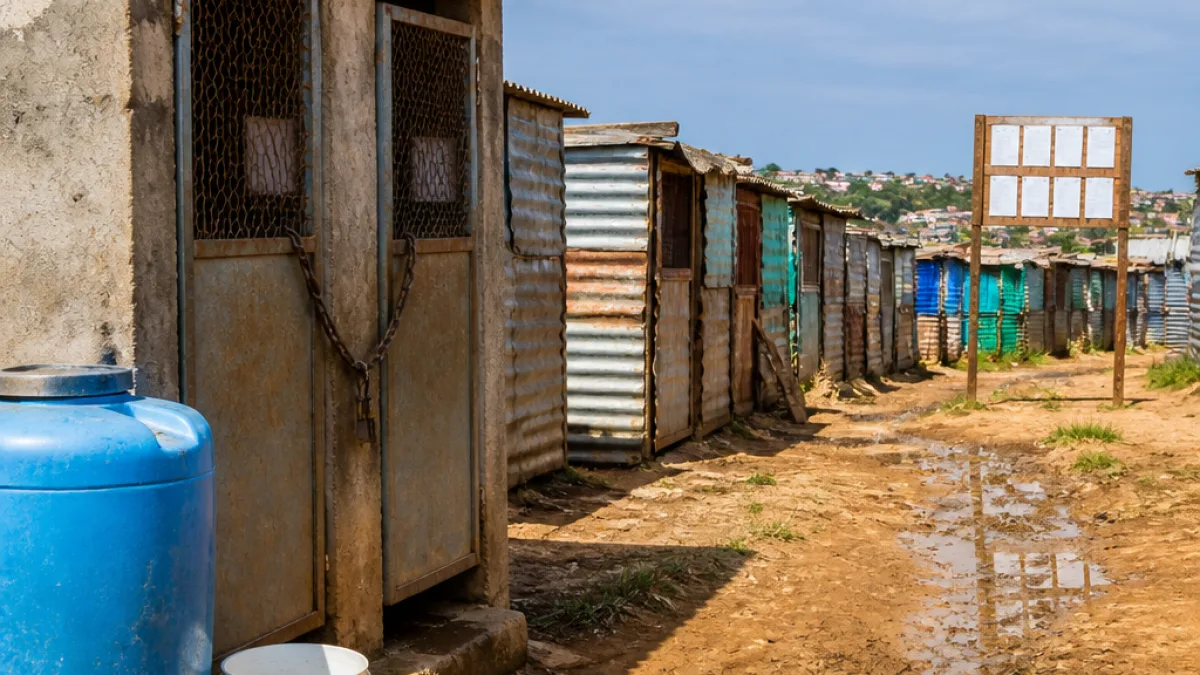
In Khayelitsha, Cape Town, 53-year-old Ntombekhaya Makeleni no longer uses communal toilets after men tried to enter while she was inside before dawn. She now uses a bucket, which is later emptied outside, as do many other people living in an area where thousands occupy informal shacks without sanitation.
For Makeleni, the lack of a safe and reliable toilet has become a reason to participate in the election. Her decision reflects the direct link between local government performance and the ballot for many residents living with inadequate services.
“I will be voting because after voting, things will be fixed.”
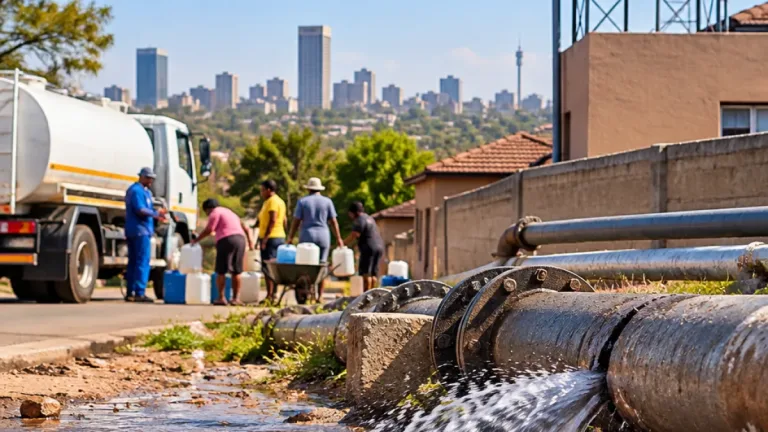
The pressure is not limited to Cape Town. In Durban, 27-year-old Nikesh Nunkoo said water outages in Shallcross had lasted between three days and two weeks. Although he has voted in three previous elections, he remained uncertain about whether he would participate this time, citing a lack of confidence that conditions would improve over the next five years.
In Chatsworth, 24-year-old Nkanyiso Hadebe, who lives in an informal settlement, said he would not vote because he believed the result would make no difference. The contrasting positions illustrate the central challenge facing political parties: service delivery failures can mobilise voters, but they can also deepen disillusionment and withdrawal from the electoral process.
Traditional support under pressure
The election will also provide an important measure of support for established parties, including the African National Congress. The ANC, once South Africa’s dominant political force and associated with the legacy of the late anti-apartheid leader Nelson Mandela, has faced an erosion of support as dissatisfaction with local government performance has grown.
The Democratic Alliance and the ANC are targeting metros in the Eastern Cape, while a large number of smaller parties will compete for seats across the country. The scale of the contest points to a political landscape in which voters have more options, but also to the difficulty of securing clear mandates in municipalities where support is divided among numerous parties.
| Election indicator | Figure |
|---|---|
| Registered voters | More than 29 million |
| Registered parties | More than 500 |
| Voters saying no party represents their views | Nearly half |
| Respondents saying their municipality is doing its job well | 38% |
Early signal before 2029
An Ipsos survey published in March found that nearly half of South Africans felt no political party represented their views. Only 38% believed their municipality was doing its job well. Those figures underline the scale of the credibility problem facing parties seeking support in communities where residents continue to experience service shortfalls.
The results will therefore be watched beyond the municipal sphere. They may indicate whether voters are rewarding or punishing parties over the performance of councils, whether fragmented support becomes a lasting feature of South African politics and whether the ANC’s decline continues before the next general election.
For residents such as Makeleni, however, the election is less about national political calculations than about whether the state can provide safe sanitation, dependable water and functioning local infrastructure. The ballot will show how many voters convert those daily pressures into political action — and how many decide that participation no longer offers a credible route to change.
- Basic services: Water, electricity, sanitation and infrastructure are among the leading concerns.
- Political fragmentation: More than 500 parties are registered for the poll.
- National significance: The result will offer an early indication of voter sentiment before 2029.