Gauteng’s water crisis cannot be solved by simply pumping more water into the provincial system while municipalities lose vast volumes through leaking infrastructure, Rand Water has warned Parliament.
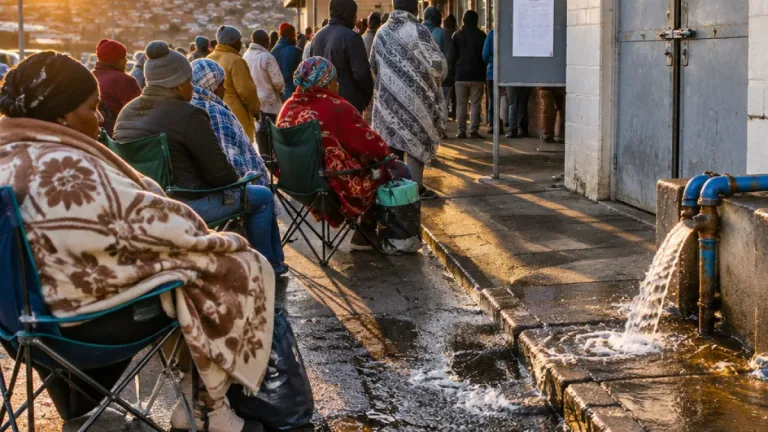
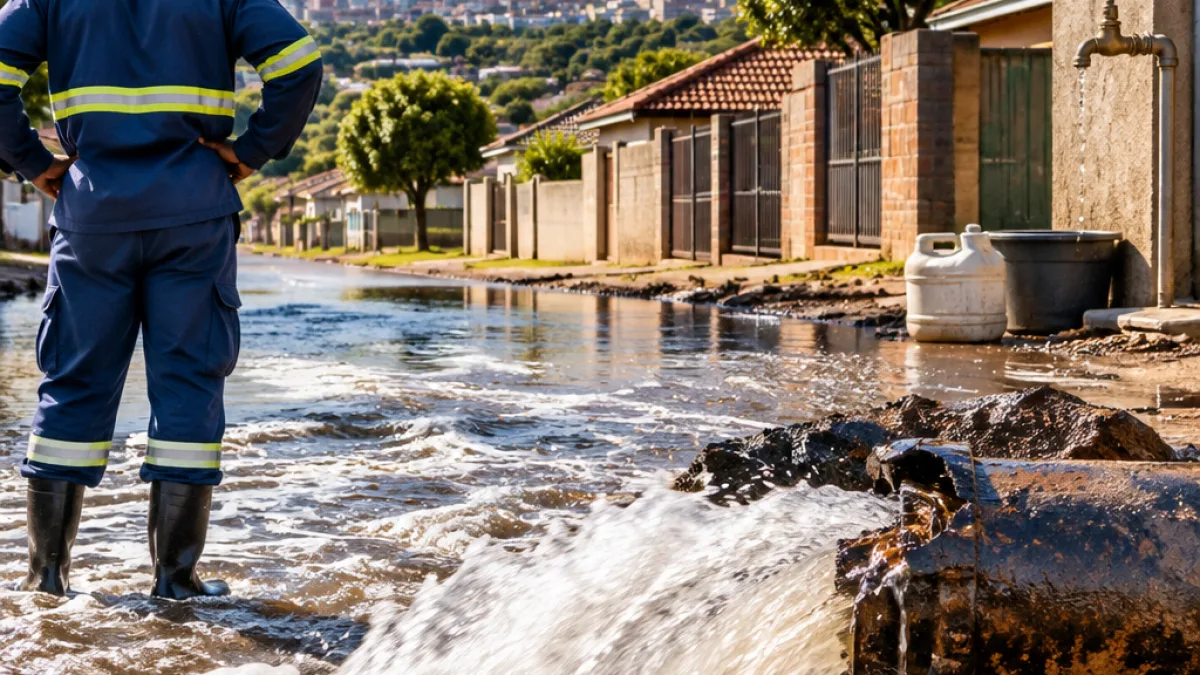
The bulk water supplier says about 1.5 billion litres of treated water are being lost through leaks, a volume greater than the entire purified water supply of the Western Cape. The warning comes as residents in parts of Gauteng continue to report dry taps and irregular household supply, even though water can be seen running in streets.
Rand Water chief executive Sipho Mosai appeared before Parliament’s portfolio committee on water and sanitation, where he said failures in municipal infrastructure were undermining the reliability of the system. Johannesburg was singled out as a particular concern because of the condition and maintenance of its water network.
More supply will not fix broken networks
Mosai rejected the idea that the utility should respond to shortages by continuously increasing the volume sent into the system. He described that approach as “strategically unwise” and unsustainable if municipalities are unable to maintain the pipes that carry water to homes and businesses.
“It doesn't matter how much you add into the system. As long as you keep pressurising the system that is characterised by water leaks, water will not get into people's houses. Everywhere you go, you see water in the street, but there's no water in the households.”
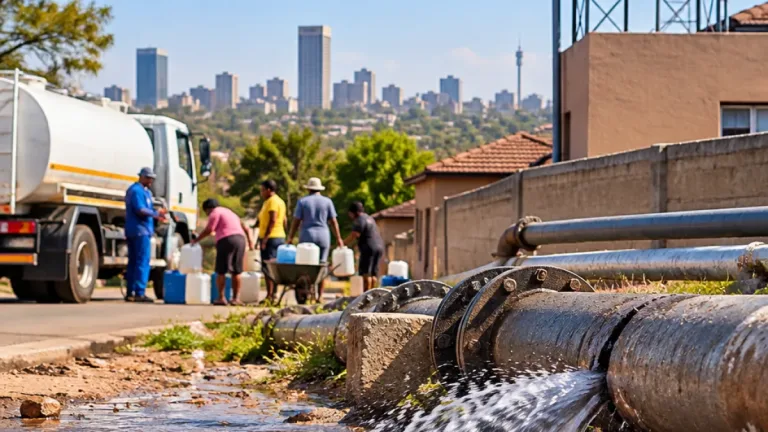
The explanation speaks directly to the experience of communities where residents may see water flowing from damaged roads or broken pipes while their own taps remain dry. Increasing pressure in a network with major leaks can result in more water being lost before it reaches consumers, rather than improving household access.
Rand Water’s warning places the focus on the condition of the last-mile infrastructure controlled by municipalities. The utility supplies bulk water, but municipal networks are responsible for moving that water through local systems to homes, businesses and other users. When those networks fail, additional bulk supply cannot by itself guarantee reliable delivery.
Financial pressure adds to infrastructure failures
Mosai also warned that the losses threaten Rand Water’s own sustainability. He said the utility could not regard its financial position as secure while such a large quantity of the water entering the system disappeared through leaks and non-revenue use.
| Issue | Figure or finding |
|---|---|
| Water lost through leaks | About 1.5 billion litres |
| Non-revenue water concern | About 50% of supplied water |
| Regional comparison | Losses exceed the Western Cape’s purified water supply |
Non-revenue water refers to water that enters the distribution system but does not generate payment, including water lost through leaks. The utility’s concern is that continued losses place pressure on the cost of treatment, distribution and infrastructure investment while reducing the money available to maintain the network.
The situation also creates a difficult balance for municipalities. Residents need a dependable supply, but the system cannot remain sustainable if large volumes are treated and pumped only to be lost before reaching households, or if bills remain unpaid. The parliamentary briefing therefore linked service delivery, infrastructure maintenance and municipal finances rather than presenting the crisis as a shortage of raw water alone.
Rand Water rejects election-period throttling claim
The appearance before MPs followed complaints from Gauteng communities that had gone without water for several days. Rand Water also rejected allegations that it had deliberately reduced or throttled supplies ahead of the recent local government elections.
Mosai acknowledged the contradiction raised by MPs: Rand Water has received international recognition for the quality of its water, infrastructure upgrades and investment, yet many Gauteng residents still do not have water in their homes. He attributed the gap between bulk-water performance and household access largely to municipal infrastructure failures, particularly in Johannesburg.
Repairs now central to the response
The utility’s position is that the immediate priority should be the repair of leaks and the maintenance of existing infrastructure, alongside planning for projects needed to meet future demand. That approach would require municipalities to address damaged pipes and deteriorating networks before relying on a larger volume of water from treatment plants.
- Repair leaks so treated water reaches households instead of being lost in streets.
- Maintain municipal networks, particularly in areas where failures are disrupting supply.
- Improve payment and revenue collection to support the operation and renewal of water infrastructure.
- Develop additional projects for longer-term demand, without treating new supply as a substitute for basic maintenance.
For households facing unreliable taps, the distinction between bulk supply and municipal distribution offers little immediate relief. The parliamentary warning nevertheless identifies where the breakdown is occurring: adding water at the top of the system will not solve failures further down the network.
Gauteng’s water challenge is therefore becoming a test of whether municipalities can protect existing infrastructure while keeping their water services financially viable. Until leaking pipes are repaired and the distribution system is properly maintained, Rand Water says the province will continue to risk losing large quantities of treated water without securing dependable supply for the people who need it.