
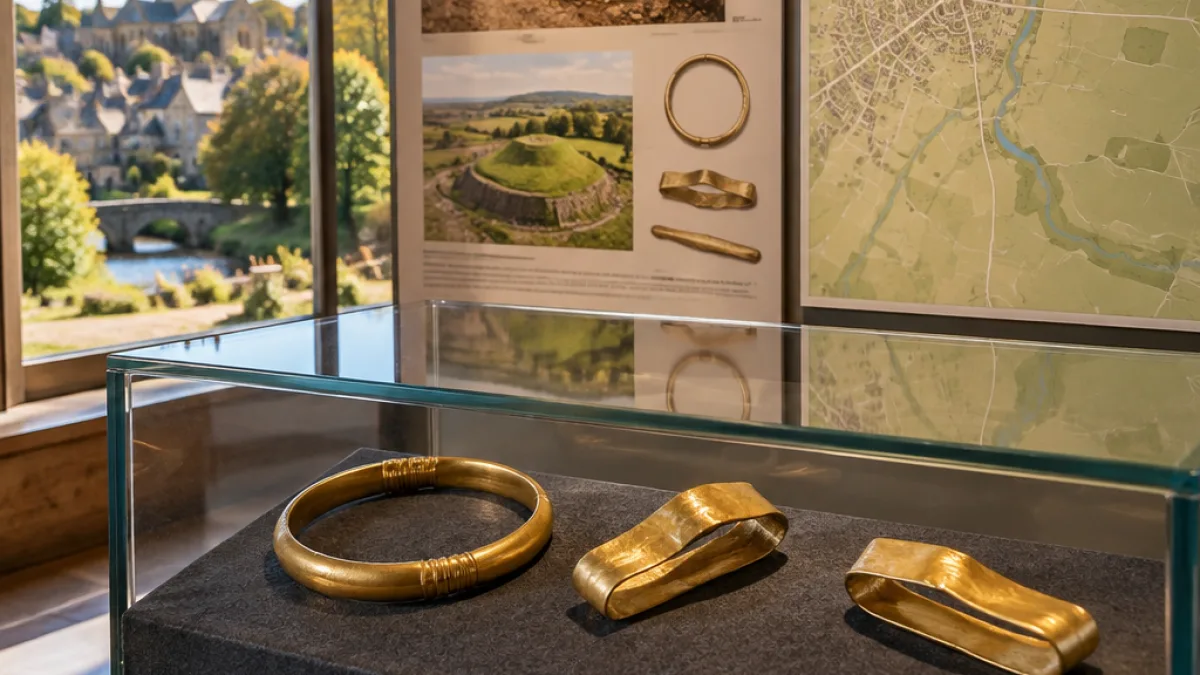
A discovery nearly 3,000 years old
Three gold bracelets recovered by a metal detectorist near Malmesbury in England are being displayed publicly for the first time, giving visitors a rare opportunity to see objects linked to life in the area during the Late Bronze Age. The jewellery, dated to between 1150 and 800 BC, has been formally recognised as treasure and acquired for the permanent collection of Athelstan Museum in Wiltshire.
The find is unrelated to Malmesbury in the Western Cape. The English town, which is described as historic, is the location associated with the archaeological discovery. The identity of the person who found the bracelets, as well as the precise place where they were recovered, has not been made public. That information remains undisclosed while the objects are presented as part of the area’s archaeological record.
According to reporting by BBC News, the bracelets went on display at the museum on 12 November 2026. Their route from the ground to the exhibition involved the British Museum’s Portable Antiquities Scheme, which records archaeological objects discovered by members of the public. The collection was later examined and classified as treasure, making it possible for the museum to obtain the items for its holdings.
Goldwork and an unresolved mystery
The three pieces were made from beaten sheet gold. Skilled metalworkers shaped the thin material into forms that appear to have been worn around different sections of the arm. One bracelet remains in a shape that is recognisable as a bangle, while the other two were altered before they were buried: they had been folded or rolled and then flattened.
| Feature | Details |
|---|---|
| Estimated date | 1150–800 BC |
| Material | Beaten sheet gold |
| Number of objects | Three bracelets |
| Exhibition venue | Athelstan Museum, Wiltshire |
| Display date | 12 November 2026 |
The reason for the deliberate flattening is not known. Museum representatives have raised the possibility that the pieces were prepared as a ritual offering to gods, but that remains an interpretation rather than a confirmed explanation. The unusual condition of two bracelets may nevertheless help researchers investigate the customs and beliefs of communities living in the region thousands of years ago.
Objects that widen the historical record
The significance of the discovery extends beyond the value or appearance of the gold. Archaeological objects can provide evidence about how people made, used and treated possessions, as well as the practices they followed when items were removed from everyday use. In this case, the differing shapes of the three bracelets raise questions about whether they were worn, stored, deliberately damaged or placed in the ground for a purpose that is no longer understood.
Local historian and Athelstan Museum trustee Tony McAleavy said the find was important both for the craftsmanship of the jewellery and for what it could reveal about people who lived around Malmesbury during the period. The museum’s acquisition means the collection can now be examined and viewed together, rather than remaining only as a private discovery or an archaeological record. For visitors, the display offers a tangible link to a community that existed long before the modern English town developed.
The discovery also illustrates the role played by members of the public in identifying archaeological material. Through the Portable Antiquities Scheme, finds made during metal detecting can be reported, assessed and recorded. In this instance, that process led to the bracelets being recognised as treasure and preserved in a museum, while the details that could identify the finder or the exact recovery site remain private.
- The bracelets date from the Late Bronze Age, between 1150 and 800 BC.
- Two pieces were folded or rolled and flattened before burial.
- Athelstan Museum has acquired the objects for its permanent collection.
- The reason for the bracelets’ unusual treatment has not been established.