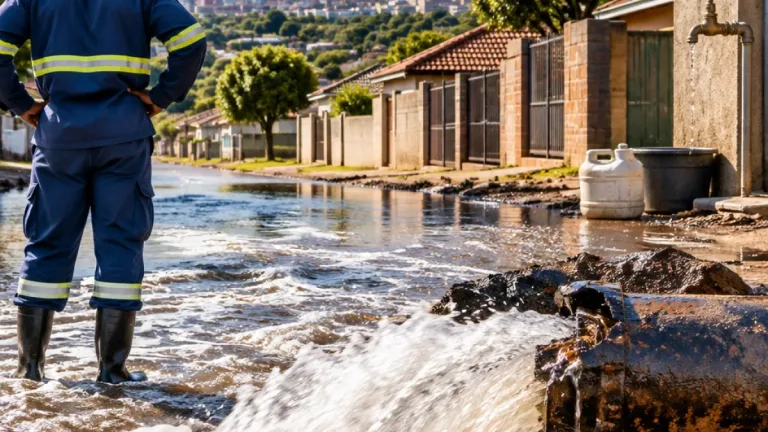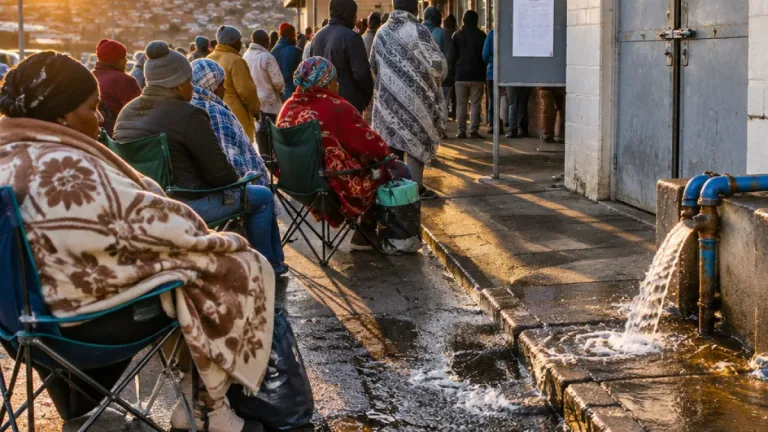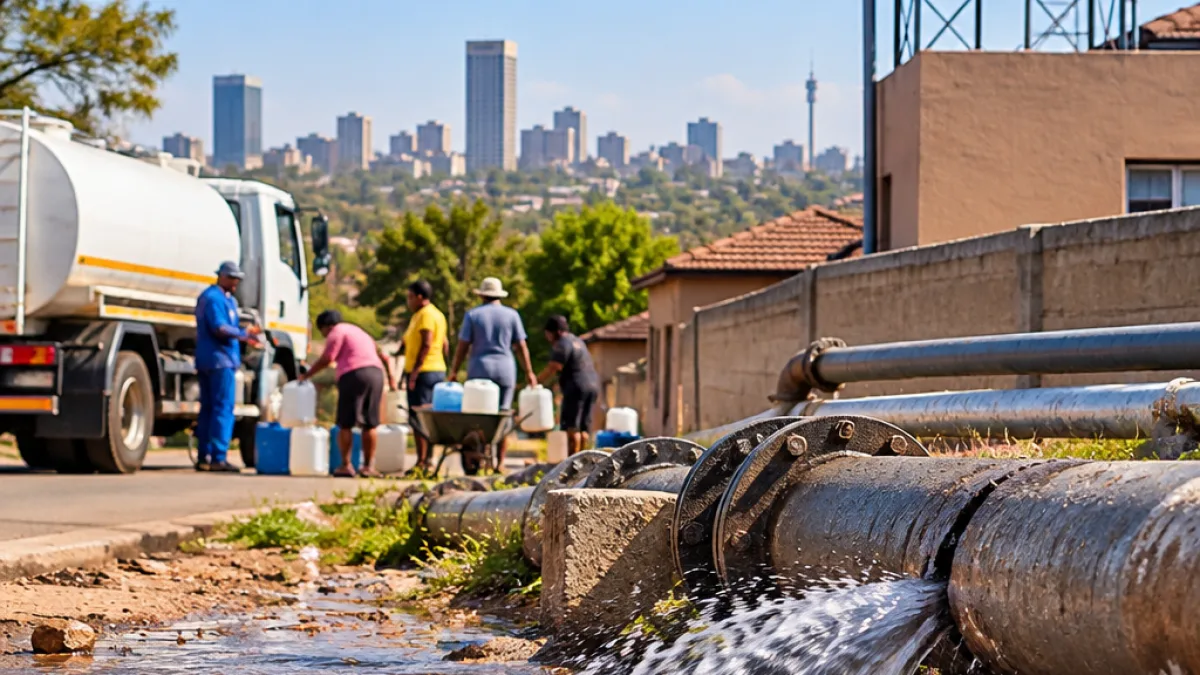
Gauteng’s worsening water crisis is being driven by failing infrastructure and weak delivery systems rather than an immediate shortage of water, according to a South African Human Rights Commission inquiry that has laid bare the pressure facing households across the province.
The commission’s 171-page report, released on Monday, identifies ageing networks, substantial water losses, inadequate technical capacity and growing dependence on water tankers as among the factors undermining reliable access to water and sanitation. The findings follow persistent complaints about outages lasting days or even weeks, leaking infrastructure, poor sanitation and uncertainty about the safety and dependability of supplies.
The inquiry examined services across Gauteng’s nine water services authorities. It was held in May after residents and community organisations raised concerns about the way water was being delivered, stored and distributed. The investigation places the problems within the wider chain of responsibility linking bulk supply, municipalities, electricity provision and local distribution networks.
Water exists, but does not reliably reach households
The Department of Water and Sanitation informed the inquiry that available water resources were sufficient to meet current demand. Additional augmentation would be needed in the future, the department said, but the commission’s central finding was that the immediate crisis lies elsewhere: in the systems required to move water from available sources to homes, businesses and public facilities.
That distinction matters for residents dealing with dry taps. A province can have water available at source while households remain without supply because reservoirs and pumping stations cannot cope, bulk lines fail, electricity interruptions stop equipment, or municipal networks lose water before it reaches consumers.
| Pressure identified by the inquiry | Effect on services |
|---|---|
| Ageing infrastructure | Breakdowns, leaks and unreliable distribution |
| High water losses | Less water reaching paying consumers and communities |
| Limited technical capacity | Slower maintenance and weaker system management |
| Insufficient reservoirs and pumping capacity | Reduced ability to maintain supply during interruptions |
| Electricity and bulk-supply failures | Disruptions across the delivery chain |
Residents remain exposed to prolonged outages
The commission’s findings reflect a problem that is experienced at street level: taps running dry, households waiting for emergency deliveries and communities having to plan their days around uncertain supply. The report records a growing reliance on water tankers, indicating that emergency measures are increasingly being used to compensate for weaknesses in permanent infrastructure.
Tankers can provide short-term relief, but their growing use also points to a system under strain. They do not resolve leaking pipes, insufficient storage or failed pumps. Nor do they remove the need for municipalities to maintain distribution networks and ensure that services are restored consistently.
Inquiry chair Henk Boshoff criticised the gap between official discussions and conditions on the ground, saying the report was being released while parts of Gauteng were still facing lengthy outages.
“We cannot continue to sit in boardrooms. We cannot sit here, release reports or have meetings.”
Boshoff also questioned why municipal performance had not improved ahead of the local government elections, saying the situation had instead deteriorated. His comments placed pressure on municipal managers and officials to translate repeated meetings and reports into practical repairs and more dependable services.
Several failures combine to weaken supply
The inquiry does not identify one isolated fault. Instead, it describes an interlocking set of weaknesses. Water losses reduce the volume that reaches communities. Old infrastructure requires maintenance and replacement. Limited technical capacity makes it harder for municipalities to identify faults, plan upgrades and operate complicated networks. Reservoir and pumping constraints can then magnify the effect of a failure elsewhere.
Electricity interruptions add another vulnerability. Even when bulk water is available, pumps and related equipment need reliable power to move it through the system. A failure in bulk supply or municipal distribution can therefore leave residents without water despite adequate resources at the source.
- Bulk supply: interruptions can affect large areas before water enters local networks.
- Storage and pumping: inadequate capacity can prevent municipalities from maintaining pressure and reserves.
- Distribution: ageing pipes, leaks and weak local systems can stop water reaching households.
- Municipal capability: shortages in technical capacity can delay repairs and reduce oversight.
Accountability now shifts to implementation
The report’s release comes as Gauteng communities continue to depend on municipalities for basic water and sanitation services. The commission’s inquiry has brought together the main pressures identified by residents and community organisations, but the immediate test will be whether the responsible institutions act on the evidence.
For households, the practical concern remains unchanged: when will supply return, how long will it last and whether emergency arrangements will be available during another interruption. The commission’s conclusion that water is available in sufficient quantity for current demand also sharpens the accountability question. The focus is no longer only on finding more water, but on repairing the machinery that is meant to deliver it.
Across Gauteng, the consequences of failure are measured in hours spent searching for alternatives, disrupted household routines and greater dependence on temporary assistance. The inquiry has warned that these conditions cannot be addressed through meetings alone. Reliable water will require functioning infrastructure, capable municipal systems and effective coordination throughout the supply chain.