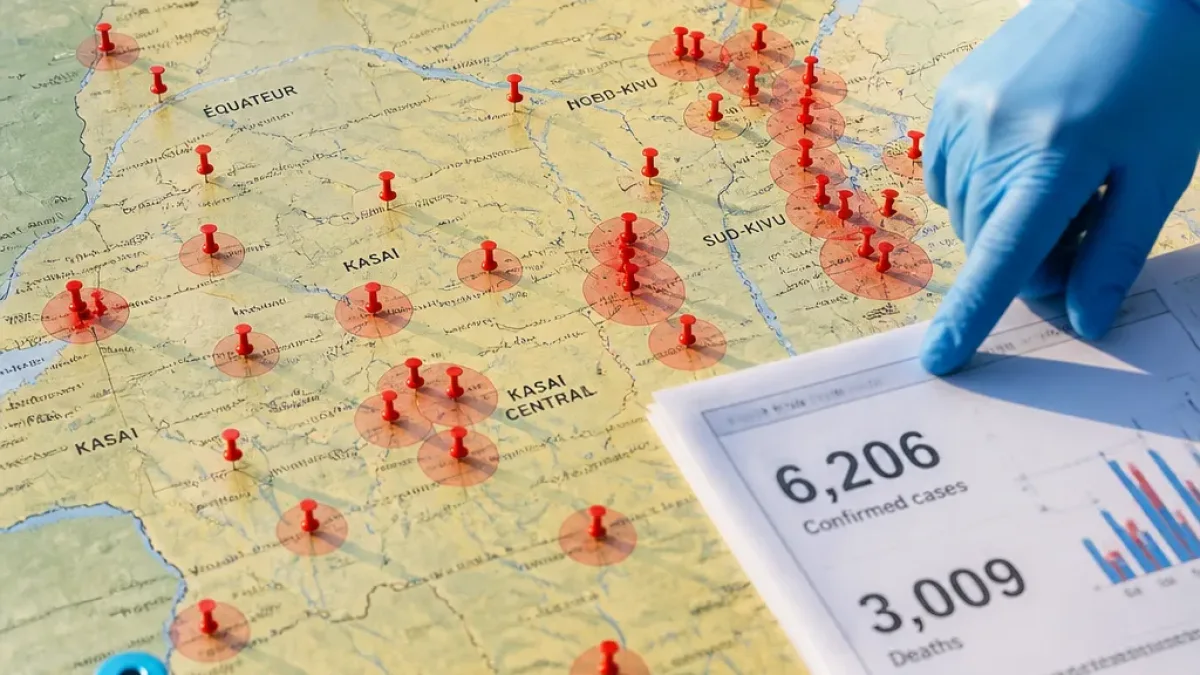
Genomic testing of Nigeria’s single confirmed Ebola case shows the virus is closely related to the strain identified in Kenya’s index case, Nigeria’s health minister Muhammad Ali Pate said, according to reporting on 25 October 2026. The finding offers the first genetic connection between two recent East African cases.
What authorities have reported
Pate said genomic analysis linked the Nigerian case to the Kenya index strain, but Nigerian officials have found no evidence that the Kenya index case travelled to Nigeria or that there was a direct epidemiological connection between the two patients. Contacts of the Nigerian patient are being traced, quarantined and tested, with some results negative and others still pending, the minister said.
Separately, Uganda — which borders the Democratic Republic of Congo (DRC) and has a history of dealing with Ebola outbreaks — reported it remained free of Ebola at the time of the report but was tightening precautions. Uganda’s health ministry reinstated traveller locator forms for all arrivals regardless of country of origin and said that travellers who recently visited the DRC would not be permitted to transit through the country.
Regional implications
The genomic match highlights the importance of cross‑border surveillance and genetic sequencing in tracking how the virus moves between countries. While the Nigerian analysis shows a close relationship with the Kenyan strain, authorities emphasised there is no confirmed travel link between the cases.
- Contact tracing and testing are under way in Nigeria, with quarantines imposed on contacts.
- Travel checks and locator forms have been reinstated in Uganda for all arrivals.
- Transit restrictions are being applied to travellers with recent travel history to the DRC.
What this means for South Africa and public health practice
Although the cases described are in Nigeria, Kenya and Uganda, genomic links between outbreaks reinforce why robust surveillance and rapid laboratory sequencing are critical to outbreak control. Sequencing helps public‑health authorities determine whether cases are part of the same transmission chain or represent separate introductions, which in turn guides contact tracing, isolation policies and travel advisories.
For clinicians and public‑health officials, the priorities remain early detection, timely laboratory confirmation, thorough tracing of contacts and clear communication to the public about symptoms and when to seek care. Ebola typically presents with fever, severe weakness, muscle pain, headache and sore throat, progressing in some patients to vomiting, diarrhoea and internal or external bleeding. Rapid identification and supportive care improve outcomes.
| Country | Action reported |
|---|---|
| Nigeria | Genomic link reported; contact tracing, quarantine and testing under way |
| Kenya | Index case strain matched genetically to Nigeria’s case |
| Uganda | Declared Ebola‑free at time of report; reinstated traveller locator forms; transit ban on travellers from DRC |
Health authorities globally and regionally routinely monitor such developments. The genomic finding does not alone establish a direct transmission pathway without supportive epidemiological evidence, which is why Nigerian officials continue to investigate travel histories and contact networks.
Genomic analysis shows the virus is closely related to the strain detected in Kenya’s index case, Nigeria’s health minister Muhammad Ali Pate said.
Members of the public should remain alert to official health advice from ministries of health and international bodies. Anyone who has recently travelled to affected areas and develops febrile illness or other compatible symptoms should seek medical assessment promptly and inform health workers about their travel history.
Health systems benefit from early warning and laboratory capacity. The reported link between the Nigerian and Kenyan strains underscores the need for continued investment in genomic surveillance across the region to rapidly identify connections between cases and to guide appropriate public‑health responses.