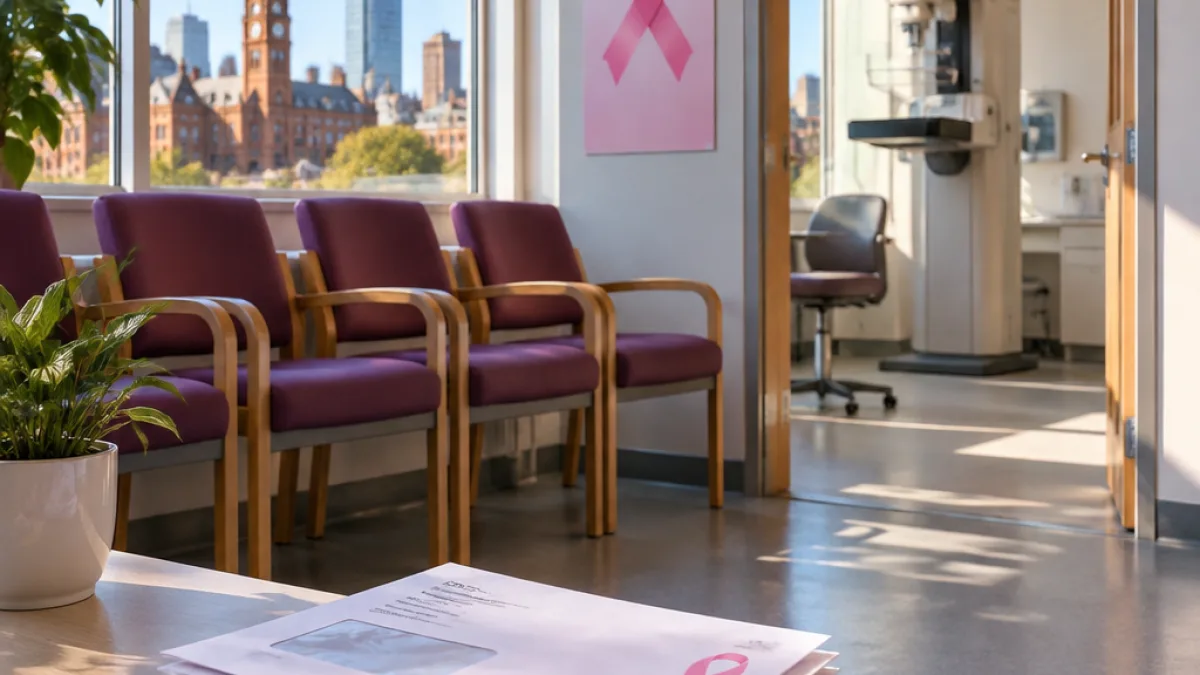
Nearly three in 10 eligible women in England’s North West are missing breast screening appointments, according to NHS figures, prompting renewed calls for women to attend routine checks and seek medical advice about any changes they notice.
The reported non-attendance rate was 28.9%. Although uptake improved marginally over the past year, the NHS said the proportion of women not attending remained a concern because screening can identify breast cancer before it becomes apparent through symptoms.
The figures relate to the North West region of England, including the area served by Manchester University NHS Foundation Trust. They do not refer to South Africa’s North West province. The distinction is important because health systems, screening arrangements and eligibility rules differ between the two countries.
Screening is intended to find disease earlier
Breast screening is designed to detect possible cancer at an early stage, when there may be no noticeable change in the breasts. The NHS said this early detection can make it possible to identify the disease before a person becomes aware that anything is wrong.
Women in England are invited for their first screening appointment between the ages of 50 and 53. Invitations are then issued every three years until the age of 71. The programme’s stated purpose is to provide regular checks during a period when the risk of breast cancer increases.
Women older than 71 are not included in the routine invitation cycle described in the report, but the NHS continues to encourage people to remain aware of changes in their breasts. The guidance also makes clear that screening is not a substitute for contacting a GP when an unusual symptom develops.
Reasons for missed appointments vary
Dr Paula Cowan, a GP and NHS England’s regional medical director for primary care in the North West, said some women could be hesitant to attend for a range of reasons. She nevertheless urged eligible women to come forward, pointing to the value of finding cancer early.
“Some people may be reluctant to come forward for a number of different reasons,” Dr Paula Cowan said, adding that breast screening could “detect cancer at an early stage”.
The available information does not identify the individual reasons behind the missed appointments or provide a breakdown by town, age group or community. That leaves important questions about access and participation unanswered, including whether non-attendance is linked mainly to reluctance, practical difficulties, appointment arrangements or a combination of factors.
What women are being encouraged to do
The NHS advice outlined in the report is straightforward: women should attend when invited, continue checking their breasts regularly and arrange a GP consultation if they notice an unusual change in how their breasts look or feel.
- Attend a scheduled screening appointment where possible.
- Continue to be breast aware between screening visits.
- Contact a GP about an unusual change rather than waiting for the next routine test.
Possible changes should not be dismissed simply because a person has recently attended screening. The report’s guidance places responsibility on women to seek a clinical assessment when something appears different, while the screening programme provides periodic checks for eligible age groups.
The figures at a glance
| Measure | Reported detail |
|---|---|
| Region | North West of England |
| Women missing appointments | 28.9% |
| First routine invitation | Between ages 50 and 53 |
| Invitation interval | Every three years until age 71 |
The slight improvement in attendance over the last year indicates that participation has moved in the right direction, but the remaining gap is still sizeable. With more than a quarter of eligible women not attending, health services face the continuing challenge of ensuring that invitations translate into completed appointments.
The report does not give the number of women invited, the total number of appointments missed or details of any new NHS measures to improve attendance. It also does not state whether missed appointments are automatically rearranged. Those details would help show the scale of the issue and clarify what support is available to women who cannot attend on the original date.
For women covered by the English programme, the central message is that screening can identify breast cancer before symptoms become evident. For anyone who notices a change, the NHS advice is to contact a GP rather than relying on a future screening invitation.