The UK has formally objected to a proposed agreement at the United Nations Cop31 climate summit, warning that the draft fails to reflect the scientific urgency of limiting global warming. Energy Secretary Miatta Fahnbulleh described the outcome as “immensely disappointing” after negotiators failed to secure a text with the level of ambition sought by Britain and its allies.
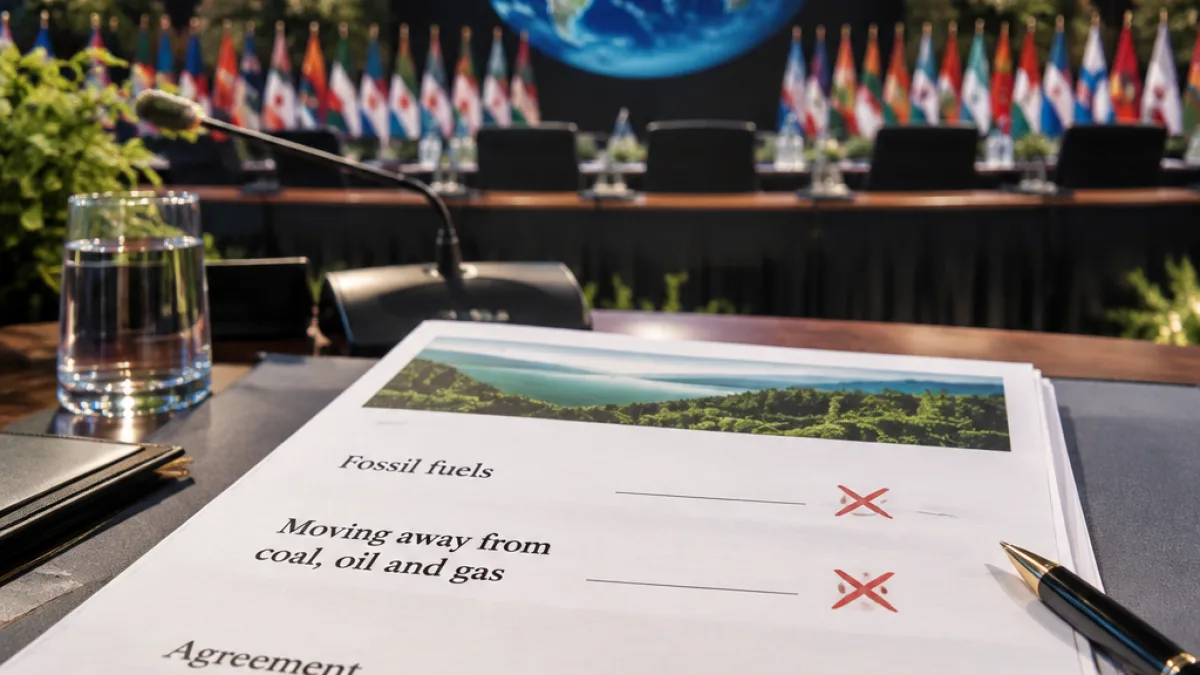
At the centre of the dispute was a draft final agreement that contained no reference to fossil fuels. It also stopped short of calling for a transition away from coal, oil and gas as sources of energy. Britain joined the European Union and other national and negotiating blocs in opposing the wording, which required near-unanimous support to be adopted.
Dispute over the scientific response
The negotiations in Antalya, Turkey, extended beyond their planned conclusion as governments remained divided over the final language. The summit had been scheduled to last two weeks, but the talks continued for more than 44 hours after the expected end of the meeting.
Ms Fahnbulleh said the summit had been intended to address the reality that global temperatures are expected to pass the 1.5C level, and that this required faster implementation of climate measures. The UK’s objection was therefore not simply about the wording of the document, but about whether the proposed text accurately represented the scale and urgency of the scientific challenge.
“We believe it moves us backwards on the science when we must accelerate implementation.”
The minister said negotiators had worked to build agreement but had been unable to deliver what she called the necessary “bold ambition”. She added that the UK would continue working with international partners on progress made during the Antalya summit, while maintaining its commitment to co-operation between governments and to protecting communities from the effects of warming beyond the 1.5C level.
What the UK says it will pursue
The Government said its own position remained focused on speeding up the shift away from fossil fuels and supporting cleaner electrification. It also highlighted the need to improve access to finance for countries dealing with the consequences of climate change and adapting to those impacts.
- Fossil fuels: the UK said it remained committed to accelerating the transition away from coal, oil and gas.
- Energy systems: ministers backed greater use of clean electrification.
- Climate finance: the Government said access to funding for adaptation needed to improve.
- International process: Britain intends to continue working with other countries before the next summit.
The Government said it was prepared to return to Cop32 in Addis Ababa with further progress, stronger resolve and improvements to the summit process. That commitment leaves the UK supporting the broader international negotiations even as it rejects the current draft’s treatment of fossil fuels and the scientific need for faster action.
A difficult conclusion
Prime Minister Andy Burnham addressed delegates earlier in the two-week meeting, which was held against the backdrop of increasing concern about the likelihood of global warming overshooting 1.5C. The eventual disagreement meant the summit could not produce the shared final position that the UK had sought.
| Issue | Position or outcome |
|---|---|
| Location | Antalya, Turkey |
| Planned duration | Two weeks |
| Delay beyond scheduled conclusion | More than 44 hours |
| Proposed next summit | Cop32, Addis Ababa |
For the UK, the central concern is that an agreement without a clear reference to fossil fuels would not match the scale of the problem identified by climate science. The failure to reach consensus has not altered the Government’s stated domestic and international priorities, but it has exposed the continuing difficulty of converting those priorities into a near-unanimous global agreement.