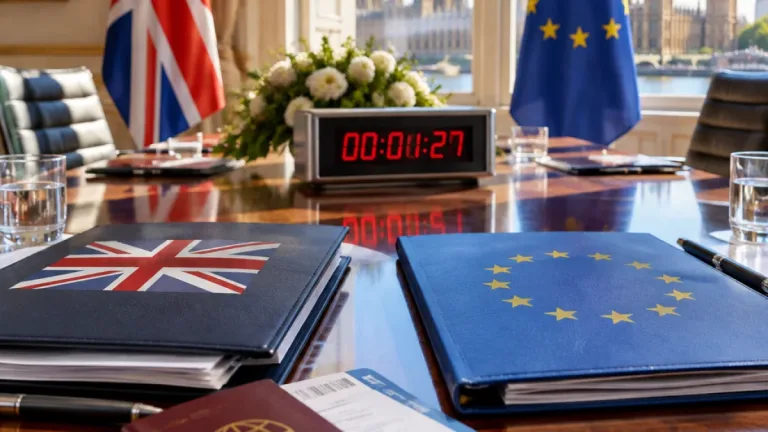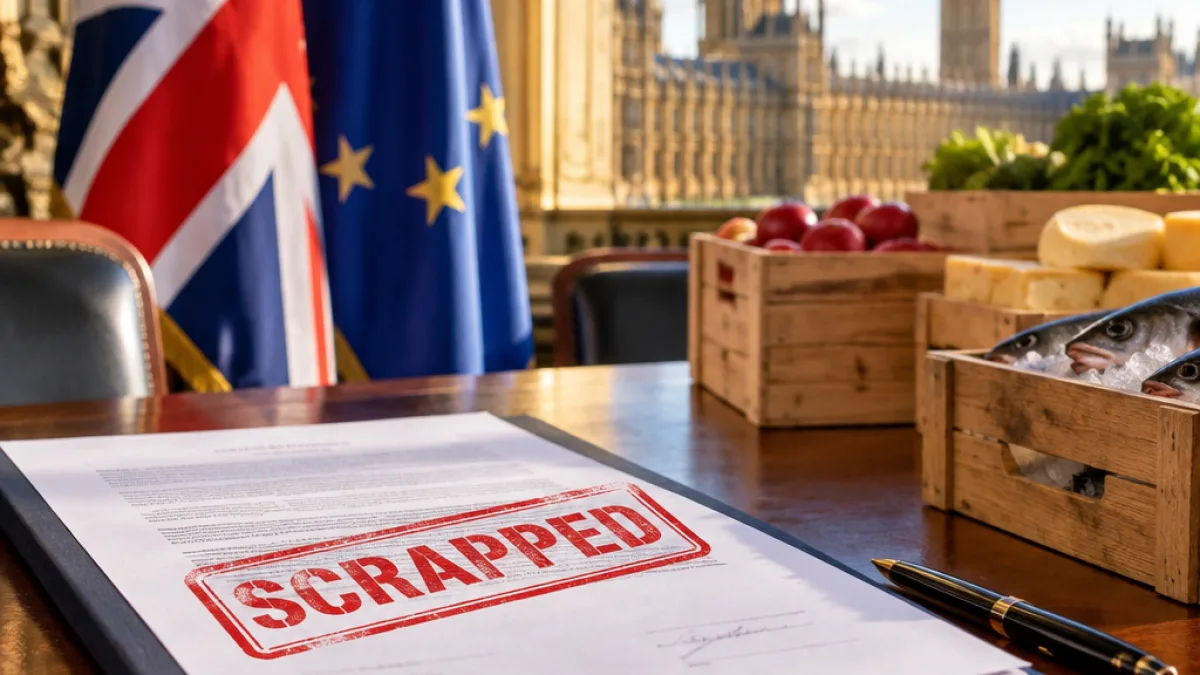
The Conservatives would scrap the new agreement between the UK and the European Union if they win the next general election, deputy leader Alex Burghart has said, opening a fresh political battle over Brexit, trade and regulatory control.
The deal, signed by Prime Minister Andy Burnham on Friday, covers a youth travel scheme, emissions trading and exports of British food. The Government has argued that removing most checks on food shipped from Britain to the EU will lower costs for businesses and could eventually ease pressure on shoppers.
A direct challenge to the Government’s European policy
Mr Burghart rejected that argument during an appearance on the BBC’s Sunday with Laura Kuenssberg programme. He described the agreement as “a dog's dinner” and said it would not produce cheaper prices in shops. His central objection was that the arrangement would require the UK to follow some EU rules while having no role in deciding how those rules are made.
“I also don't think it is a good idea for a country like Britain to hand over control of its rules to another power and have no say over how those rules are created right into the future.”
Asked directly whether the Conservatives would remain committed to cancelling the agreement after a general election victory, Mr Burghart gave a clear answer: “I don't think that there will be positive outcomes, and yes, we would scrap it.” That pledge would place the future of the agreement at the centre of any Conservative campaign on relations with Brussels.
What the agreement contains
| Area | Proposed change |
|---|---|
| Food exports | Most checks on British food exports would be removed |
| Youth travel | A scheme allowing travel between the UK and EU is included |
| Emissions | The agreement covers emissions trading |
| Regulation | The UK would follow some EU rules |
Mr Burghart accepted that the deal would reduce some of the “friction” affecting trade. However, he argued that it would create a substantial extra obligation for the 90% of farmers who do not trade with the EU. His criticism reflects the wider Conservative case that the agreement sacrifices national control in return for economic benefits that, in their view, have not been demonstrated.
Retailers welcome lower costs, but not lower prices
Food retailers have welcomed the proposed changes, saying they would cut costs, reduce bureaucracy and remove obstacles to trade. Their position is more cautious on the effect for consumers. Retailers have not promised to reduce prices as a direct consequence of the agreement, and the British Retail Consortium has said it does not expect supermarket prices to fall as a result.
The consortium has also warned that other upward pressures on prices would remain and would not be removed by the deal. That distinction is important to the political argument: reducing the expense and paperwork faced by importers and exporters does not automatically mean that the saving will appear on the shelf.
Foreign Secretary Ed Miliband defended the Government’s position, saying the agreement would reduce pressure on trading costs. He argued that such costs feed into prices and pointed to the burden created by post-Brexit paperwork.
“It will reduce the costs that the retailers face, all of that Brexit red tape, millions of forms that they were having to fill in.”
The competing claims leave voters with two separate questions. The first is whether the agreement will make trade simpler and cheaper for businesses. The second is whether those changes will translate into lower prices for households. The Government is presenting the deal as a practical attempt to reduce barriers, while the Conservatives are framing it as an unacceptable transfer of control to Brussels.
With the Conservatives now promising to reverse the arrangement outright, the agreement has become more than a technical trade measure. Its provisions on food exports, regulation and travel are likely to be judged alongside the broader question of how far Britain should co-operate with the EU after Brexit. The immediate dispute is over prices and paperwork; the deeper political choice is between closer alignment and a stricter interpretation of regulatory independence.