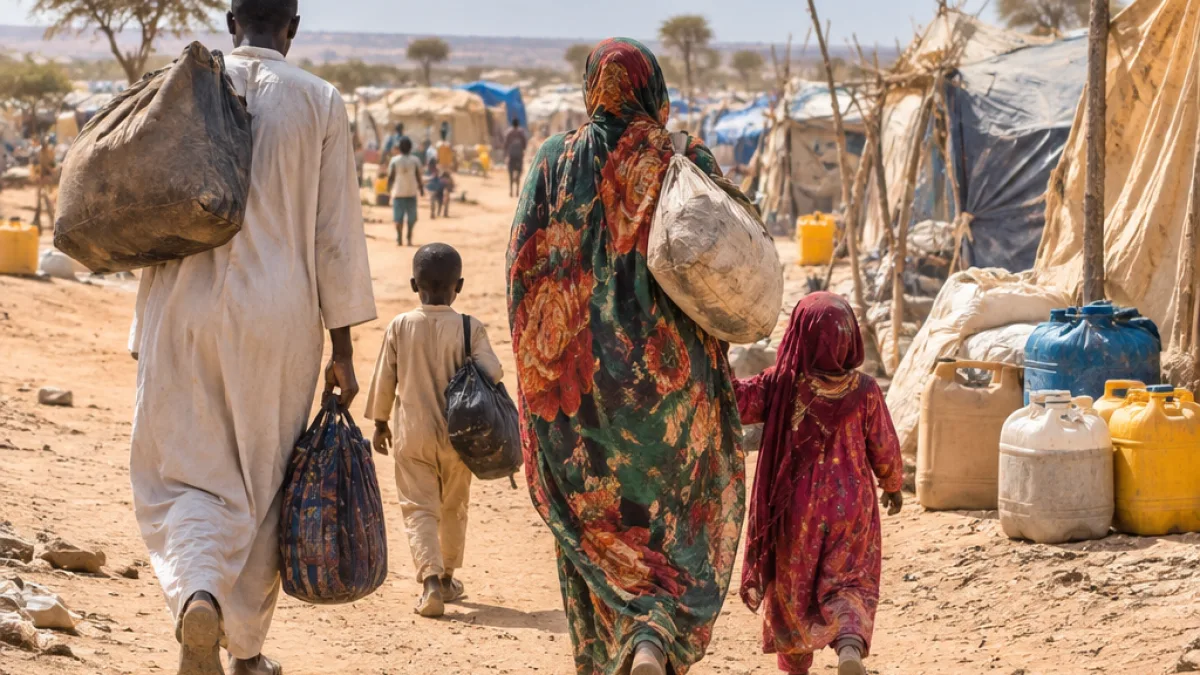
Sudan’s civil war has created the world’s largest humanitarian, displacement and hunger crisis, yet the conflict continues to receive comparatively limited international attention. A new documentary from The Independent reports from the frontlines, documenting the consequences for people caught in one of the most severe emergencies unfolding anywhere in the world.
The film, presented and directed by The Independent’s chief international correspondent Bel Trew, follows the impact of the conflict on communities facing extreme suffering. Its release comes as the United Nations has warned of genocide, underlining the seriousness of a war that has displaced millions and left large numbers of people facing hunger.
A war overshadowed beyond Sudan
The documentary’s central focus is the human cost of a conflict that has struggled to remain prominent in international public debate. Rather than treating the war as a distant political crisis, the reporting places viewers alongside people living through its consequences, showing how violence and instability have shaped an emergency extending across Sudan.
The source material describes the country’s situation as a crisis of extraordinary scale. Millions of people are facing unimaginable suffering, while displacement and hunger have become defining features of the emergency. The film seeks to make that reality harder to overlook by bringing frontline testimony and images to a wider audience.
- Humanitarian impact: Sudan is facing the world’s largest humanitarian, displacement and hunger crisis.
- International warning: The United Nations has raised the prospect of genocide in relation to the conflict.
- Reporting focus: The documentary follows the experiences of people living through the war on the ground.
Reporting from the frontlines
Trew worked on the film with field producer Mohammed Amin. Camera work was carried out by Trew, Sid Ahmed Ibrahim and Dan Faber, while Faber also served as producer. The production team’s approach gives the film a direct, on-location character, with reporting centred on the people experiencing the conflict rather than on official statements alone.
The documentary is presented as an attempt to close the distance between the scale of Sudan’s emergency and the attention it receives abroad. The war’s consequences are described not simply in terms of battlefield developments, but through the displacement, hunger and fear endured by civilians. That perspective is significant in a crisis where the sheer scale of suffering can be difficult to convey through figures alone.
A crisis with consequences beyond the battlefield
Sudan’s emergency is presented in the film as both a national catastrophe and an international humanitarian challenge. Mass displacement places pressure on those forced from their homes and magnifies the demands facing organisations attempting to respond. Hunger adds another layer of urgency, while the United Nations’ warning of genocide points to the potential for still more devastating consequences.
The documentary does not offer a resolution to the war. Instead, it records the conditions in which millions are living and asks why a crisis of such magnitude remains so widely overlooked. Its importance lies in giving visibility to people whose experiences risk being eclipsed by other global events.
| Production | Details |
|---|---|
| Director and presenter | Bel Trew |
| Field producer | Mohammed Amin |
| Producer | Dan Faber |
| Editors | Todd Dalton and Vali Raza |
With warnings of genocide and millions facing hunger and displacement, the scale of Sudan’s suffering is no longer a matter that can be treated as peripheral. The film’s message is direct: the people caught in the war require sustained attention, and the crisis demands recognition equal to its human cost.