Medical advances are beginning to challenge assumptions about how long people can live, but the prospect of humans escaping ageing remains far more uncertain than headlines about immortality may suggest.
New developments in gene editing and gene therapy are already showing how treatments designed around an individual’s biology could change the course of serious disease. Artificial intelligence may accelerate that progress, raising a difficult question for people now in middle age: could they miss out on future breakthroughs by only a few years, while younger generations benefit from longer and healthier lives?
Longer life is not the same as living for ever
The idea of living indefinitely is constrained by more than ageing itself. Even if every disease associated with old age could be treated, people would remain vulnerable to accidents and other external causes of death. The possibility of the universe eventually imposing an ultimate limit also makes literal immortality a different proposition from extending human lifespan.
Biology presents another obstacle. There is an active debate over whether human lifespan has a fundamental ceiling, with many findings pointing towards a limit of roughly 150 years. That does not settle the question of whether people could live substantially longer, healthier lives, but it does underline the difference between improving survival and removing the biological process of ageing altogether.
“Could we be the last generation to die?”
The more immediate scientific question is therefore not whether people will become immortal, but how quickly medicine might produce meaningful gains in health and longevity. The source of those gains may be treatments that target specific biological mechanisms rather than a single cure for ageing.
Early signs from gene-based medicine
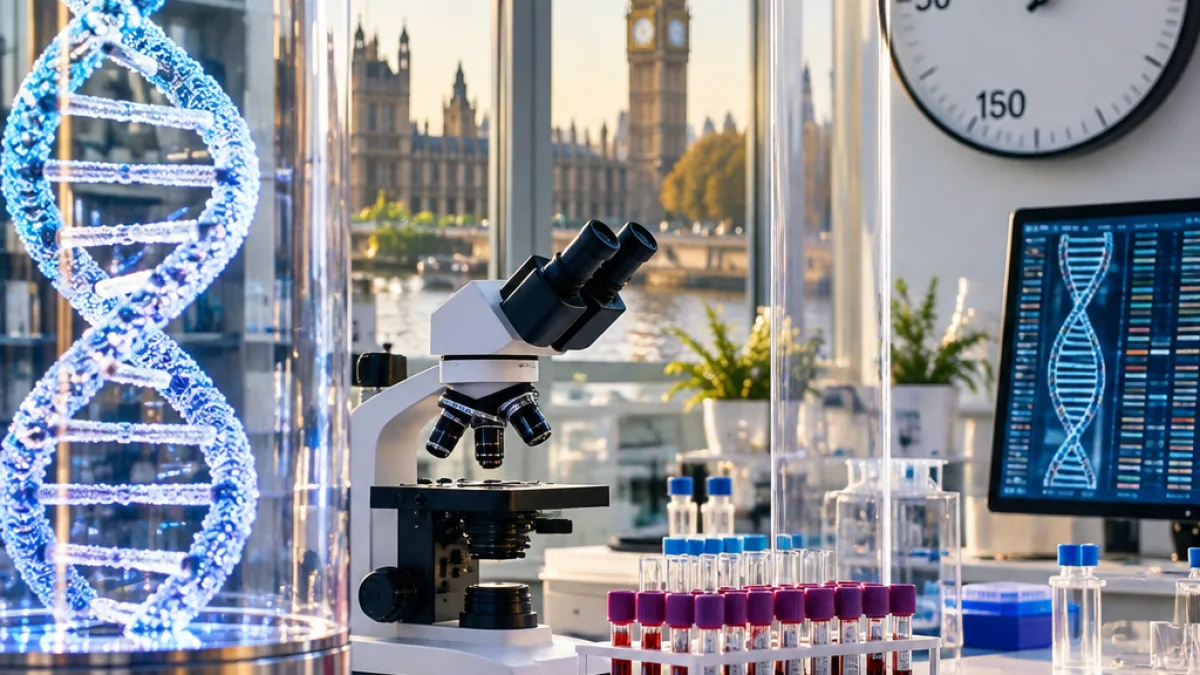
One recent trial involved a gene editor intended to switch off the PCSK9 gene in people’s livers. The treatment dramatically reduced cholesterol, an effect expected to lower the risk of heart disease. It is an example of how changing gene activity could influence a major cause of illness, although the reported result concerns cardiovascular risk rather than an ability to halt ageing itself.
Another case involved a baby, KJ Muldoon, who received a gene therapy created specifically for his condition. So far, he has been developing well and has not required the liver transplant that had been his only other option. The outcome is encouraging, but the account also makes clear that it is an early result rather than proof that gene therapy can routinely extend human life.
What the advances do — and do not — show
These examples point to a future in which medicine could prevent or treat diseases that currently shorten lives. They do not demonstrate that ageing has been cured, nor do they remove the hazards that would remain even if illness were brought under better control.
- Gene editing has been used in a trial to reduce the activity of PCSK9 and lower cholesterol.
- A personalised gene therapy has so far helped KJ Muldoon avoid the liver transplant he otherwise faced.
- Research on lifespan continues amid debate about a possible human limit of around 150 years.
- Artificial intelligence could potentially speed biomedical progress, but its effect on longevity remains uncertain.
The prospect of a widening gap between generations is also unresolved. People who are already middle-aged may benefit from advances still to come, but there is no evidence in the supplied cases that a decisive treatment for ageing is close at hand. The current picture is one of important progress against particular diseases, not a confirmed route to indefinite life.
For now, the most defensible conclusion is that medicine may gradually increase the number of years people spend in good health, while the more dramatic promise of living for ever remains firmly in the realm of speculation.