Andy Burnham has warned that Britain’s international standing has declined since Brexit, as he signalled that Labour could reconsider its existing limits on closer ties with the European Union after the next general election.
In a foreign policy speech, Mr Burnham said he would begin discussions with Brussels about the UK’s future relationship with the bloc following a major summit in the Belgian capital this week. The move could reopen one of the most divisive questions in British politics, although he is expected to argue that Labour will not cross its current red lines before voters are next asked to choose a government.
A longer-term discussion with Brussels
Mr Burnham is expected to outline a range of possible arrangements, including a customs union, participation in the single market and the possibility of fully rejoining the EU. Downing Street sources said his intention was to shape the political debate rather than commit automatically to a final destination.
However, the prime minister’s decision to express a personal preference for rejoining the bloc has already complicated that approach. Some ministers are concerned that a renewed focus on Brexit could reopen arguments that have continued to divide the country. They have suggested that the government should proceed more cautiously rather than move quickly towards reversing the UK’s departure.
“At every stage the British people will be the boss.”
The prime minister has stressed that any process would be gradual and that the public would remain central to decisions about the country’s relationship with Europe. Mr Burnham said the existing agreement had failed to deliver a satisfactory settlement, comparing it to the emperor’s new clothes because, in his view, people had been unwilling to acknowledge its shortcomings.
Economic measures on the immediate agenda
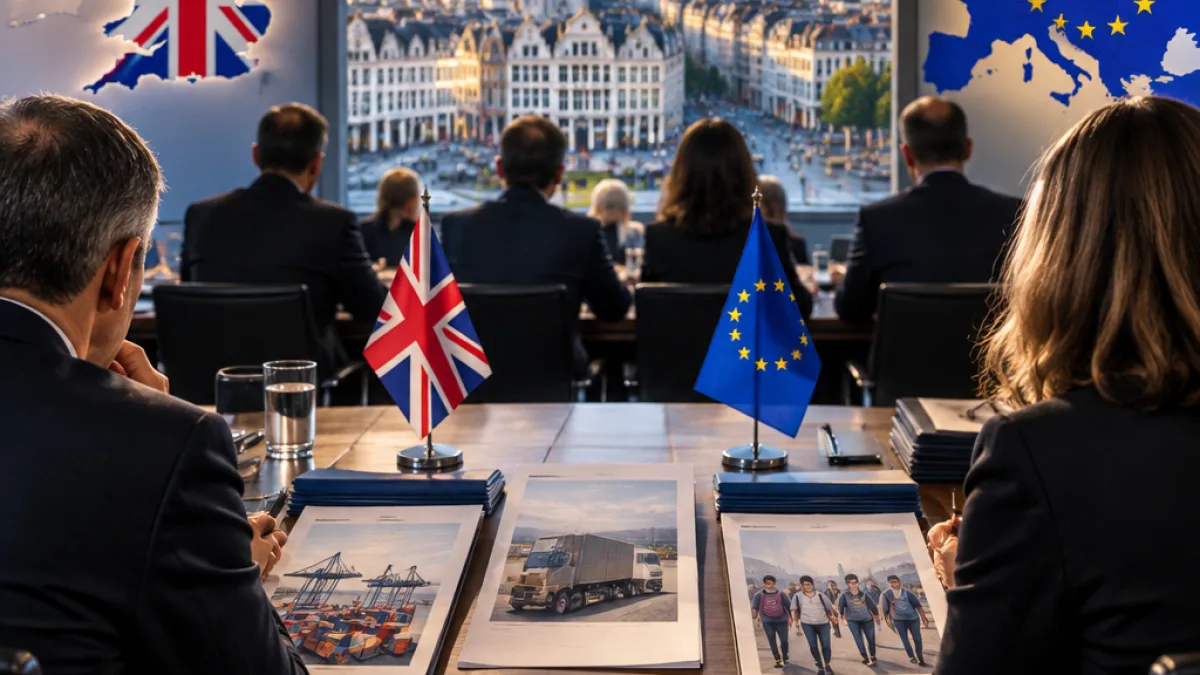
Before any discussion of a fundamental change in Britain’s status, Mr Burnham is due to meet European leaders at Friday’s Brussels summit. He is seeking agreements in areas including food and farming, emissions trading and a youth mobility scheme.
The government says those measures could increase gross domestic product by 0.4%, equivalent to approximately £17 billion. The figures form part of the case for a closer practical relationship with the EU, while stopping short of an immediate commitment to membership of its central institutions.
| Proposal or issue | Position described in the report |
|---|---|
| Near-term approach | Discussions with EU partners after the Brussels summit |
| Possible future models | Customs union, single market or full rejoining |
| Potential economic gain | 0.4% of GDP, or about £17 billion |
| Other measures sought | Food and farming, emissions trading and youth mobility |
Opposition to any move back towards the EU
The prospect of reopening the question has already prompted a response from supporters of Brexit. Two separate campaign groups have been established in recent days to argue that Britain should remain outside the EU if Mr Burnham eventually seeks to reverse the country’s departure.
Former prime ministers Boris Johnson and David Cameron have also warned against the move, despite having taken opposing positions during the Brexit debate. Their interventions underline the political sensitivity of any proposal that could alter the direction set by the existing settlement.
- Labour is expected to keep its current Brexit limits until the next election.
- Ministers are divided over whether a closer European relationship should be pursued cautiously.
- The immediate talks are focused on practical agreements rather than an instant return to the EU.
Mr Burnham’s speech presents the Brussels meeting as the beginning of a process rather than the conclusion of one. He said Britain and the EU had both changed since Brexit, and that their future relationship should be examined accordingly. Any move beyond the current arrangements would therefore require sustained negotiations, political agreement and public consent, while the government faces pressure from both supporters and opponents of closer integration.