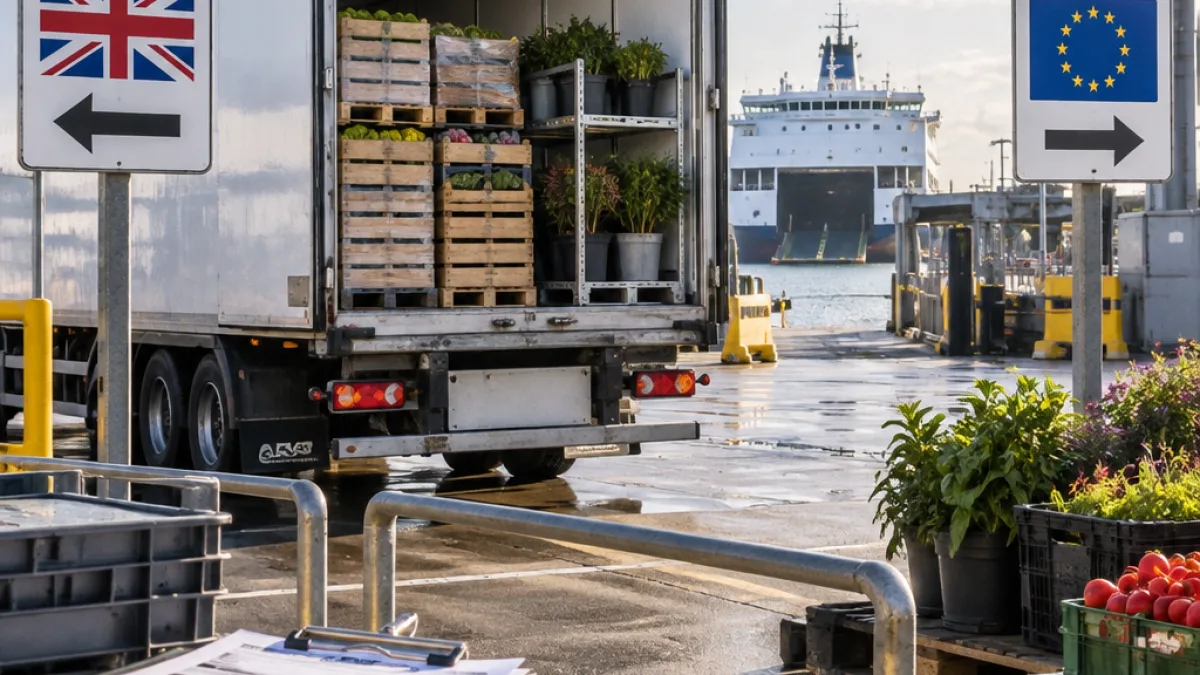
The UK and the European Union have reached a draft agreement covering food and plant products which could significantly alter the operation of the post-Brexit Irish Sea border. The proposed arrangement is expected to remove many checks on goods travelling from Great Britain to Northern Ireland, although it would not eliminate the region’s distinctive trading requirements.
Northern Ireland would remain the only part of the UK required to follow EU customs rules. That continuing divergence is likely to keep the agreement politically sensitive, even if it reduces some of the practical difficulties experienced by retailers and suppliers since Brexit.
What the Irish Sea arrangements mean
The Irish Sea border refers to the checks and controls applied to goods moving into Northern Ireland from the rest of the UK. It was created by the 2019 Brexit agreement between the UK and EU, which sought to avoid a physical border on the island of Ireland while protecting the EU’s single market.
Under that settlement, Northern Ireland follows many EU rules governing goods. In return, products entering Northern Ireland from Great Britain must meet requirements designed to ensure compliance with those rules. This has created additional paperwork and restrictions for businesses moving goods across the Irish Sea, with food and plants facing some of the most extensive bureaucracy.
The original arrangement reflects a central post-Brexit trade dilemma. Keeping the land border between Northern Ireland and the Republic of Ireland open required a different regulatory position for Northern Ireland, but that solution also introduced a new layer of controls within the United Kingdom. The draft deal seeks to reduce some of those frictions without removing the underlying regulatory distinction.
Potential impact on goods and businesses
The agreement is focused on agricultural and food products, areas where compliance requirements can be particularly demanding. If implemented, it could make it easier for retailers and other businesses to move qualifying goods from Great Britain into Northern Ireland by reducing the number of checks and the amount of associated administration.
| Area | Position under the draft arrangement |
|---|---|
| Food and plant shipments | Fewer checks and reduced post-Brexit bureaucracy are expected |
| Northern Ireland’s goods rules | Many EU regulatory requirements would continue to apply |
| UK-wide position | Northern Ireland would retain a different trading arrangement from the rest of the UK |
The practical effect will depend on how the final terms are implemented and on the precise conditions attached to the new system. The available details describe the agreement as a draft, meaning the proposed changes do not amount to a complete removal of Brexit-related controls.
- Trade between Great Britain and Northern Ireland could become less administratively burdensome.
- Northern Ireland would continue to observe EU rules for goods in relevant areas.
- The agreement is unlikely to settle the constitutional and political dispute surrounding the Irish Sea border.
Regulatory influence remains a central dispute
Opponents argue that the UK would be accepting a relaxation of trade restrictions in return for following EU goods standards without having a role in determining those standards. That concern goes beyond individual consignments: it raises questions about how businesses in Northern Ireland will operate as rules evolve in markets with which they trade.
Some unionist leaders also object to Northern Ireland continuing to be treated differently from the rest of the UK. For them, the Irish Sea arrangements represent a constitutional problem as well as a commercial one. By contrast, many nationalists regard the special arrangements as a necessary compromise that limits the disruption caused by Brexit and helps preserve the open border on the island of Ireland.
“Northern Ireland would still be the only part of the UK that must follow EU customs rules.”
The proposed deal therefore offers a potentially important operational improvement, but not a definitive settlement. It could reduce the immediate burden on companies supplying Northern Ireland while preserving the regulatory framework that created the Irish Sea border in the first place.
For businesses, the key question is whether fewer checks translate into a sufficiently predictable trading system. For politicians, the more difficult issue is whether that practical relief can be accepted alongside continued EU rule alignment and Northern Ireland’s separate position within the UK. The draft agreement leaves both questions unresolved.