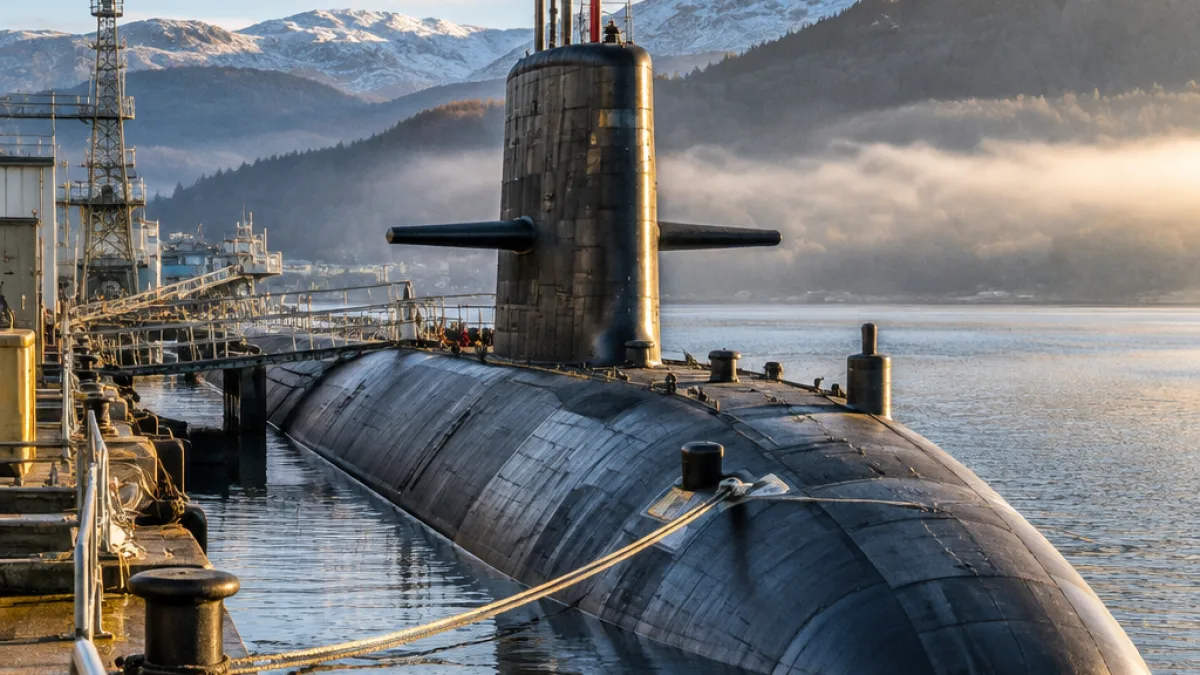
HMS Vengeance has returned to the Faslane naval base after spending a record 217 days submerged, completing the longest known deployment by a British Trident submarine. The vessel began its patrol on 12 April and arrived back in Scotland on Sunday, where its crew was welcomed by Defence Secretary Wes Streeting.
The mission lasted 12 days longer than the previous record, set by HMS Vanguard at 205 days. Its duration has drawn attention to the pressures placed on submariners and to the condition of the ageing vessels responsible for maintaining the UK’s nuclear deterrent.
A patrol far beyond the original design
The Vanguard-class boats were introduced in the 1990s and were originally built around deployments lasting roughly three to four months. A tour of more than 100 days was regarded as a demanding assignment at the time. HMS Vengeance’s latest patrol therefore represents a substantial extension of the period crews are required to remain beneath the sea, away from their families and without normal contact with the outside world.
David Cullen, a nuclear expert at the Basic thinktank, said the increasing length of patrols was connected to the strain on both personnel and the submarine fleet.
“Patrols are getting longer and longer. The fleet was designed around three-month tours, and that was considered to be a long time to be stuck underwater in a metal box with no contact with the outside world.”
The longer missions reflect delays in submarine maintenance. With one boat required to remain at sea at all times, extended patrols can place additional demands on the vessels available for service. The situation has led Labour to blame Conservative spending reductions, while naval chiefs have maintained that measures are in place to improve the position.
Continuous deterrence
HMS Vengeance is one of four submarines that carry Britain’s Trident nuclear missiles. The arrangement is intended to ensure that a boat is permanently deployed, allowing the UK to retain the ability to launch a retaliatory strike even if land-based systems had been destroyed during a nuclear conflict.
That policy makes the condition and availability of the submarine fleet a matter of national security. Any disruption to maintenance schedules has consequences beyond the individual vessel involved, because the deterrent depends on a continuing rotation of boats and crews.
| Measure | Figure |
|---|---|
| HMS Vengeance patrol began | 12 April |
| Time submerged | 217 days |
| Previous record, HMS Vanguard | 205 days |
| Submarines carrying Trident missiles | Four |
Political recognition and crew concerns
Mr Streeting was accompanied at Faslane by First Secretary of State Lou Haigh as the returning sailors were received. He said the length of the deployment did not sit lightly with him and expressed gratitude for the crew’s commitment, expertise and professionalism.
The defence secretary described Britain’s nuclear patrols as the “ultimate national endeavour” and praised the submariners for what he called dedicated and heroic service. His comments placed the return within the wider political argument over the deterrent, while also acknowledging the personal cost of keeping it operational.
The record patrol has brought that cost into sharper focus. The crew of a Vanguard-class submarine is about 140 people, and those personnel must sustain round-the-clock duties during months underwater. The deployment also illustrates the tension between the strategic requirement for an uninterrupted deterrent and the original assumptions about how long crews and boats would remain at sea.
HMS Vengeance’s return does not end the patrol cycle. Another submarine must continue the standing deployment, preserving the policy that at least one Trident boat is ready at sea. The record set by the vessel has consequently become both a public recognition of the crew’s endurance and a warning about the pressures created when maintenance does not keep pace with the demands of continuous deterrence.