Parliament's Public Accounts Committee has questioned the slow implementation of the Green India Mission, after finding that only about 5 per cent of its forest-restoration target had been achieved over the past decade. The panel has asked the Ministry of Environment, Forest and Climate Change to submit a time-bound plan for implementing the mission's goals.
The issue was examined at a meeting in New Delhi on Thursday while the multi-party committee reviewed the Comptroller and Auditor General's performance audit of the programme. The panel, led by senior Congress MP K C Venugopal, also discussed the mission's progress across 16 States and Union Territories.
Target and actual progress
The Green India Mission is one of the national missions under the National Action Plan on Climate Change. It was designed to increase forest coverage and support the country's response to climate change. According to the figures discussed by the committee, the mission had set a goal of restoring 2.8 million hectares. However, work had been completed on only 0.148 million hectares as of March 2025.
| Indicator | Figure |
|---|---|
| Forest-restoration target | 2.8 million hectares |
| Area covered by March 2025 | 0.148 million hectares |
| Progress reported | About 5% |
The target was set in 2014, with the intended completion year being 2018. The committee's review has brought renewed attention to the gap between the mission's stated objectives and work carried out on the ground. It also questioned the deployment of funds and the absence of concrete action to meet the programme's commitments.
“The Committee was dissatisfied with the progress of this Mission and the Ministry's lack of concrete action in this regard.”
Venugopal said the mission's intended restoration covered 2.8 million hectares, but the money was not deployed and only 5 per cent of the targets had been achieved. The committee has sought a specific implementation roadmap, rather than continuing with targets that remain largely on paper.
Air pollution and forest loss
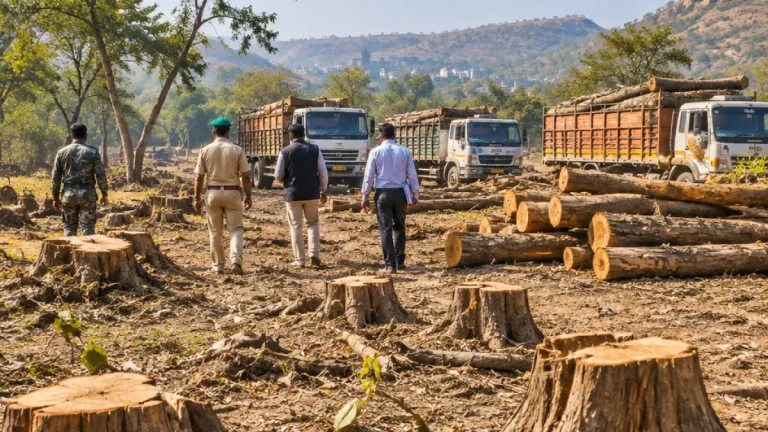
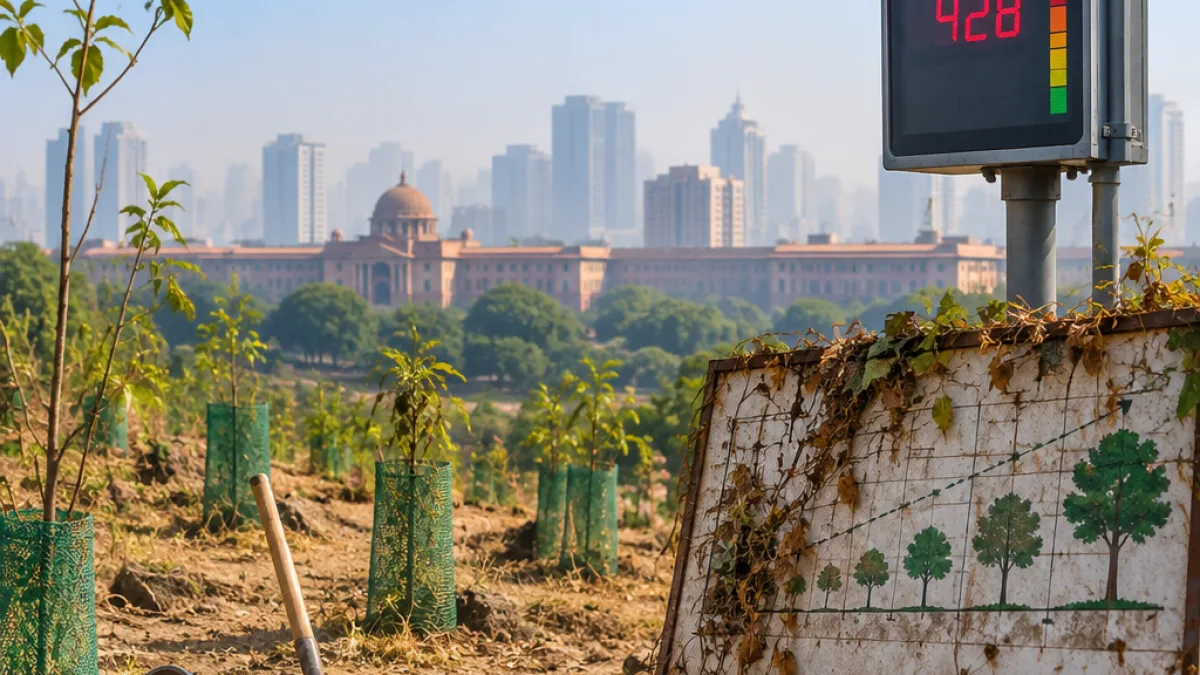
The review also linked the mission's weak performance to wider environmental pressures, particularly in the Delhi-National Capital Region. Venugopal said the region's air quality index had crossed 400, a level beyond the severe category, and that such readings had become routine. He identified deforestation in the Aravallis and nearby areas as one of the reasons for the region's environmental stress.
The concerns point to the close relationship between forest restoration, climate resilience and public health. Delays in restoring degraded landscapes can affect the capacity of ecosystems to support clean air and regulate local environmental conditions. The PAC's intervention places the mission's performance within that larger national challenge, rather than treating it only as an administrative shortfall.
The Environment Ministry has committed to bringing revised guidelines for Cabinet approval soon. The proposed revision will be closely watched because the committee has asked for a plan with clear timelines. For the mission to regain momentum, the immediate test will be whether its revised framework converts the original national commitment into measurable work across the States and Union Territories already under review.
The PAC's findings underline the urgency of moving from broad policy announcements to accountable restoration on the ground. With the mission falling substantially short of its earlier deadline and the country continuing to face severe air pollution in the national capital region, the committee's demand for a concrete plan adds parliamentary pressure to an environmental programme central to India's climate response.