A molecular test designed to detect tuberculosis closer to the patient is awaiting regulatory clearance in India after CoSara Diagnostics submitted its clinical performance study to the Central Drugs Standard Control Organization (CDSCO). The company expects a decision in the fourth quarter of 2026, subject to the regulator’s review and any additional requirements it may raise.
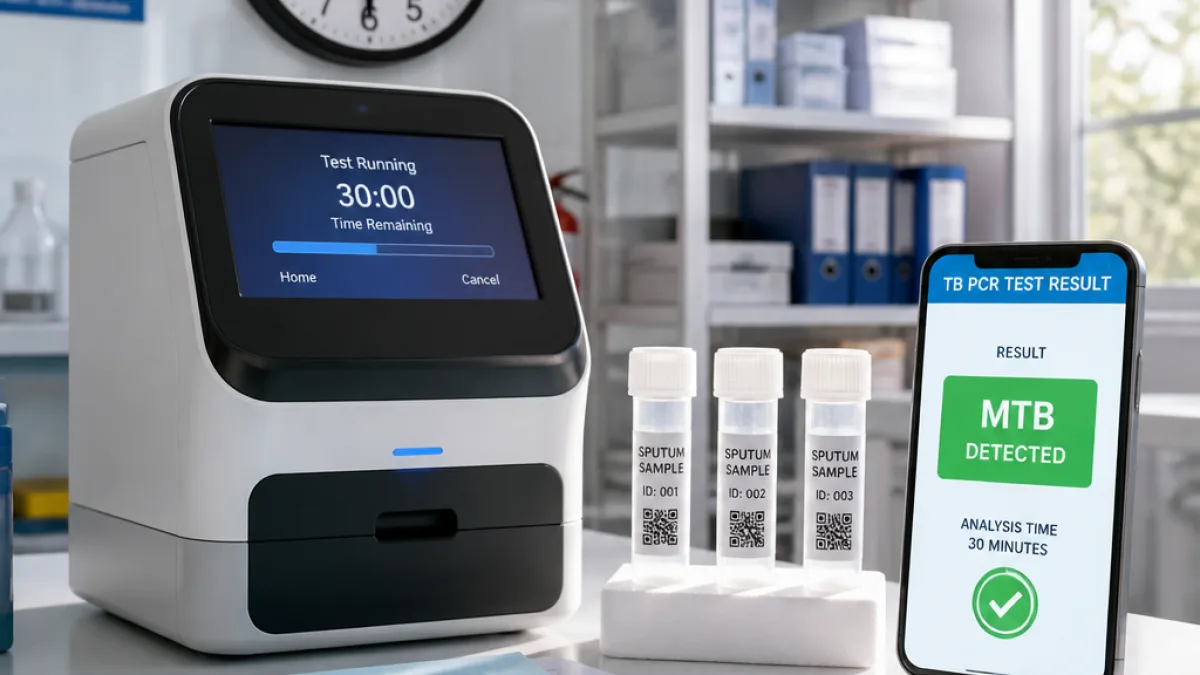
The CoSara PCR Mycobacterium tuberculosis test is intended to work with the compact CoSara PCR Pro real-time PCR instrument. According to the company, the system can produce a result in approximately 30 minutes and displays the analysis through a mobile application. If approval is granted, commercial sales could begin in India before the end of the year.
Clinical evaluation and performance
The evaluation was conducted at selected laboratories in India. A total of 676 clinical samples were assessed, while 233 samples were paired with MGIT, or mycobacterial growth indicator tube, culture testing to provide comparative results against the reference method.
The company reported average sensitivity of 97.3 per cent and average specificity of 96.0 per cent for TB detection. Sensitivity indicates how effectively a test identifies people who have the disease, while specificity reflects how well it distinguishes people who do not have it. The study also recorded consistent results across three separate test batches, which the company has presented as evidence of reproducibility in manufacturing.
| Study parameter | Reported finding |
|---|---|
| Clinical samples assessed | 676 |
| Samples paired with MGIT culture | 233 |
| Average sensitivity | 97.3 per cent |
| Average specificity | 96.0 per cent |
| Approximate turnaround time | 30 minutes |
Designed for decentralised testing
The study began in July 2026, when PCR Pro instruments, MTB test kits and sample-preparation equipment were placed in Indian laboratories for evaluation. The proposed system is not limited to a conventional central laboratory workflow. Test analysis is carried out on a mobile device, while the associated digital infrastructure is designed to continue operating when there is no continuous internet connection.
Results can be synchronised with the cloud when connectivity becomes available. This feature is intended for settings where internet access may not be uninterrupted. It also allows the platform to combine testing at the point of care with digital reporting and data storage, according to the company.
The potential public-health significance lies in the time between collecting a sample, processing it and communicating the result. The company’s material notes that delays in this chain can extend to weeks. A test that provides a molecular result in about half an hour could, if cleared and implemented appropriately, bring diagnosis closer to patients and reduce dependence on a centralised laboratory for the initial testing step.
- The test is intended to detect Mycobacterium tuberculosis using real-time PCR.
- The system combines a compact instrument with mobile-based result analysis.
- Its operation is designed to continue offline and synchronise data later.
- Commercial availability depends on CDSCO approval.
Regulatory decision remains pending
The clinical dossier has been filed, but submission does not amount to approval. CDSCO will assess the evidence and may seek further information or impose additional requirements before deciding whether the test can be marketed in India. The company’s projected launch timeline therefore remains contingent on the regulatory process.
The reported study findings establish the performance claimed by the developer in the evaluated samples, but wider use will depend on regulatory clearance, deployment in suitable healthcare settings and the ability of facilities to operate the equipment and manage the associated digital results. Until the review is complete, the test remains an investigational product awaiting authorisation for commercial sale in India.