Prime Minister Narendra Modi set aside his familiar kurta-pyjama and jacket for an evening in the Philippines’ traditional formalwear, appearing in a Barong Tagalog at a gala dinner in Manila. The occasion, hosted by Philippine President Ferdinand Marcos Jr on Monday, November 16, brought together visiting world leaders and dignitaries attending the 49th ASEAN Summit.
Modi is in the Philippines for the annual India-ASEAN Summit. His decision to wear a garment closely associated with the host country’s national identity added a quietly personal dimension to the formal gathering. Rather than arriving in his customary Indian attire, he chose a Filipino style that acknowledged the setting and the ceremonial character of the evening.
A formal look rooted in Filipino tradition
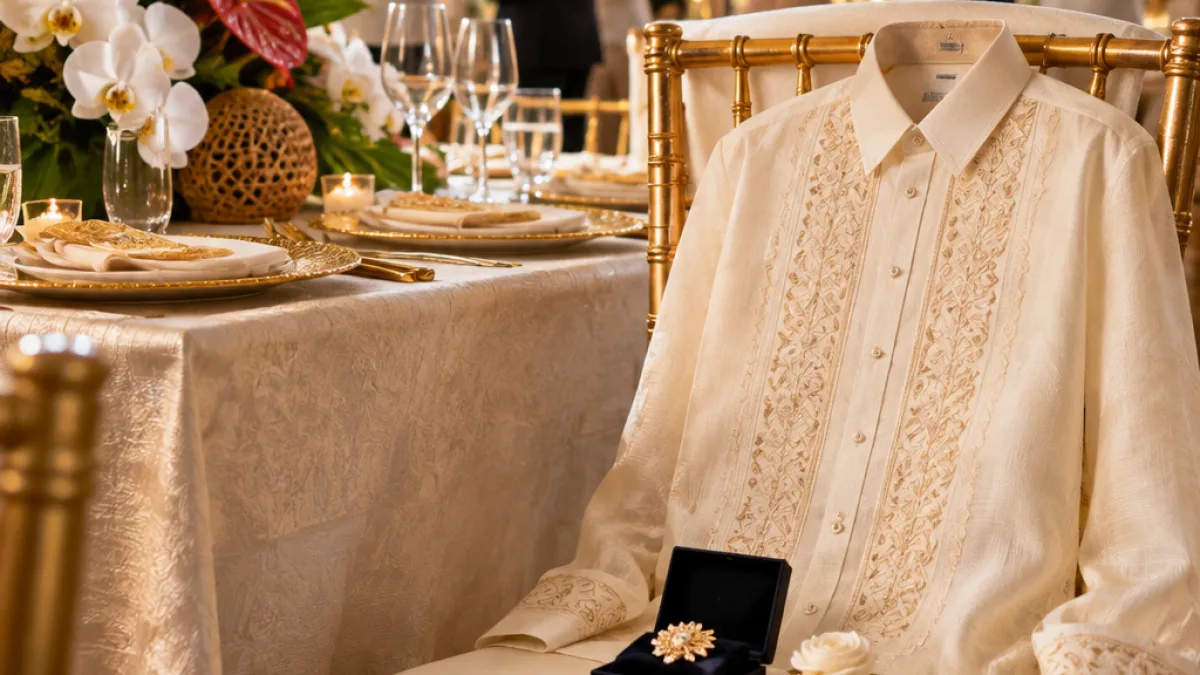
The Barong Tagalog is a traditional men’s garment in the Philippines, worn for weddings, official ceremonies and other important occasions. At the Manila dinner, Modi’s version was a collared, button-down shirt marked by tonal embroidery. The design featured elaborate floral and swirling motifs, giving the otherwise restrained silhouette a detailed, festive finish.
He paired the outfit with a gold-toned brooch and a colourful rose-shaped lapel pin with green detailing. The accessories brought a small but visible note of contrast to the embroidered shirt, while retaining the polished character expected at a diplomatic gala. Philippine President Marcos Jr was also dressed in a Barong Tagalog, creating a shared visual thread between the host and the visiting Prime Minister.
| Detail | What was seen at the gala |
|---|---|
| Garment | Traditional Filipino Barong Tagalog |
| Design | Collared shirt with tonal floral and swirling embroidery |
| Accessories | Gold-toned brooch and rose-shaped lapel pin with green detailing |
| Occasion | Gala dinner hosted by Philippine President Ferdinand Marcos Jr |
What makes the Barong distinctive
Unlike a conventional shirt, the Barong Tagalog is generally lightweight and may be slightly sheer. It is designed to be worn untucked over trousers, giving it an easy, flowing shape even when used for highly formal occasions. That combination of comfort, craftsmanship and ceremony has helped the garment remain central to Filipino dress culture.
Traditional versions may be made from delicate textiles such as piña, a fabric derived from pineapple leaf fibres, or jusi, a fine material historically associated with silk and other fibres. Contemporary versions can also use other materials. Across these variations, the embroidery remains one of the garment’s most recognisable features, transforming a simple shirt-like form into a piece suited to milestone events and public occasions.
- Lightweight construction: the garment is intended to remain comfortable while retaining a formal appearance.
- Untucked styling: it is worn over trousers rather than tucked in like an ordinary formal shirt.
- Embroidered finish: floral and other decorative motifs give the garment its distinctive identity.
- Ceremonial use: it is worn at weddings, official functions and other special occasions in the Philippines.
Clothing as a gesture of connection
At an international dinner, clothing often communicates before a speech begins. Modi’s Barong Tagalog brought the visual language of the host country into India’s representation at the gathering, while President Marcos Jr’s matching choice reinforced the shared setting. First Lady Louise Araneta-Marcos wore an ivory gown with striking blue embroidery, adding another carefully considered element to the evening’s formal dress.
The moment also offered a reminder that traditional clothing can move comfortably between heritage and contemporary public life. The Barong’s delicate fabric, untucked cut and elaborate needlework distinguish it from standard Western formalwear, yet its place at a summit gala shows how regional dress can carry authority on an international stage. For Indian viewers, Modi’s choice presented a familiar idea in a different form: respect for a host nation can be expressed through the details of what one wears.
During his Manila visit for the ASEAN engagement, the Prime Minister’s attire therefore became more than an evening change of clothes. It was a carefully placed gesture of cultural acknowledgement—formal, understated and rooted in the Philippines’ own sartorial tradition.