Tributes to tribal icons
Jammu and Kashmir Lieutenant Governor Manoj Sinha on Saturday extended greetings to the people of Jharkhand on the state’s Foundation Day and Janjatiya Gaurav Diwas, using the occasion to recall the contribution of tribal communities to India’s freedom struggle and cultural life.
Addressing a gathering in Jammu, Sinha paid homage to Bhagwan Birsa Munda and other tribal leaders who resisted colonial rule and fought to protect the identity, traditions and rights of their communities. He said Birsa Munda’s legacy continued to represent ideals of self-respect, justice and empowerment.
The Lieutenant Governor said the observance of 15 November as Janjatiya Gaurav Diwas reflected the country’s recognition of the role played by tribal communities in the freedom movement. The day also provides an occasion to remember the sacrifices of tribal figures whose struggles shaped public debates around dignity, rights and social justice.
Jharkhand’s separate identity
Sinha also recalled the contribution of former Prime Minister Atal Bihari Vajpayee to the creation of Jharkhand as a separate state. He described the formation of the state as a historic step that opened a new phase in its development journey.
In outlining Jharkhand’s political and cultural history, he referred to the sacrifices of Baba Tilka Manjhi, the leaders of the Santhal Rebellion and Birsa Munda. Their movements, he said, inspired successive generations in the pursuit of justice and dignity.
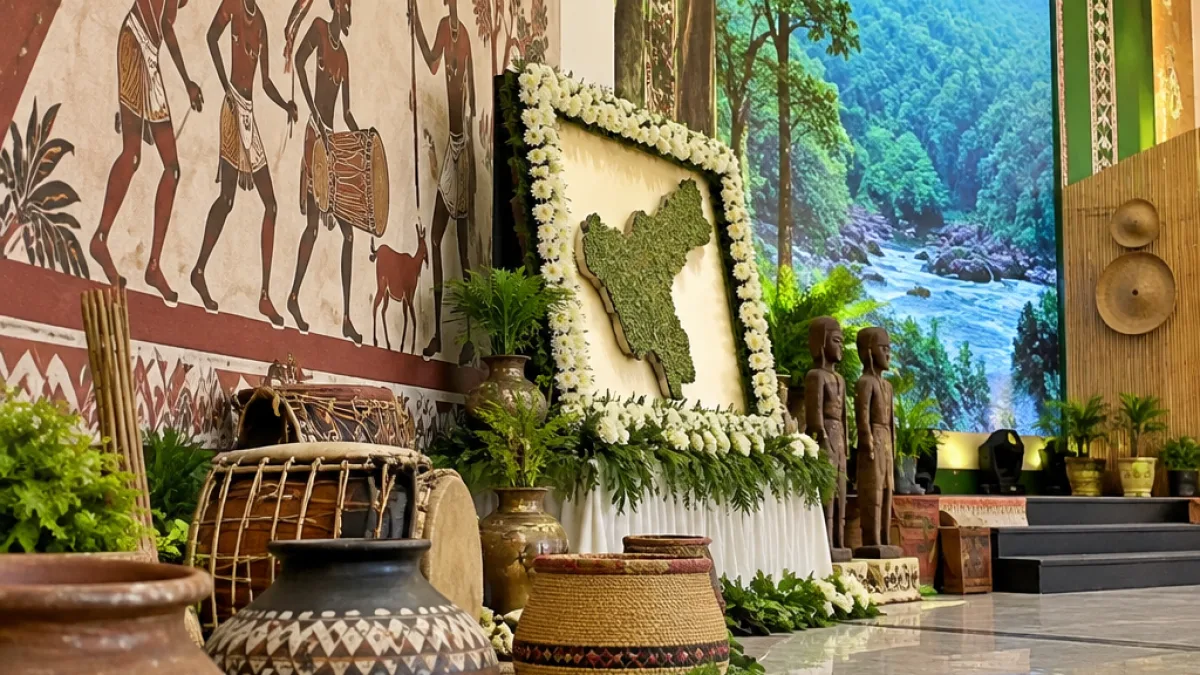
The message placed the state’s distinct identity within the setting of its natural and cultural landscape. Sinha noted that Jharkhand’s character was shaped by its rivers, forests, mountains, traditions, languages and folk culture. He also stressed that the relationship between tribal communities and nature held lessons for the wider world as countries confronted the challenge of climate change.
Culture, environment and development
Preserving linguistic and cultural heritage was described as an important part of safeguarding identity and collective memory. The reference assumes significance for communities whose traditions are expressed not only through written records but also through languages, art forms, customary practices and oral histories.
Sinha highlighted the importance of Jharkhand’s diverse folk traditions, artistic forms and languages, while drawing attention to the need to protect them. His remarks connected cultural preservation with the broader question of how India recognises the contribution of tribal communities to its national life.
The Lieutenant Governor also acknowledged Jharkhand’s contribution to India’s industrial growth, energy security and infrastructure development. The state’s role in these sectors was placed alongside its historical and cultural importance, underlining the multiple dimensions of its place in the national economy.
- 15 November: Jharkhand Statehood Day and Janjatiya Gaurav Diwas
- Key historical figure: Bhagwan Birsa Munda
- Areas highlighted: Tribal history, cultural preservation, climate concerns and development
At the close of his address, Sinha urged citizens to uphold constitutional values. The appeal linked the commemoration of Jharkhand’s statehood and tribal heritage with the broader responsibilities of citizenship and public life.
The observance thus brought together three themes: remembrance of tribal resistance, protection of cultural and linguistic diversity, and recognition of Jharkhand’s economic contribution. By invoking both Birsa Munda’s struggle and the state’s role in industrial and infrastructure development, the message presented Jharkhand’s identity as rooted simultaneously in history, community, nature and national progress.