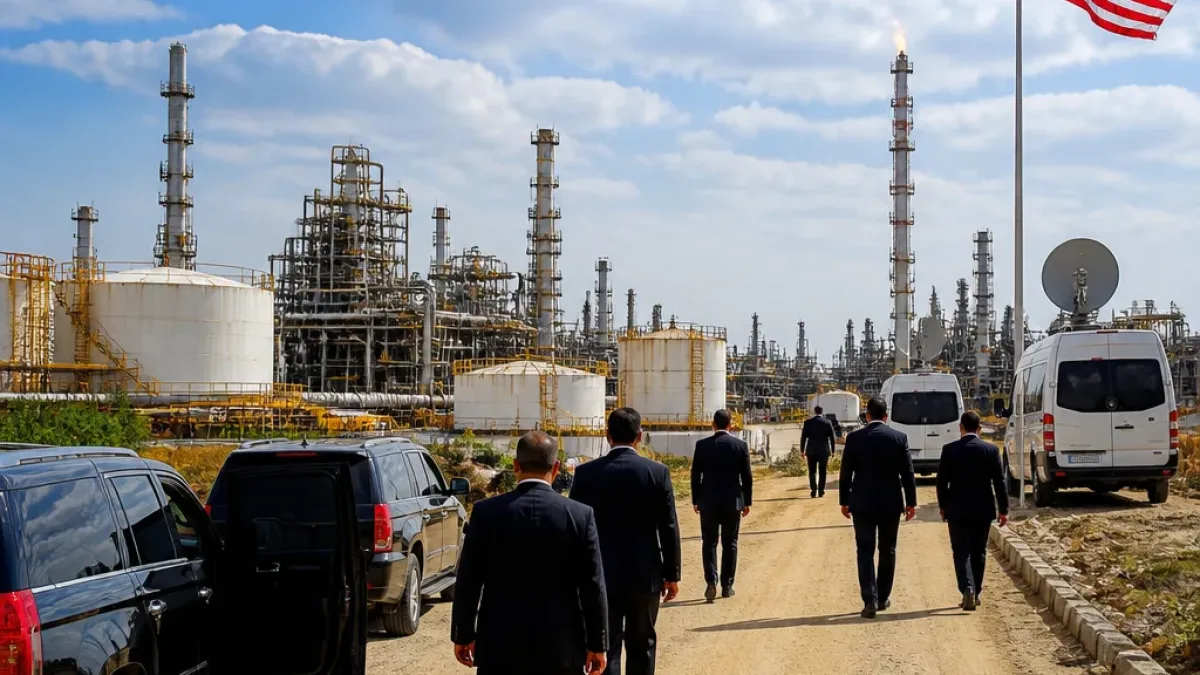
US Secretary of State Marco Rubio began a three-day visit to India with a stop in Mumbai and will travel to Jamnagar to inspect the Reliance Industries refinery that processes large volumes of Russian crude, official schedules and industry reporting showed.
Visit centres on energy links and stalled trade talks
The itinerary — which skips New Delhi for the moment in favour of the finance hub of Mumbai and the western refinery complex — comes as Washington and New Delhi remain at odds over punitive measures related to India’s continued purchases of Russian oil. The Jamnagar refinery, owned by Reliance, can process 1.4 million barrels of crude a day, making it a major exporter of diesel and a central node in India’s energy relationship with Russia, according to the reporting.
Reliance has also been identified as a notable buyer of Venezuelan oil, and its refining complex has been a significant purchaser of Russian Urals crude. The scale of the refinery’s throughput and its role in global diesel shipments will make the visit closely watched by observers in New Delhi and Washington for signals on bilateral energy and trade policy.
- Itinerary: Visit begins in Mumbai, followed by Jamnagar refinery inspection.
- Refinery capacity: 1.4 million barrels per day.
- Energy ties: Major buyer of Russian Urals and Venezuelan crude.
Trade deal prospects and a proposed US refinery
The visit comes against the backdrop of an elusive larger trade settlement. In February 2026, President Donald Trump announced a “trade deal” that reduced US tariffs on Indian goods in return for India lowering certain trade barriers and halting purchases of Russian oil, according to the reporting. President Trump claimed that Prime Minister Narendra Modi had agreed to stop buying Russian oil — a claim the reporting said New Delhi has not confirmed.
“Lindsey O. Graham Sanctioning Russia and Iran Act,”
Industry and maritime intelligence cited in the reporting said Indian refiners briefly diversified away from Russian supplies in response to tightening sanctions, but that India’s reliance on discounted Russian crude has remained a cornerstone of its energy strategy. The reporting also noted that Russia remains India’s top supplier of crude oil.
Separately, Washington and Reliance have discussed an ambitious US refinery project. The reporting said President Trump put the value of that proposed plant in Texas at $300 billion and promoted it as a way to help reduce the US trade deficit with India. Whether the project proceeds, and under what terms, will be monitored closely in both capitals.
| Item | Detail |
|---|---|
| Jamnagar refinery capacity | 1.4 million barrels per day |
| Proposed US refinery value (as stated) | $300 billion |
| Key crude sources | Russian Urals, Venezuelan crude |
Implications for policy and diplomacy
The stop at Jamnagar underscores three policy tensions: Washington’s efforts to deter third‑party purchases of Russian energy; India’s energy security calculus that leans on discounted supplies; and the stalled bilateral trade negotiations that hinge in part on these energy choices. Any public messaging or private assurances emerging from the visit are likely to be parsed for what they imply about the future of sanctions diplomacy and the feasibility of a broader trade package.
Observers will be watching for statements from both sides after the visit and for any concrete movement on the proposed Texas refinery project, which, if pursued, would recast parts of the economic relationship between the two countries. For now, the visit places India’s crude sourcing choices and Reliance’s refining role at the centre of a complex diplomatic and commercial dialogue.