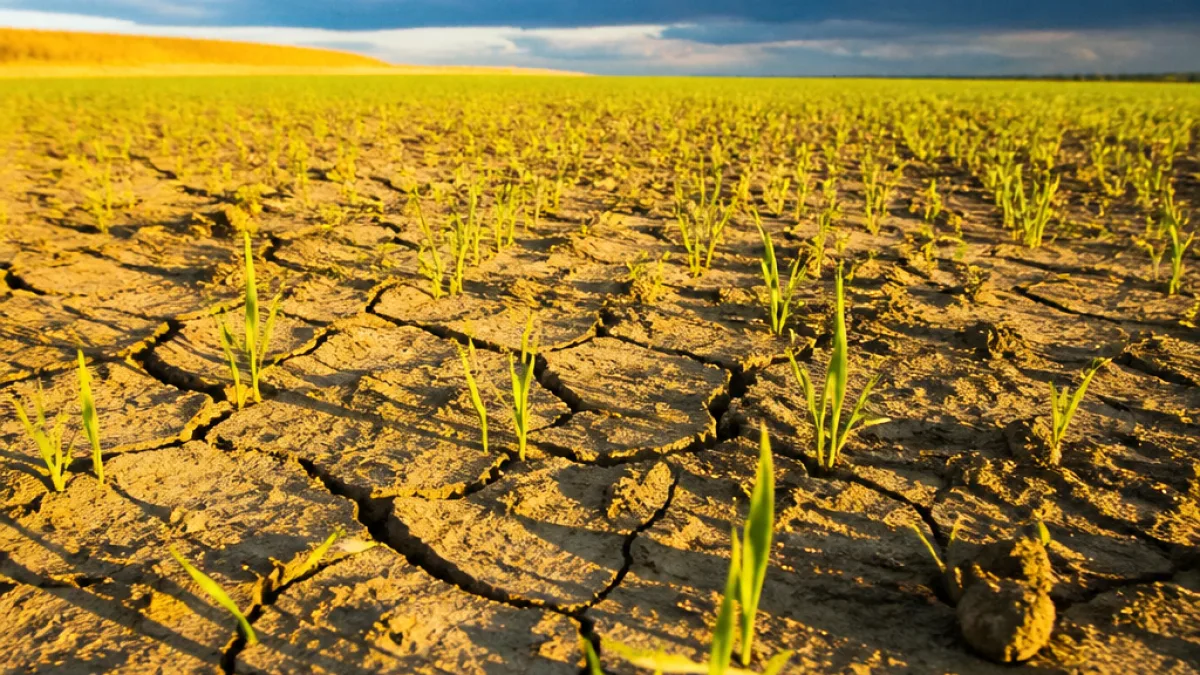
Drought conditions remain entrenched across much of Barton County and surrounding areas, even as an unusually mild autumn continues to shape prospects for winter wheat and livestock. The latest drought monitor report, dated Tuesday, Oct. 27, shows little movement over the preceding two weeks, with almost half of Barton County and broad areas to the south classified from moderate to severe drought.
The northern third of the county is described as exceptionally dry. That lack of meaningful improvement is set against a forecast that tilts warmer and somewhat wetter than normal through the first half of November. The outlook offers potential relief, but the expected precipitation would have to overcome a substantial moisture deficit.
A warmer and potentially wetter start to November
For Nov. 3 to 7, the six- to 10-day forecast gives a 33 to 50 per cent probability of temperatures leaning above normal. It also assigns a 40 to 50 per cent chance that precipitation will be above normal. The eight- to 14-day forecast, covering Nov. 5 to 11, keeps the warmer signal in place, with a 40 to 50 per cent chance of above-normal temperatures and a 33 to 40 per cent chance of above-normal precipitation.
| Forecast period | Temperature outlook | Precipitation outlook |
|---|---|---|
| Nov. 3–7 | 33–50% chance of above normal | 40–50% chance of above normal |
| Nov. 5–11 | 40–50% chance of above normal | 33–40% chance of above normal |
In this region, above-average temperatures mean daytime highs in the upper 70s. That warmth is not necessarily harmful to newly seeded wheat. With no hard frost expected soon, later-planted fields could have additional time to develop roots and tillers, the shoots that help determine a plant's eventual structure.
Benefits for late-planted wheat, but moisture remains a concern
The forecasted combination of moderate warmth, possible rain and a delayed killing frost could support establishment of the 2027 wheat crop, particularly where planting occurred later than usual. Declining daylight is already slowing plant growth, and that seasonal change contributes to the development of winter hardiness without stopping the crop's progress altogether.
However, the precipitation outlook should be kept in perspective. Normal precipitation for October and November in the area is less than two inches. Even if rainfall comes in above normal, that benchmark is relatively modest, and the source cautions that a small improvement would not automatically erase the existing drought. The latest monitor's limited change underscores how difficult it has been to rebuild soil moisture.
- Potential gain: warm conditions and rain could help late-planted wheat establish roots and tillers.
- Potential loss: prolonged warmth could encourage excessive growth above ground and draw down moisture needed in spring.
- Additional concern: mild autumn weather can leave crops exposed to greater pressure from insects and some diseases.
Trade-offs extend beyond the crop
Continued warmth could produce too much top growth before winter, using water that would otherwise remain available when the crop resumes growth in spring. The same conditions may also increase fall pest pressure, with insects identified as a particular concern. Barley yellow dwarf and other diseases are listed among the possible threats.
The lack of a hard frost is also notable. The area has experienced one light frost, but no severe, crop-killing freeze is expected in the near term. Such a late season has occurred in recent memory, although this year is characterized as particularly delayed. The extended open weather presents a mixed picture: it may help plants establish, but it also lengthens the period in which pests and disease can remain active.
For cattle producers, the mild conditions may be more straightforwardly useful. The source says the open weather should provide better opportunities for grazing winter cereals, assuming forage is available. That possible benefit comes while drought continues to affect the broader landscape, leaving producers to balance improved autumn access with the need to conserve moisture and protect future growth.
Overall, the outlook is neither a clear end to drought nor an unqualified benefit for agriculture. Wheat has time and favourable temperatures to establish, and rainfall above normal could help, but the region remains unusually dry. The next several weeks will determine whether the forecast precipitation meaningfully improves conditions or whether the warm autumn instead accelerates water use and increases pressure from pests and disease.