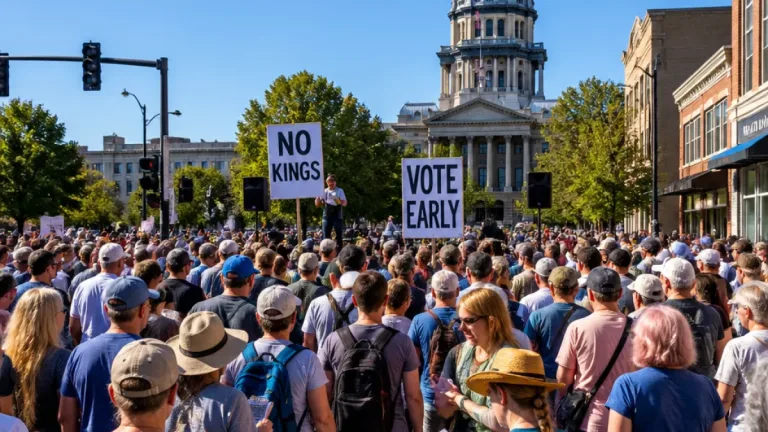
Alberta voters head to the polls Monday in a referendum that asks the province 10 questions, including a measure on whether the province should pursue a binding second referendum on separation from Canada.
What’s on the ballot
The referendum, first unveiled by Premier Danielle Smith, originally comprised nine questions focused on immigration and potential changes to the Constitution. On May 21, Smith announced a tenth question addressing the prospect of a second, binding referendum on separation.
Organizers say the vote will affect not only Alberta policy but could have broader implications for federal-provincial relations across the country. The central public debate is well captured by the question posed throughout the campaign:
"Do we stay or go?"
Logistics and coverage
More than 1,400 polling stations are to be open across the province, with voting hours scheduled from 9 a.m. to 8 p.m. Electors who are still in line at 8 p.m. will be permitted to cast their ballots. While advance voting allowed ballots to be cast at any advance location within an electoral division, on election day voters must attend their assigned voting location; electors are not permitted to vote outside their electoral division.
National and local media are staging extensive coverage. Global News has announced dedicated live analysis beginning at 8 p.m. MT, featuring anchors and political reporters providing running results and commentary. Simultaneous television coverage is scheduled to begin on all Global News stations in Alberta at 9 p.m.
- Ballot items: 10 questions — immigration, constitutional changes, and separation.
- Polling stations: more than 1,400 across Alberta.
- Voting hours: 9 a.m. to 8 p.m.; those in line at 8 p.m. may still vote.
National stakes and accountability
The referendum’s inclusion of a separation question elevates the vote from a province-wide policy exercise to an event with potential national consequences. While the federal government has legal and constitutional frameworks governing secession and changes to federation arrangements, the referendum itself will be closely watched in Ottawa and in other provinces as an indicator of Alberta public opinion on federal ties.
Premier Smith’s decision to add the tenth question in May intensified debate over the referendum’s scope and purpose. The original nine questions were framed around immigration and constitutional adjustments; the later addition of a binding separation question has sharpened partisan and public scrutiny of the provincial government’s intentions and the referendum’s potential impact.
How results will be reported
Broadcasters and online outlets are committed to in-depth, up-to-the-minute reporting. Coverage plans include live analysis, a political panel, and on-the-ground reporting from multiple Alberta communities. Results reporting will follow the close of polls and will be presented across broadcast and streaming platforms.
| Item | Detail |
|---|---|
| Number of questions | 10 |
| Polling stations | Over 1,400 |
| Voting hours | 9 a.m. to 8 p.m. (those in line at 8 p.m. may still vote) |
As results roll in, the referendum will test both provincial political strategies and the durability of national institutions in responding to high-stakes expressions of regional sentiment. Media and political observers will be parsing turnout, question-by-question outcomes and the immediate responses from leaders in Alberta and Ottawa.
With ballots covering a mix of immigration, constitutional and secession-related topics, the referendum represents a significant moment in Alberta politics — and an important one for the country to monitor.