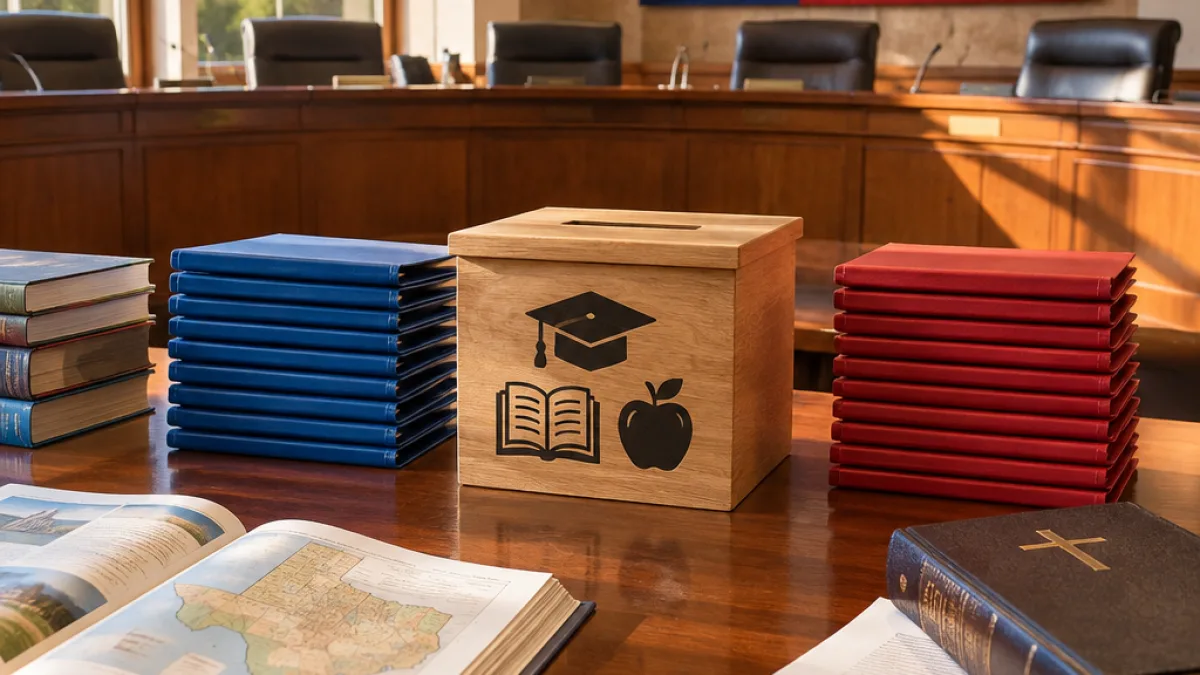
Texas Democrats are on course to take control of the State Board of Education for the first time in more than three decades, after election results reflected voter concern over the direction of public schooling in the state.
The likely change follows months of debate about school vouchers, Bible-based classroom materials, revised social studies standards and how schools should treat students involved in protests against immigration enforcement. Those issues helped draw parents, teachers and other voters into the campaign, including some who had not previously been active in politics.
A projected eight-to-seven majority
Democrats are expected to hold eight of the board’s 15 seats when the new members take office in January, giving them a narrow advantage over Republicans. One contest remains undecided. Democrat Dana Van De Walker is leading that race, and the party’s majority depends on that lead holding.
| Projected board outcome | Seats |
|---|---|
| Democrats | 8 |
| Republicans | 7 |
| Total board membership | 15 |
Michelle Palmer, a high school history and government teacher, won her board race after two unsuccessful campaigns. She said the tone of conversations with voters was different this time, with more people expressing concern about the future of public education.
“I was hearing from day one from people who had not really been politically active before that they were worried about education,” Palmer said.
Her victory came alongside other Democratic wins, including those involving Gina Hinojosa, who made education a central issue in her campaign for governor, and James Talarico, a former teacher who has opposed the use of Bible passages in public-school curriculum. The results suggest that disputes once treated as questions of classroom content or board procedure became motivating issues for voters.
What the new members want to change
The incoming Democratic members say they want the board to move away from political confrontation and focus more closely on student learning, classroom requirements and research-supported decisions. Thomas Ray Garcia, a Democrat and community college professor who will join Palmer on the board in January, described the result as a clear message from voters.
“Public education was on the ballot, and voters made their voices clear,” Garcia said.
- Curriculum: New members are expected to scrutinize social studies standards and the use of religious material in public-school lessons.
- School choice: The election was shaped in part by disagreement over the state’s voucher program.
- Classroom priorities: Democratic board members say they want greater attention paid to student learning and teachers’ needs.
- School communities: The treatment of students involved in immigration-enforcement protests became part of the wider education debate.
Limits on the board’s authority
A Democratic majority would not give the board unrestricted control over Texas education policy. Republicans continue to control the Texas Senate, a balance of power that could constrain the incoming governor’s ability to alter legislation, particularly the voucher program.
The board also does not directly oversee every policy that prompted opposition during the election. That means the new members may be able to influence curriculum decisions and the direction of board discussions without being able to reverse all of the measures that helped drive voters to the polls.
The result nevertheless gives Democrats an opportunity to set priorities for the state education board after more than 30 years out of the majority. For students and teachers, the practical effect will depend on how the board uses that margin, whether the outstanding race confirms the projected result and how its decisions interact with laws controlled by the Republican-led Senate.