Renewed fighting in northern Ethiopia is driving a fragile health system closer to collapse, the head of the World Health Organization said Monday, as reported attacks on civilians add to shortages of health workers, medicines and equipment.
WHO Director-General Tedros Adhanom Ghebreyesus said children, including a newborn, were reportedly among those killed at the Jaari 2 displacement camp in Amhara. In Rama, in neighbouring Tigray, several people were reportedly killed while attempting to obtain food.
Tedros did not provide casualty figures or dates for either incident, and he did not attribute the attacks to a particular group. He said more broadly that drone strikes and civilian deaths were becoming frequent in Ethiopia. There was no immediate government response or public statement addressing the reported attacks.
Medical care disrupted by insecurity
The violence comes as a November 2022 peace agreement between Ethiopia’s federal government and rebel forces in Tigray has been effectively undermined by renewed hostilities. The development has raised concerns that fighting could spread more widely, adding pressure to communities already affected by conflict and displacement.
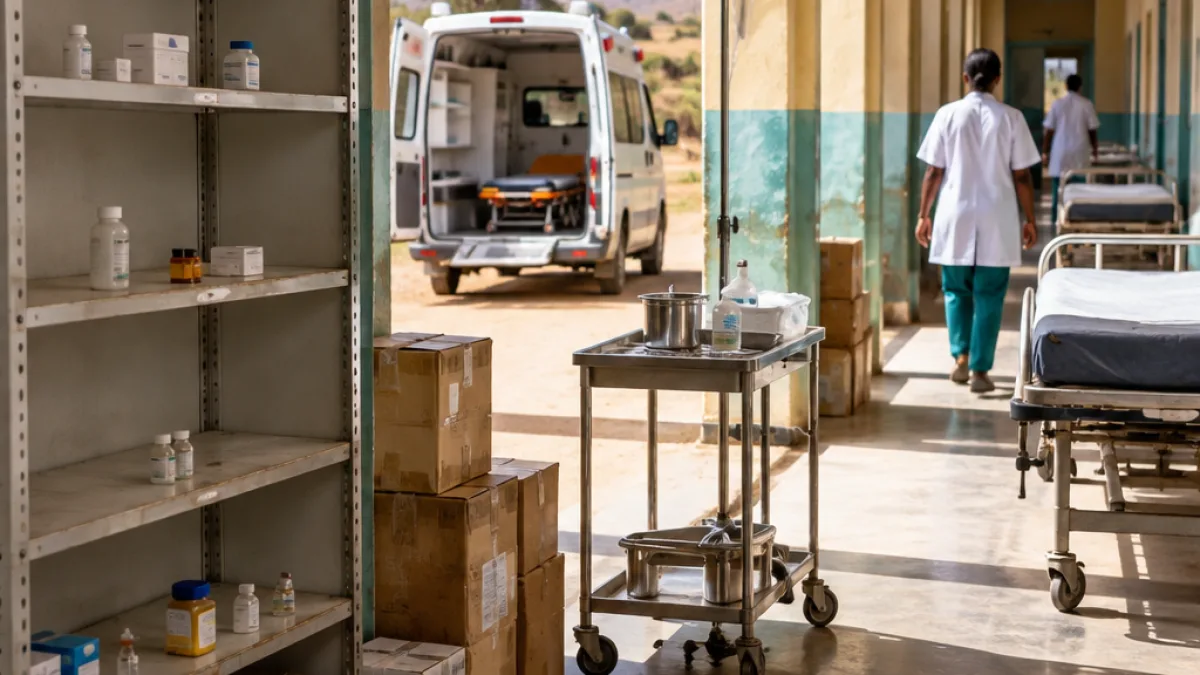
According to the WHO chief, hospitals across northern Ethiopia are operating without enough personnel, medication or equipment. Ambulance services are also severely restricted, while insecurity is preventing medical supplies from reaching facilities and people who need them. The WHO and other United Nations agencies are working to provide additional supplies, but access remains constrained by the security situation.
“Civilians must be protected. Health workers and humanitarian supplies must be allowed to reach those in need.”
The reported consequences for health services include:
- Hospitals facing shortages of health workers, medicines and equipment;
- Ambulance services operating under severe limitations; and
- Humanitarian deliveries obstructed by continuing insecurity.
Conflict and questions about accountability
The crisis is unfolding across several regions. In Amhara, Fano, a loose network of ethnic Amhara militias, has fought federal forces since 2023. The government is also confronting armed opposition in Oromia. In separate attacks there, the Ethiopian Orthodox Church said at least 60 Orthodox Christians had been killed. U.S. Ambassador Ervin J. Massinga condemned what he described as reported targeted killings in the Arsi zone.
Tedros’s warnings carry particular political sensitivity. He is an ethnic Tigrayan and previously served as Ethiopia’s foreign minister and health minister when the Tigray People’s Liberation Front dominated the country’s ruling coalition. Ethiopian authorities have previously accused him of using his international position to advance political interests, an allegation he has rejected. Tedros has acknowledged his connection to the region while saying his comments are not politically biased.
For civilians in the affected areas, the immediate concern is access to basic care rather than the competing political claims surrounding the conflict. When hospitals lack supplies and personnel, and ambulances cannot reliably travel, injuries and illness can become more difficult to treat. The WHO’s appeal underscores the need for protection of civilians, health workers and humanitarian routes as fighting continues.