PEMBERTON, B.C. — The Pemberton Valley’s flood-protection system is facing a costly repair effort after a month of torrential rain pushed waterways across southwestern British Columbia to dangerous levels.
The Pemberton Valley Dyking District, which oversees 44 kilometres of dikes around the community, says the final bill will be significant. The district has begun emergency work, but the full scale of the damage remains unknown as officials assess the system and respond to blockages in local waterways.
The district plans to seek provincial disaster financial assistance. That application will not guarantee support: flood and emergency events must meet eligibility requirements, and the district says it will need to make its case for funding.
Repairs begin while damage is assessed
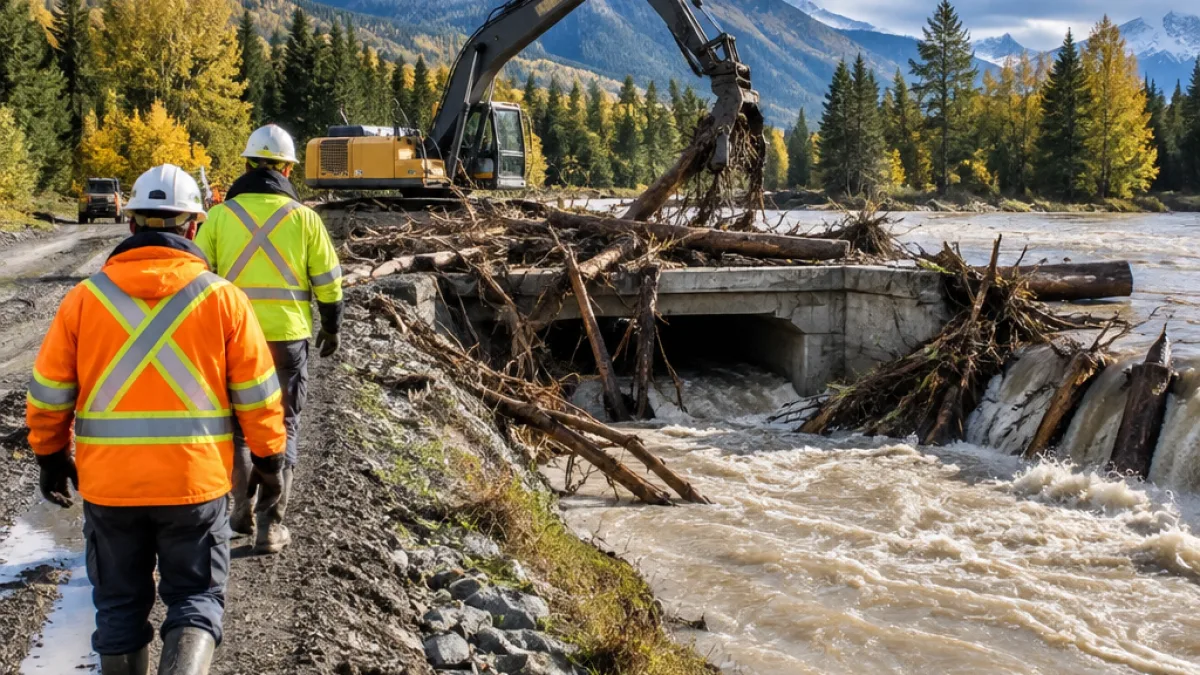
Crews have carried out urgent work on a culvert in Pemberton Creek and are removing log jams. Those measures are intended to address immediate risks while the district determines what more extensive work will be required.
Some of the larger repairs remain undefined. The district identified Miller Weir and damage to portions of the dike network as projects requiring further assessment. Until inspections are complete, officials cannot say how much work will be needed or what the overall cost will be.
| Issue | Information available |
|---|---|
| Flood-protection network | 44 kilometres of dikes managed by the district |
| Emergency work | Culvert repairs and log-jam removal |
| Further assessment | Miller Weir and other dike damage |
| Provincial support | Disaster financial assistance application planned |
Calls for a provincewide response
Jeremy Valeriote, the re-elected Green MLA for the area, has pressed the incoming provincial government to treat emergency preparedness as an immediate priority. He sent a request to Lorne Doerkson, who was to be sworn in as premier, after Doerkson visited the region the previous week.
In the letter, Valeriote said Pemberton had been only hours of rainfall away from a much larger disaster. He called for a government-wide approach led from the premier’s office, arguing that emergency events cross the boundaries that normally divide ministries, agencies and political positions.
“These devastating emergency events do not respect bureaucratic boundaries or political positions on climate action.”
His requests include provincial money for repairs and upgrades to the dyking system, changes to culverts and bridges to reduce flood risk, and approval of disaster assistance for residents and businesses affected by the flooding.
A region exposed to fast-moving water
The storms earlier this month saturated large parts of southwestern B.C. and triggered flood advisories in several regions. The weather also brought a deadly reminder of the hazards facing communities along mountain rivers: four people died over four days in rivers near Squamish, roughly 90 kilometres south of Pemberton.
In the Pemberton Valley, the dikes are a visible line between settled areas and the waterways that move through the valley. When intense rainfall arrives in quick succession, the condition of culverts, bridges, weirs and embankments becomes a public-safety concern as well as an infrastructure issue.
The district’s current work reflects that layered risk. Clearing log jams may improve the movement of water, while culvert repairs can address specific points where drainage is constrained. Larger structures such as Miller Weir and damaged dike sections require a more detailed process before permanent work can proceed.
Funding decision still ahead
The next stage will depend partly on the provincial response. The district must document the damage and pursue assistance through the disaster-financial-support process, while the government determines whether the event and the requested work qualify.
That uncertainty leaves local officials balancing urgent repairs against longer-term planning. Valeriote’s requests go beyond restoring infrastructure to its previous condition. They also include resizing or replacing culverts and bridges, measures aimed at reducing the chance that future high-water events produce the same pressure points.
For now, the district continues its assessment and emergency work as the valley moves beyond the latest storms. The amount of damage at several key locations has yet to be quantified, and the funding path remains unresolved. What is clear is that the recent flooding has turned preparedness into an immediate local question, with decisions about dikes and drainage carrying consequences for the wider Pemberton community.