A decade of language learning
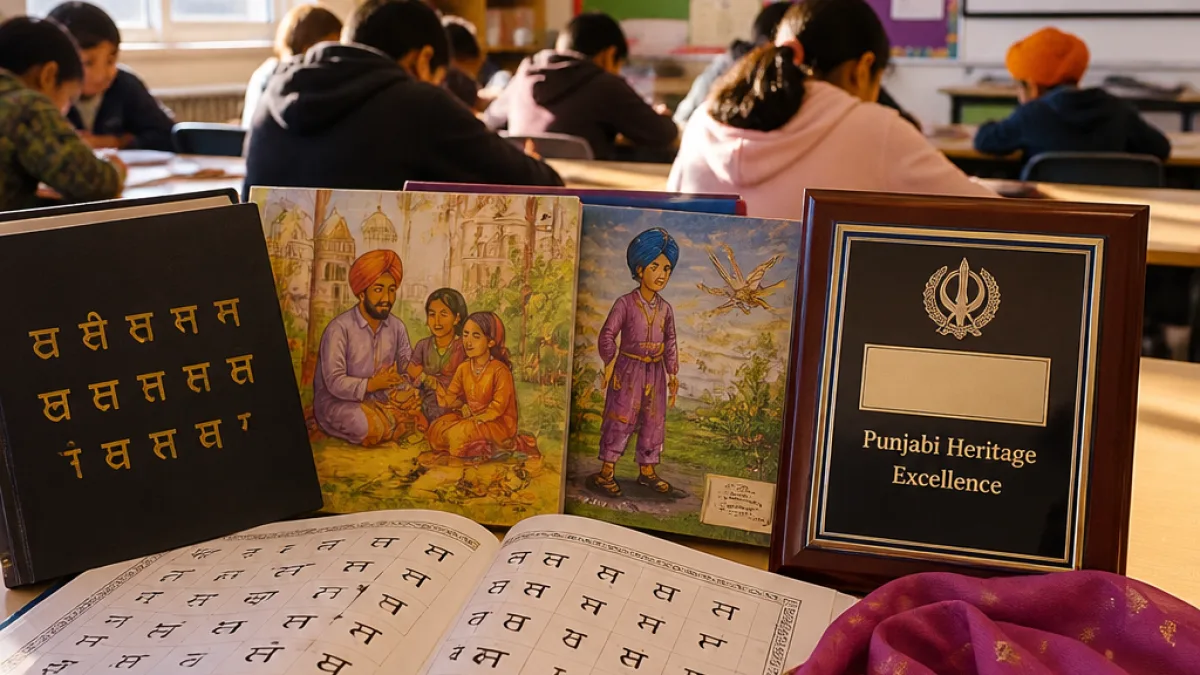
For more than 10 years, Sarbdeep Kaur Johal has helped students in Surrey learn to read, write and speak Punjabi. The Queen Elizabeth Secondary teacher and children’s author was recently recognized with a 2026 Heritage Defender Award at the Darpan Extraordinary Achievement Awards.
The honour recognizes her work in cultural preservation and her view that language can connect generations, identities and communities. Johal was nominated by Gurpreet Kaur Bains, a teacher at L.A. Matheson. For Johal, the award reaches beyond her own career and speaks to the importance of maintaining a language that remains part of many Surrey families’ lives.
“This award felt like recognition not only of my journey, but of the value of linguistic and cultural authenticity.”
Johal said her own upbringing shaped the way she approaches that work. She was raised in a family of educators and identifies her mother’s resilience as a major influence. Her mother came to Canada without speaking English and learned the language gradually, “one word at a time,” according to Johal.
From a substitute class to Punjabi 12
Teaching Punjabi was not initially part of Johal’s planned path. While working as a teacher on call at a high school, she took over a Punjabi 12 class and recognized that she still had a strong relationship with the written language. That experience led her to pursue Punjabi teaching more fully.
“I did not want to see the Punjabi program struggle in the high school system due to a lack of teachers willing and qualified to teach Punjabi 12.”
Her classroom reflects the varied linguistic backgrounds of students born in Canada. Many speak Punjabi at home, but their vocabulary and pronunciation can differ depending on the region of Punjab their families come from and the dialects they hear from relatives. Johal treats those differences as a resource rather than a barrier.
- Students compare words used by their own families.
- They discuss differences in expressions and dialects.
- They build confidence through regular reading and writing practice.
Language as a bridge at home
Johal said writing presents a greater challenge than speaking. It requires consistency, practice and continued exposure, particularly for students whose home lives include more than one language. The work can be gradual, but she sees its effects outside the classroom when students become more able to communicate with older relatives.
Parents have told Johal that their children’s ability to read Punjabi has helped them feel closer to their grandparents. One Grade 12 student wrote a short story in Punjabi about her grandfather’s experience with dementia and the way the condition altered their relationship. Punjabi was seldom spoken in the student’s home, but writing offered a way to explore that family experience through the language.
Johal said the award represents more than an individual achievement. She sees it as recognition for people who value their mother tongue and cultural heritage, as well as for the students working to carry those connections forward. In Surrey classrooms, that effort links language instruction with family memory, identity and the changing ways culture is maintained across generations.