A broad agenda for Surrey’s new council
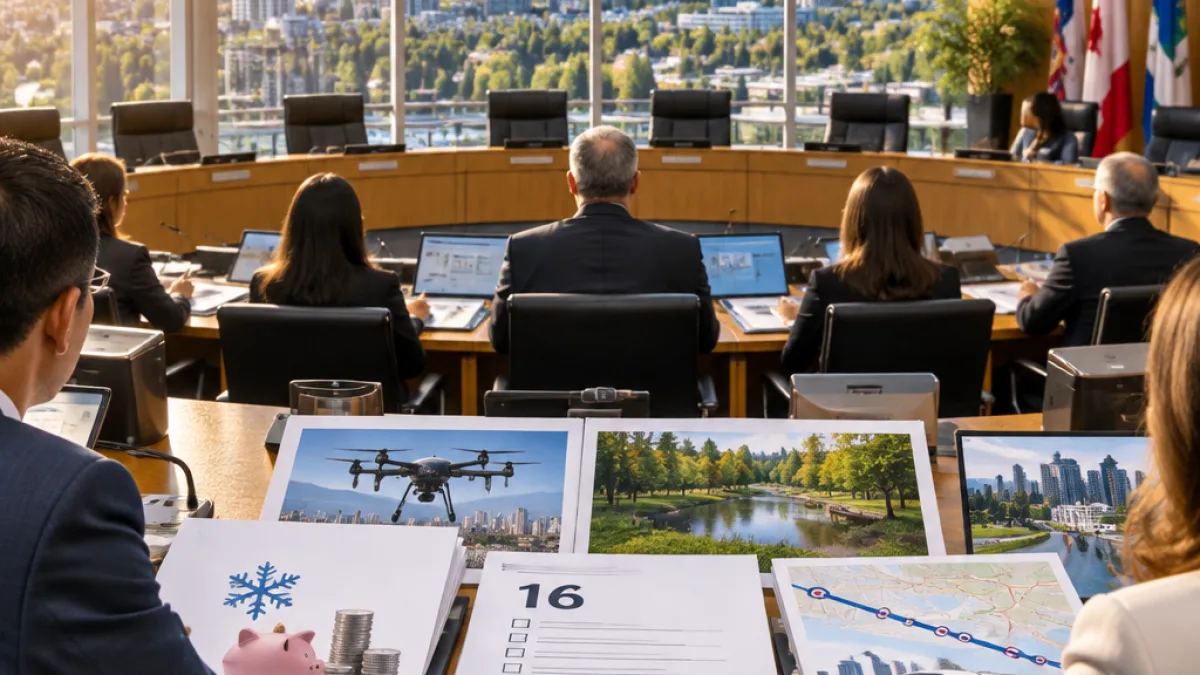
Surrey council has approved 16 priorities during its first meeting of the term, setting out an agenda that reaches from municipal finances and policing to parkland, zoning and rapid transit. The decisions came as the city continues to grow and as councillors weigh competing demands for services, development and public spending.
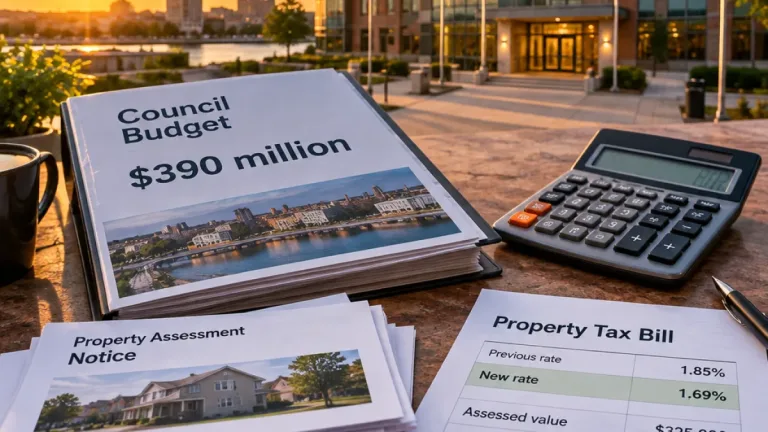
Among the measures approved Monday were a proposed tax freeze, a zero-tolerance approach to crime and a forensic audit of previous land deals. Council also endorsed plans connected to the Surrey Police Service, the protection of land at Rosemary Heights Retreat Centre and efforts to advance a SkyTrain extension to Newton.
The range of priorities reflects the practical pressures facing a rapidly changing municipality. Some measures focus on immediate public-safety concerns, while others could shape how Surrey manages land, neighbourhood form and transportation over a longer period. The debate at council’s opening meeting also exposed questions about which decisions belong at city hall and how the city should distribute limited resources.
Bains challenges policing proposal
Coun. Harry Bains, the only councillor who was not elected as part of Mayor Doug McCallum’s slate, questioned the feasibility and necessity of a proposal to equip the Surrey Police Service with a drone fleet and helicopter within 90 days.
Bains said the police service had not requested the equipment and argued that operational decisions should remain with the Surrey Police Board rather than municipal council. His objection centred on governance as well as spending: city hall, he said, should not direct the police service’s day-to-day operations without a request from the organization responsible for them.
“That’s a decision for the Surrey Police Board to make. City hall needs to separate itself from the operational management of the Surrey Police,” Bains said.
The issue leaves a clear question for Surrey residents: whether the proposed equipment would be funded and directed as a council priority, or considered through the police board’s own operational process. The source material does not indicate that the Surrey Police Service has asked for the drone fleet or helicopter.
Neighbourhood rules and parkland spending
Bains also raised concerns about a motion to create sizing regulations for Crescent Beach and Ocean Park with the stated aim of preserving neighbourhood character. He said Surrey contains many distinctive communities and warned that creating special zoning rules for only selected areas could establish a precedent other neighbourhoods may seek to follow.
That discussion touches on a central tension in a growing city: protecting the feel of established communities while allowing enough new housing and density to meet future needs. Bains said additional residents may want similar zoning treatment in their own neighbourhoods, potentially making future development more difficult.
The councillor separately questioned the proposed purchase of the Rosemary Heights Retreat Centre lands for park protection. He noted that an adjacent park already exists and said the acquisition could cost tens of millions of dollars. In his view, the same funding might instead be used to create parks in Surrey communities that currently lack them.
| Priority area | Proposal or concern |
|---|---|
| Municipal finances | Tax freeze and forensic review of earlier land deals |
| Public safety | Zero-tolerance crime policy and proposed police aircraft and drones |
| Land use | Neighbourhood sizing rules and Rosemary Heights park protection |
| Transit | Advancing SkyTrain expansion to Newton |
Transit plans remain connected
McCallum’s agenda also includes advancing the SkyTrain extension to Newton. Bains asked whether pursuing that project could lead to the cancellation of the planned Bus Rapid Transit line along King George Boulevard to South Surrey.
McCallum responded that the decision currently rests with TransLink. That leaves residents watching two related questions: how Surrey’s rapid-transit network will expand, and whether different projects will proceed together or compete for attention and resources. No decision to cancel the King George Boulevard Bus Rapid Transit route was identified in the source material.
With all 16 priorities approved at the first meeting, the next stage will be determining how they are implemented, financed and coordinated with outside bodies such as the Surrey Police Board and TransLink. The objections raised by Bains suggest that the council’s agenda will continue to face scrutiny over affordability, jurisdiction and whether citywide policies serve Surrey’s neighbourhoods evenly.