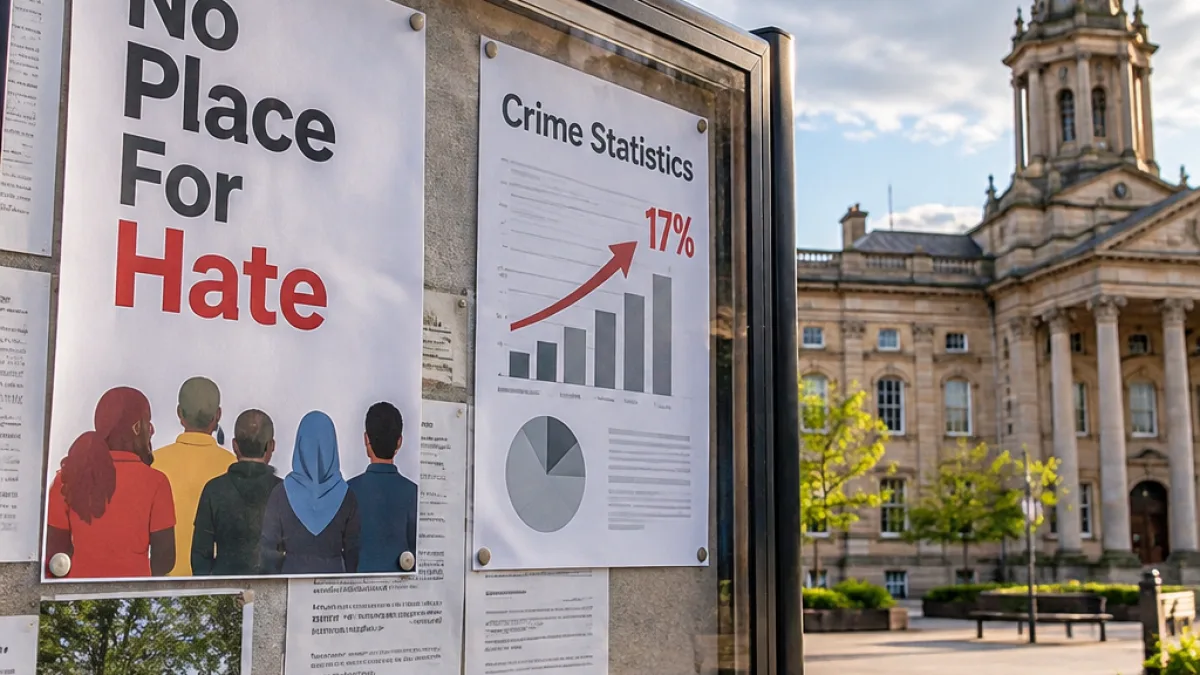
Recorded hate crime in Derby has increased by 17 per cent, prompting a warning from a senior council figure that the trend is a “real worry”, despite a year-long campaign aimed at tackling hostility and encouraging victims to report incidents.
A Derby City Council report recorded 1,224 hate crime incidents in the city between July and September. That was 178 more offences than during the equivalent period a year earlier. The figures have emerged against a broader rise across England and Wales, where police recorded 146,825 hate crimes in the year ending March 2026 — an increase of seven per cent on the previous year.
A national rise reflected in Derby
The Government defines a hate crime as a criminal offence perceived by the victim or another person to have been motivated by hostility or prejudice linked to a personal characteristic. Such offences can include physical attacks, abuse, threats or activity intended to stir up hatred.
Derby council said national and international developments, including attitudes towards migration and international conflicts, had affected behaviour in the city. It did not present those factors as a single explanation for the increase, but identified them as part of the wider environment in which abusive, threatening and aggressive language had been directed at communities, council staff and elected members.
| Measure | Recorded figure | Change |
|---|---|---|
| England and Wales, year ending March 2026 | 146,825 hate crimes | +7% |
| Derby, July to September | 1,224 incidents | +178 offences, or 17% |
Campaign designed to improve reporting
The council-led No Place For Hate In Derby campaign was launched a year ago in response to the increase in hostile conduct. Its stated objectives include preventing hate incidents in workplaces, promoting respect and dignity, and supporting policies intended to uphold diversity, equality and inclusion.
The campaign has also focused on making it easier for people to seek help. Council leaders have argued that the rise in recorded incidents should not automatically be read as proof that every aspect of hate crime has worsened at the same rate. Greater awareness of what constitutes a hate crime, and clearer routes for obtaining assistance, may lead more people to come forward.
“While reported hate crime has increased, this reflects both a national trend and greater awareness of what constitutes hate crime and where people can go for help.”
Councillor Sarah Chambers, the cabinet member for communities and public safety, told a cabinet meeting that the increase remained a “real worry”. She said the campaign had raised awareness, improved access to support and encouraged more victims to report their experiences.
The accountability challenge
The figures therefore present officials with two responsibilities at once: responding to the offences being recorded and establishing whether reporting patterns are changing. A rise in reports can be a sign that victims have greater confidence in services, but it also leaves authorities with a larger volume of incidents requiring assessment, support and, where appropriate, investigation.
- National picture: police in England and Wales recorded 146,825 hate crimes in the year ending March 2026.
- Derby picture: 1,224 incidents were recorded between July and September, 178 more than in the comparable period.
- Official response: the council says its campaign has improved awareness and access to support while continuing to address hostility.
For Derby’s communities, the distinction between increased reporting and increased harm does not remove the need for action. Abusive language, threats and physical attacks can affect people’s sense of safety even where no prosecution follows. The council’s own assessment acknowledges the pressure created by both local experiences and wider national and international tensions.
The latest figures will test whether the campaign can convert increased awareness into sustained prevention. For now, Derby’s experience forms part of a national rise that has left the authorities facing a difficult question: how to welcome improved reporting without allowing the underlying hostility that generates those reports to become normalised.