Australia confirm their supremacy
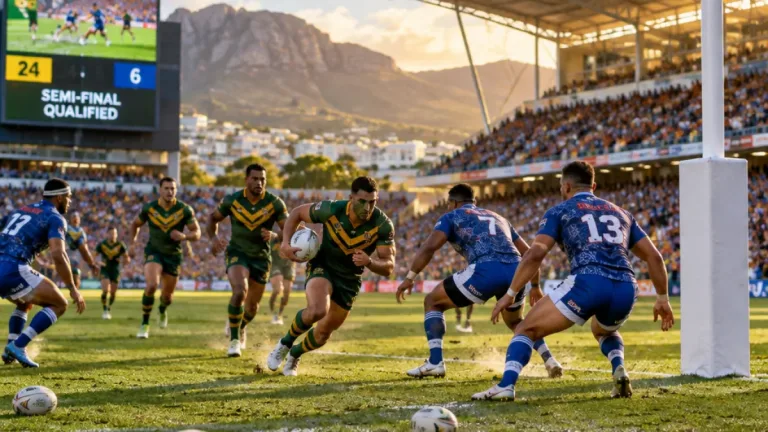
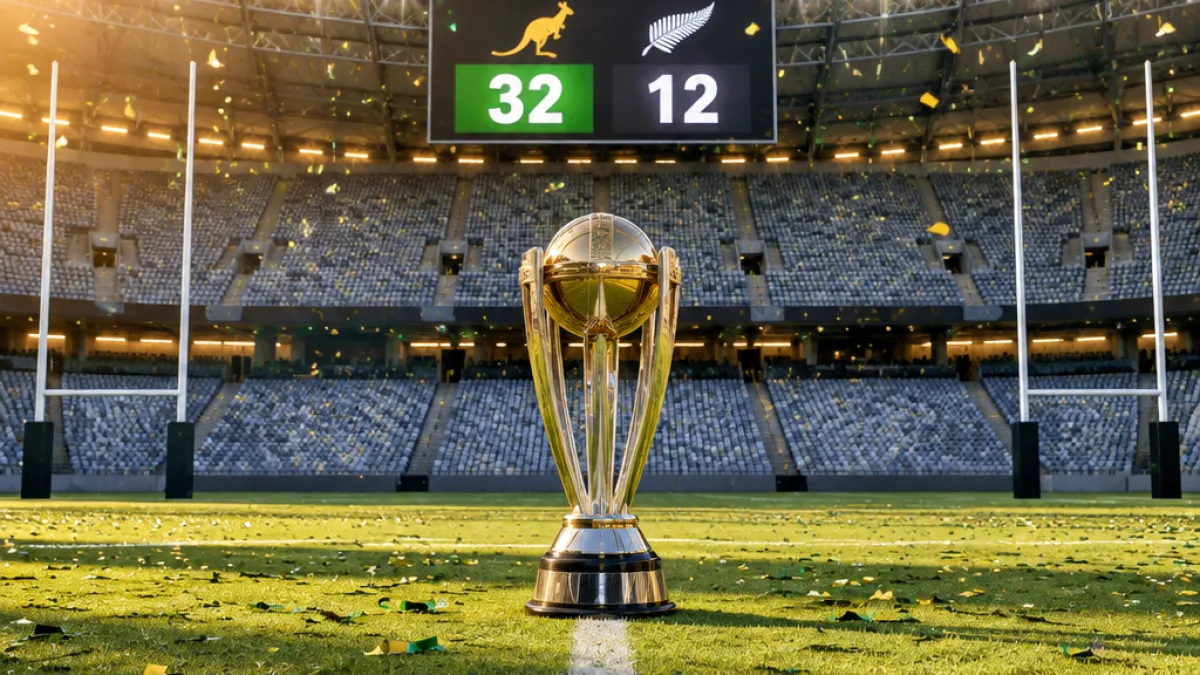
Australia have reinforced their status as the leading force in international rugby league after defeating New Zealand 32-12 in the World Cup final and securing a fourth consecutive men’s title. The result completed another successful campaign for the Kangaroos, who had not always looked convincing in the early stages but produced their most authoritative performance when the tournament reached its decisive point.
The victory also denied New Zealand a first men’s World Cup crown since 2008. The Kiwis had entered the final in strong form, yet their defensive performance proved costly. They missed 37 tackles, allowing Australia’s attacking players to find space and maintain pressure across the match. Reece Walsh and Bradman Best were particularly influential in opening gaps in the New Zealand line, while Australia’s structure and composure improved markedly compared with the opening weeks of the competition.
A rapid start sets the tone
Australia needed less than two minutes to establish control. Liam Martin carried several defenders over the line inside 95 seconds, giving the hosts an immediate advantage and placing New Zealand under pressure from the outset. The Kiwis responded after 10 minutes, with centre Casey McLean finishing a move begun by Kodi Nikorima, but the response did not alter the broader direction of the contest.
Australia’s wider attacking movement then became increasingly difficult to contain. Walsh and Best combined through quick handling to release Jack Bostock, who crossed in the corner. Martin and Bostock both scored twice, making them central figures in a final in which Australia converted its opportunities with far greater efficiency than its opponents. Bostock was subsequently named player of the match.
“We were written off early in the tournament.”
Speaking after the final, Bostock said the side had not produced its best rugby at the beginning of the competition but had gradually found its rhythm. He said the team had shown signs of improvement in the previous week before bringing its full performance to the final. The winger also highlighted the experience within the squad, noting that it contained 10 club captains, a level of leadership he described as valuable to his development.
A contest shaped by contrasting trajectories
The final represented a sharp change from the teams’ first meeting in the tournament. Australia had edged New Zealand 24-22 in the opening match in October, a narrow result that suggested a closely balanced competition. By the time the two sides met again for the title, however, Australia had assembled a more complete performance, while New Zealand’s defensive errors prevented it from sustaining pressure for long periods.
For New Zealand, the defeat extends the wait for another men’s World Cup success. The side had the opportunity to end an 18-year gap between titles, but could not match Australia’s intensity after conceding early. The result will also place renewed focus on the Kiwis’ ability to turn strong tournament form into a performance capable of challenging Australia at the highest level.
The tournament’s headline outcomes can be summarised as follows:
- Men’s final: Australia defeated New Zealand 32-12.
- Australia’s record: fourth successive men’s World Cup title.
- New Zealand’s last triumph: the Kiwis’ most recent men’s title came in 2008.
- Player of the match: Australia winger Jack Bostock, who scored twice.
Success across both competitions
Australia’s dominance was not confined to the men’s tournament. Earlier on Sunday, the Jillaroos defeated New Zealand’s women’s side 34-10, completing a fourth consecutive women’s World Cup victory. Taken together, the two results underline the depth of Australia’s international programme and its ability to remain successful across both major competitions.
That double success also gives the latest tournament a clear regional dimension. Australia and New Zealand remain the central powers of international rugby league, but the results show the distance that New Zealand must close if it is to prevent another period of Australian control. For the Kangaroos, meanwhile, the final offered a reminder that a hesitant start need not prevent a champion side from rebuilding its momentum and peaking when the title is at stake.