
Chief constable warns of an ‘intolerable’ position
Eleven Police Scotland officers convicted of criminal offences remain on the force’s payroll, including eight whose convictions involved violence against women and girls, the chief constable has confirmed. Jo Farrell disclosed the figure in a letter to the Scottish Parliament’s justice committee, alongside a warning that existing procedures are failing to remove officers who have no continuing place in policing.
The disclosure places the force’s disciplinary arrangements under renewed scrutiny at a time when several serving and former officers have been linked to high-profile cases involving sexual and violent offending. Ms Farrell said the process for dealing with misconduct was too slow and called for the police conduct regime to be modernised.
“This is intolerable to me, as Chief Constable, and would rightly be intolerable to the public.”
In her letter to justice committee convener David Linden, written ahead of a meeting this week, Ms Farrell said some cases involving proven criminality had taken too long because of “sub-optimal regulations”. She said that delay could leave people in the organisation for longer than was appropriate, even where the evidence against them was clear.
Suspensions costing millions
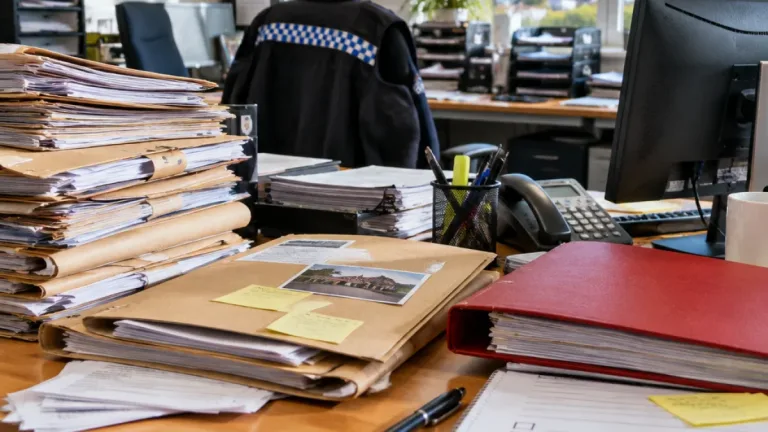
The chief constable also said 80 officers are currently suspended, with the annual cost to Police Scotland standing at £4.5 million. She attributed the expense to what she described as sluggish conduct arrangements, as well as the time required for criminal cases to pass through the courts.
| Issue | Figure |
|---|---|
| Convicted officers still on the payroll | 11 |
| Of those convicted officers involved in violence against women and girls | 8 |
| Officers currently suspended | 80 |
| Annual cost of suspensions | £4.5 million |
| Serving officers suspended over allegations of violence against women and girls | 45 |
Ms Farrell said that, under current arrangements, even cases involving “incontrovertible evidence” could not be fast-tracked to dismissal. That means the force can be left carrying the financial and administrative burden of prolonged suspensions while decisions await the conclusion of court or conduct proceedings.
High-profile cases intensify scrutiny
The figures follow a series of cases involving police officers exposed as rapists this year. Derek McNee, Campbell Petrie, Carmichael John Williamson and Cameron Ross were all convicted and are no longer employed by Police Scotland, according to the information provided to the committee.
Another case concerns Alan Greer, who was named as a violent serial rapist by a BBC investigation. He took his own life in May after police raided his home. The force also confirmed last month that 45 serving officers were suspended over allegations of violence against women and girls, a figure that has added to pressure for a more effective system for identifying risk and dealing with misconduct.
The chief constable’s intervention is significant because it acknowledges a gap between criminal conviction and removal from the police service. While the letter does not identify the 11 officers who remain on the payroll, it makes clear that the issue is not confined to isolated cases. The number of suspended officers, the cost involved and the allegations concerning women and girls point to a wider challenge for the force’s governance.
For the justice committee, the central issue will be whether existing regulations allow Police Scotland to act quickly enough once criminality or serious misconduct has been established. Ms Farrell’s assessment is that they do not. Her call for reform now places responsibility on the Scottish Government and lawmakers to examine how disciplinary cases are managed, how long officers can remain suspended and how public confidence can be protected while proceedings continue.