Luiz Inácio Lula da Silva has been hailed by international counterparts after securing a historic fourth term as president of Brazil, but the outcome has been contested by figures aligned to his right‑wing opponent, raising immediate questions about the route ahead for the country’s fragile democratic recovery.
Contestation from Bolsonaro allies
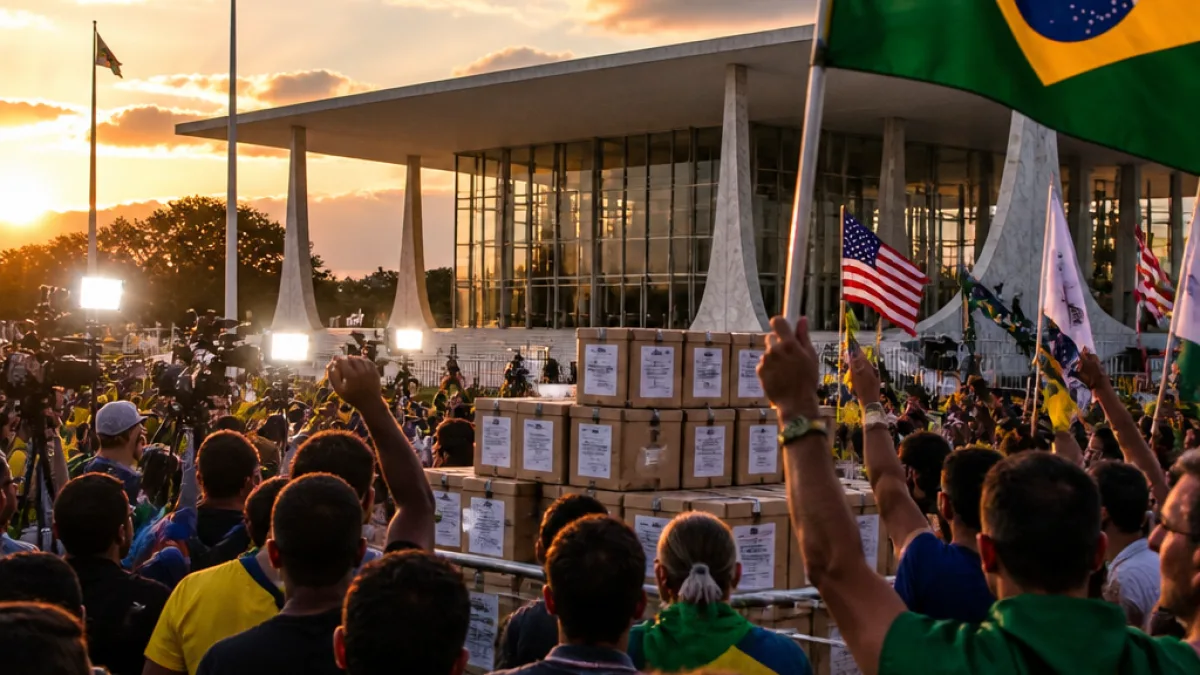
Senator Flávio Bolsonaro, the son of former president Jair Bolsonaro, said he would seek annulment of the result and refused to accept the outcome following the runoff. He criticised a late decision by a Supreme Court justice appointed by the president-elect that extended voting by two hours in some areas to address alleged transport problems for voters, saying the circumstances made it “impossible to recognise the election results.”
"It is impossible to recognize the election results, given the circumstances under which things unfolded,"
The scale of the result, with Flávio Bolsonaro trailing by more than 4 million votes, was noted by analysts as making successful annulment efforts unlikely. Observers also pointed out an important contradiction: Bolsonaro’s campaign itself had previously sought extensions to voting in some regions affected by heavy rain, the source of the justices' emergency measure.
Background: the shadow of 2022
Brazil’s recent political history looms over the post‑election period. Jair Bolsonaro’s rejection of the 2022 result culminated in a major democratic crisis when his supporters breached government buildings. Those events have had lasting consequences: the former president later received a 27‑year sentence for plotting a coup, underlining the seriousness with which Brazil’s institutions treated the earlier attacks on its democratic order.
International responses
Despite the dispute, a range of world leaders moved quickly to congratulate Lula and signal readiness to work with his administration. Reactions highlighted priorities such as trade, environmental protection and regional cooperation.
- Canada: Prime Minister Mark Carney said ties between the two countries had flourished and urged both sides to seize the opportunity to deepen cooperation on trade and environmental protection.
- Peru: President Keiko Fujimori congratulated the president-elect and praised the Brazilian people for what she called a democratic day.
- Ecuador: President Daniel Noboa emphasised common regional challenges and the benefits of working together.
- Chile: President José Antonio Kast confirmed he had spoken directly with the president-elect.
| Leader | Message |
|---|---|
| Mark Carney (Canada) | Celebrate strengthened partnership; call to expand trade and protect the environment |
| Keiko Fujimori (Peru) | Congratulated Lula and saluted the Brazilian people |
| Daniel Noboa (Ecuador) | Called for regional cooperation around shared challenges |
| José Antonio Kast (Chile) | Reported a direct conversation with the president‑elect |
The international endorsements underscore how Lula’s victory is being read not merely as a domestic development but as an event with implications for trade partnerships, regional diplomacy and environmental policy across Latin America.
What happens next
Legal challenges and public contestation could prolong the post‑election period. Nevertheless, the numerical margin reported between the candidates suggests that authorities and courts will face strong pressure to uphold the result unless substantial evidence is presented to support annulment claims. The memory of 2022 — and the sanctions and convictions that followed the assault on institutions — will shape both domestic and foreign responses as Brazil moves towards the transfer or consolidation of power.
For international partners, the immediate task will be navigating a transition that preserves stability while engaging on trade, climate and regional security issues. For Brazil, the challenge is to channel political competition back into democratic institutions and to prevent a repeat of last decade’s fractures in public life.