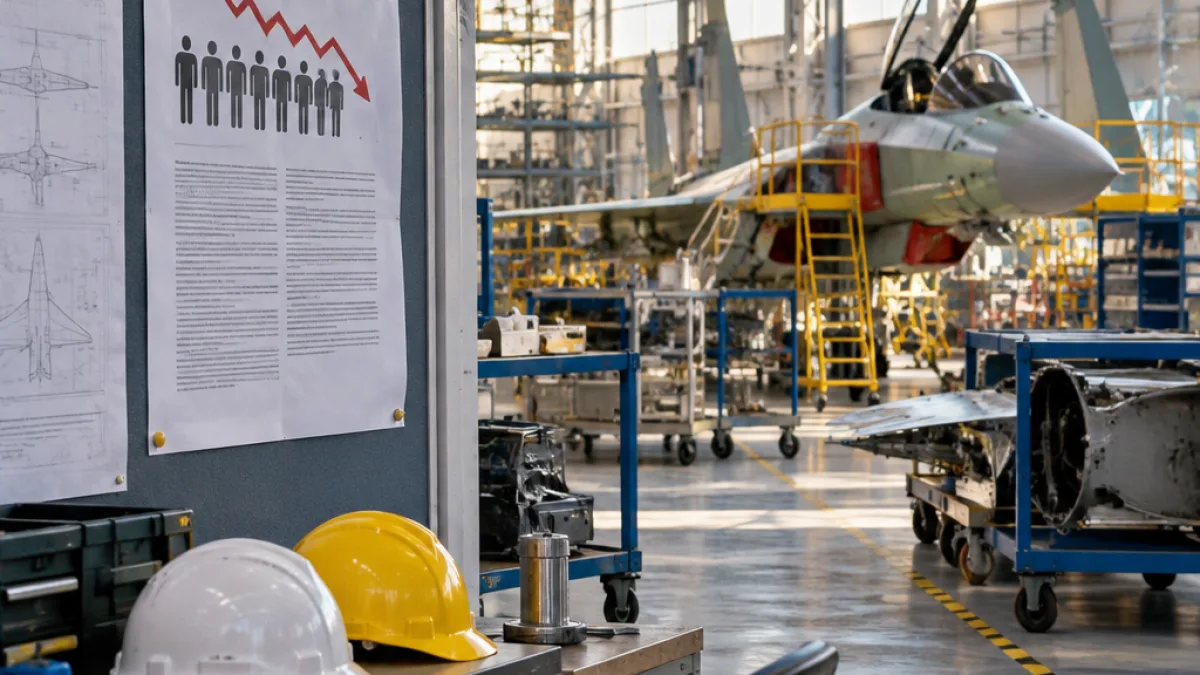
BAE Systems is planning to cut more than 1,000 jobs from its aerospace division, the Unite union has said, in a move that would affect one of the UK’s most strategically important defence manufacturers.
The proposed redundancies are expected to be concentrated at the company’s sites in Warton and Samlesbury, which are central to its aerospace activities. Unite, one of the country’s influential trade unions, said the planned reductions reflected continuing uncertainty over defence expenditure and delays in government decisions.
BAE Systems supplies defence equipment to the UK military and overseas customers. Its aerospace work is connected to several major programmes, including the Typhoon fighter and the Global Combat Air Programme (GCAP), the planned sixth-generation combat aircraft project. The company is also a significant partner in the United States-led F-35 joint strike fighter programme.
Union warning over industrial impact
Unite general secretary Sharon Graham criticised the prospect of job losses and argued that government decisions on defence procurement were having consequences for British manufacturing. She said the union had been warning for months that delays in defence spending were prompting companies in the sector to take decisions that could affect employment.
“The UK would not have a manufacturing industry left if the government doesn’t start making critical decisions.”
Graham also linked the reported cuts to what she described as delays in defence spending. The union’s statement places the announcement in the context of broader questions about the future scale and timing of orders for British defence companies.
Typhoon and next-generation aircraft programmes
BAE Systems recently secured a multi-billion-pound agreement to manufacture Typhoon fighter jets for Türkiye. The company is also involved in the development of GCAP and remains a key participant in the F-35 programme, giving its aerospace division a role across both current and future combat-aircraft projects.
There had been speculation that the UK Government might order an additional group of Typhoon aircraft for the Royal Air Force. Such a purchase was seen as a possible way to provide further industrial support for BAE Systems, while the RAF is withdrawing its oldest Typhoon variants. The source does not say whether an additional order has been approved.
| Area | Reported position |
|---|---|
| Jobs | More than 1,000 aerospace roles may be removed |
| Sites affected | Warton and Samlesbury |
| Recent order intake | Up by £3.2 billion to £16.4 billion in the first half of fiscal 2026 |
| Key programmes | Typhoon, GCAP and F-35 |
A contradiction at the heart of the announcement
The reported reductions come despite BAE Systems recording strong growth in order intake during the first half of fiscal 2026. The company’s intake rose by £3.2 billion to £16.4 billion, according to the source. That contrast highlights the difference between winning future or long-term work and maintaining staffing levels in particular divisions and locations.
For workers at Warton and Samlesbury, the immediate issue is the security of their employment. For the wider UK defence sector, the dispute raises questions about how procurement timetables translate into factory activity and skilled manufacturing work. The aerospace division’s links to Typhoon, GCAP and F-35 also mean that any reduction would be watched closely by unions and policymakers concerned with the country’s industrial capability.
The report remains developing. BAE Systems’ position on the planned redundancies, including the precise number of affected employees and the timetable for any changes, has not been provided in the source material. Unite’s account is therefore the basis for the reported figure while further details are awaited.