Germany’s far-right Alternative for Germany party has placed higher education at the centre of a political dispute in Saxony-Anhalt after securing 43.8% of the vote in the eastern state’s September election.
The result was an unprecedented breakthrough for the AfD in the state. As the party works to form a government, its proposals for universities are causing concern among students and academic leaders, who fear that Saxony-Anhalt could become a testing ground for a wider ideological programme.
Proposals reach beyond funding and administration
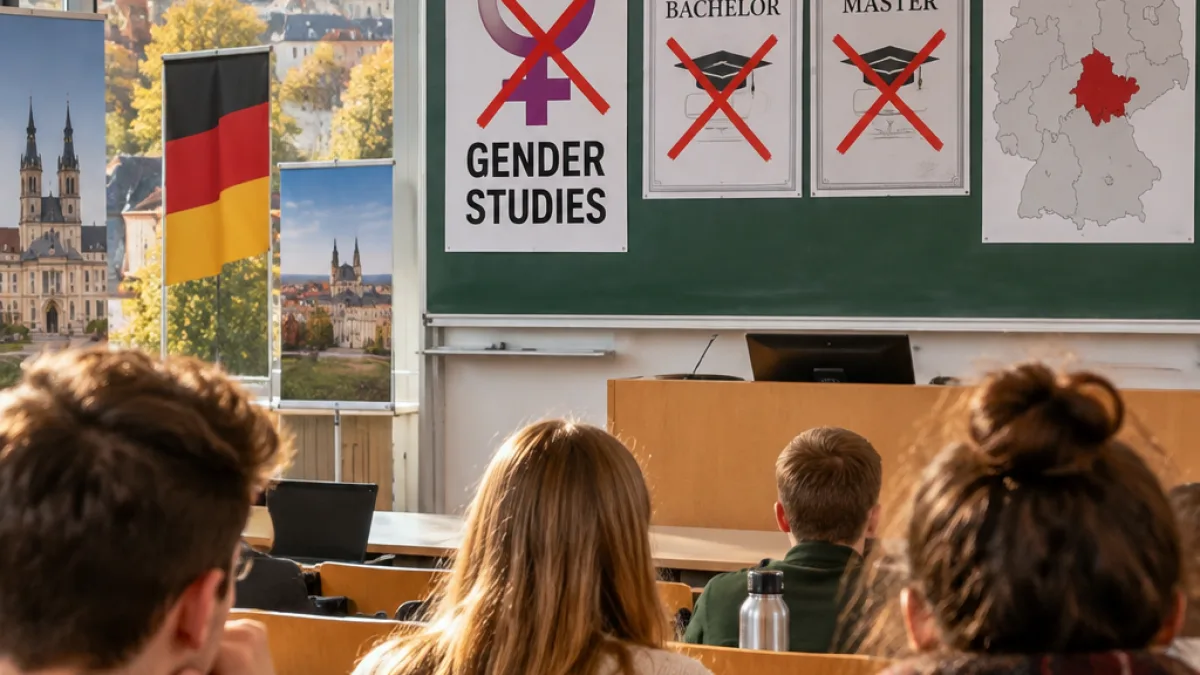
The AfD’s education agenda includes plans to remove gender studies from universities and to reverse the internationally recognised structure based on bachelor’s and master’s degrees. The proposals would therefore affect both the subjects institutions teach and the way qualifications are organised.
Those plans have prompted comparisons with political battles over higher education in the United States. The debate in Saxony-Anhalt is not limited to the detail of university policy: it has become part of a broader argument about the role of academic institutions, the subjects they should offer and the values they should reflect.
The election result itself was not driven primarily by education policy. Exit polls indicated that AfD voters in Saxony-Anhalt placed greater emphasis on crime, immigration and “East German interests”. Nevertheless, the party’s electoral strength has given its higher education proposals increased prominence as negotiations over a new government continue.
| Development | Significance for higher education |
|---|---|
| AfD vote in Saxony-Anhalt | 43.8% in the state election |
| Gender studies | The party proposes eliminating the subject |
| Degree structure | The party proposes reversing the bachelor’s and master’s model |
International students describe anxiety
The political shift has also been felt among international students in Magdeburg, the state capital. At the headquarters of the Magdeburg Indians student organisation, members recalled receiving a large number of messages after election night from students who were uncertain about what the result might mean for them.
“The students were scared, and they were emailing us like, ‘What we should do?’”
The comment came from Parthiban Saravanakumar, treasurer of the organisation. He moved to Magdeburg from India eight years ago. The group’s headquarters still carried decorations from a recent Diwali celebration when the account was reported, creating a contrast between the community’s ordinary student life and the unease following the election.
For international students, the political argument has a practical dimension. Any proposed change to university subjects or qualifications could affect how institutions present their courses and how students understand the value of their studies. The source material does not indicate that the AfD’s proposals have already been implemented, but it records concern among students and university leaders while the party seeks to form a government.
A potential model for wider change
The significance of Saxony-Anhalt lies partly in the possibility that its policies could provide a model for the AfD’s approach to higher education. The party’s success has created the opportunity to test ideas that would challenge established university structures, including the degree system used internationally and the academic status of gender studies.
That prospect explains why the state’s universities are being watched beyond Germany. The debate combines the immediate uncertainty of coalition-building with longer-term questions about academic freedom, international participation and the independence of higher education from party politics.
For now, the proposals remain part of the AfD’s programme as it works towards forming a government in Saxony-Anhalt. But the election has already changed the context in which universities operate: issues that might previously have been confined to campus debates are now tied to the direction of a state administration and to the broader rise of the far right in German politics.