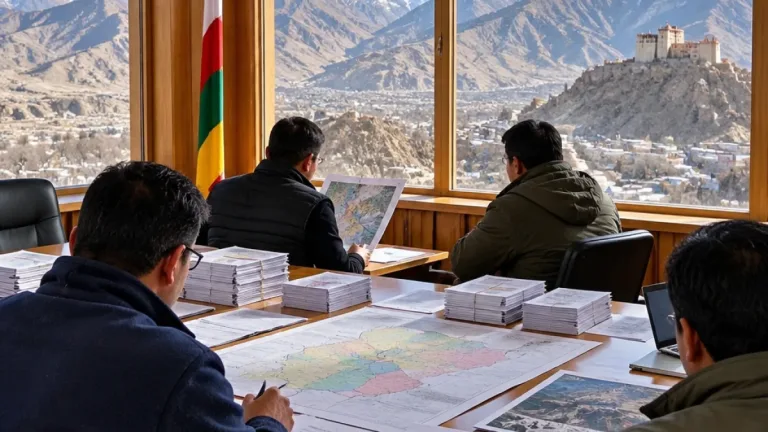
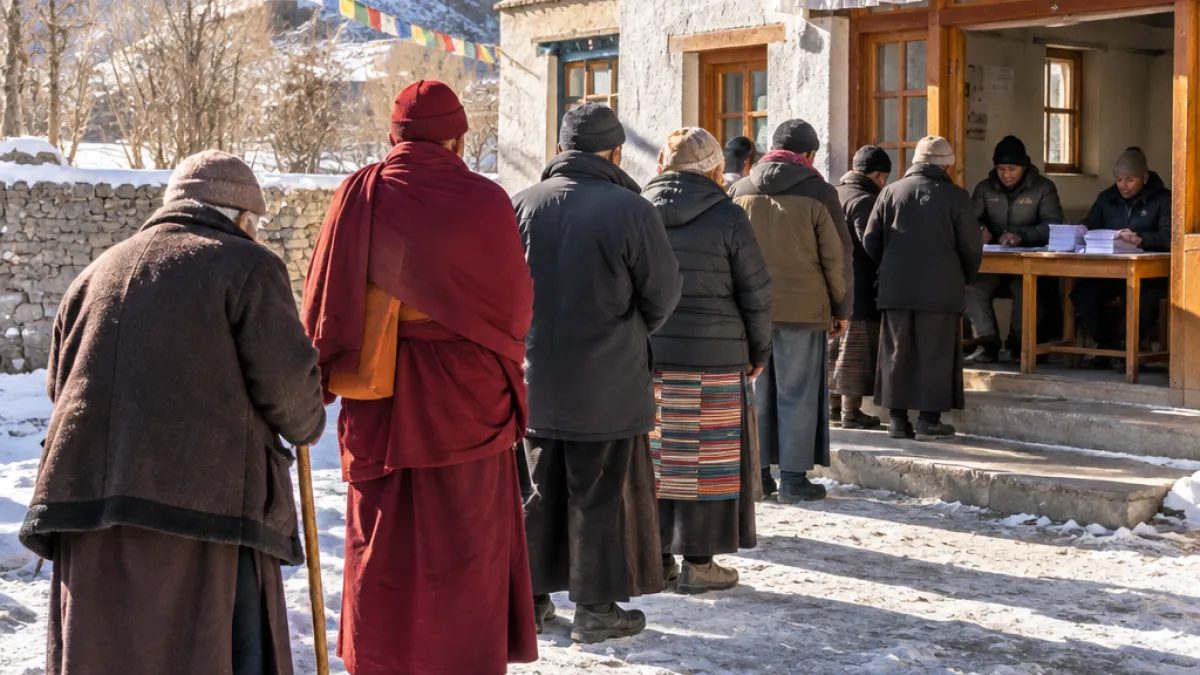
Ladakh recorded a 70.03 per cent voter turnout in its panchayat elections and 52.4 per cent in municipal council polls, in the first urban local-body election in the Union Territory since it was carved out in 2019.
The polling brought voters from villages and towns to booths across the high-altitude region, with young and elderly electors, women and men, first-time voters and monks taking part. The participation came despite freezing conditions and a political campaign by the Leh Apex Body (LAB) and the Kargil Democratic Alliance (KDA) seeking postponement of the December 4 elections to the autonomous hill development councils.
The State Election Commission said the turnout reflected public support for grassroots democracy and local self-governance. The polling exercise covered a substantial network of village-level seats, while the municipal contest marked a significant return of elected urban representation after the Union Territory’s formation.
Village polls cover eight districts
Panchayat elections were held across 192 Panchayat Halqas in eight districts. The election schedule covered 192 sarpanch posts and 1,428 panch seats. A large number of posts were settled without a contest, with 55 sarpanches and 1,186 panches elected unopposed.
Voting was therefore required for the remaining 137 sarpanch positions and 242 panch seats. The figures underline the mixed character of the exercise: while many village representatives secured office without polling, electors in the contested seats still participated in a region where winter travel and road access can sharply affect movement.
| Election | Seats or wards | Turnout or result detail |
|---|---|---|
| Panchayat | 192 sarpanch, 1,428 panch seats | 70.03% turnout; 55 sarpanches and 1,186 panches elected unopposed |
| Municipal | 38 wards | 52.4% turnout; 21 wards in Leh and 17 in Kargil |
Leh and Kargil municipal contests
The municipal elections covered 38 wards—21 in Leh and 17 in Kargil. Polling took place in all 21 wards of the Leh Municipal Council. In Kargil, four wards were filled unopposed, while voting was conducted in the remaining 13.
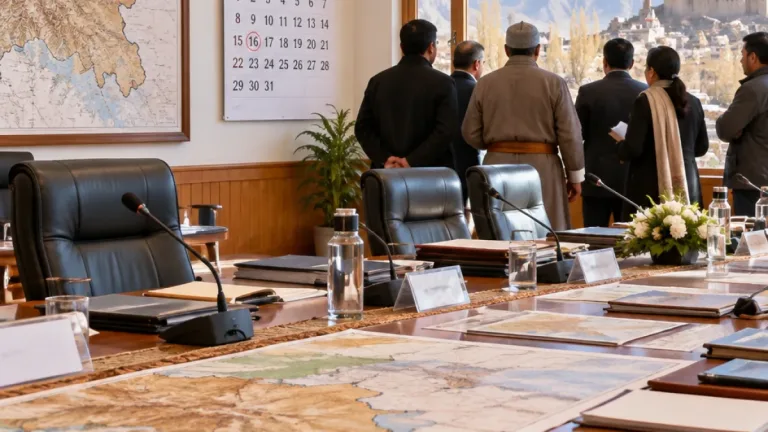
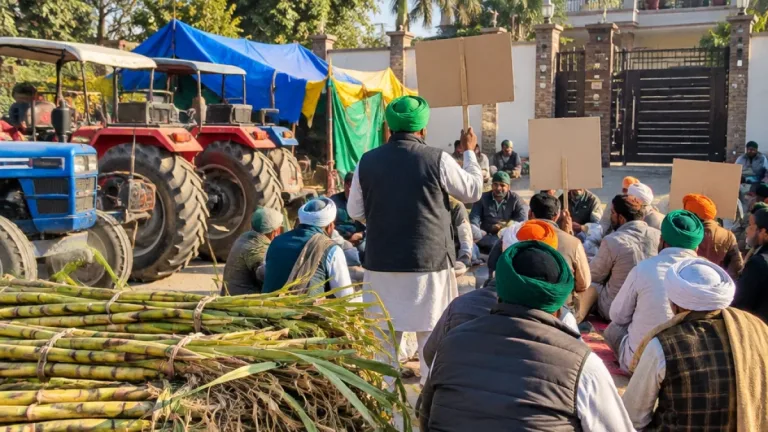
The election was also viewed through the region’s wider political contest. The BJP and Congress were described as the principal contestants in the direct electoral battle, with independents also in the fray. Ladakh has, meanwhile, seen sustained mobilisation over demands for statehood, constitutional safeguards, protection of land and jobs, and greater political representation.
Remote stations add to logistical challenge
Election authorities put in place transport, heating and security arrangements for the polling teams and voters. In Zanskar, helicopters were used to airlift teams to three remote polling stations that could not be reached by road. The arrangement enabled voting in isolated settlements where the geography and winter conditions posed an additional operational challenge.
Authorities also made arrangements for monitoring polling stations through closed-circuit television cameras at designated locations. The security deployment included police, the Central Reserve Police Force and the Indo-Tibetan Border Police, according to the election-related account.
Political groups question timing and rolls
The polling was held amid opposition from the LAB and KDA, which had urged the authorities to defer the elections to the eight autonomous hill development councils scheduled for December 4. The groups have argued that severe winter weather and seasonal migration could affect participation and the conduct of the electoral process.
In Leh, LAB co-chairperson Chering Dorjay Lakrook and member Sonam Wangchuk also alleged at a joint press conference that a large number of people had been excluded from the electoral rolls. They raised concerns about voters being unable to cast ballots in their home villages and about polling locations being shifted between villages.
These allegations were made alongside the broader demand for stronger constitutional and political protections for Ladakh. The concerns have added a layer of contestation to an election that the administration and its supporters have presented as an important step towards strengthening local institutions.
Administration calls participation significant
Ladakh Lieutenant Governor Vinai Kumar Saxena described the polling as historic and said the participation demonstrated people’s faith in democratic processes and local self-government.
“Overwhelming participation in the polls is a powerful testament to people’s unshakeable faith in the democratic process and local self-governance,” Lieutenant Governor Vinai Kumar Saxena said.
The voting figures will now form part of a broader electoral calendar in the Union Territory. The panchayat election process is scheduled to conclude by November 30, followed by voting on December 4 for the hill councils across all eight districts. For Ladakh’s villages and towns, the latest results provide elected local bodies with a mandate at a time when questions of representation, winter accessibility and the region’s constitutional future remain central to public debate.