Unions set November votes
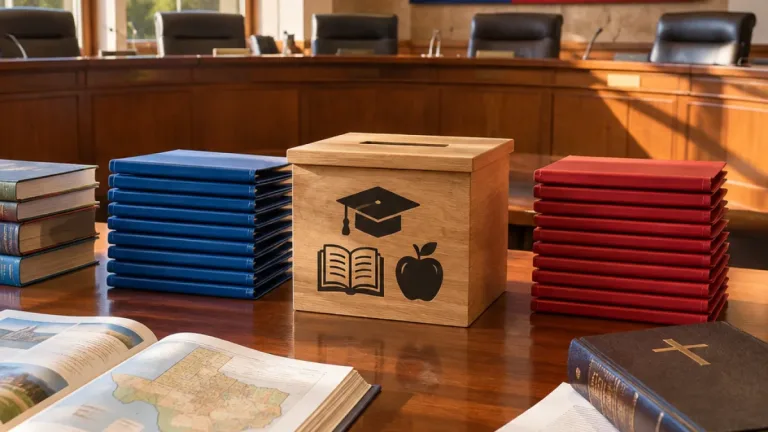
Five major unions representing education workers in Ontario are preparing to hold strike votes in November, raising the prospect of a broader labour confrontation in the province’s publicly funded schools. The unions’ contracts expired on Aug. 31, 2026, and negotiations have remained unresolved since then.
A strike vote would not automatically lead to walkouts. It would give union members an opportunity to indicate whether they are prepared to take job action and would strengthen the bargaining position of their representatives. The vote also allows unions to demonstrate support for their negotiating demands before deciding whether any further action is necessary.
| Issue | What is known |
|---|---|
| Contracts | Expired Aug. 31, 2026 |
| Strike votes | Planned for November |
| Unions involved | Five major education unions |
| Canadian labour disputes | About 95 per cent are resolved without a strike |
A warning rather than a guaranteed walkout
Strike votes are commonly used as a pressure tactic in negotiations. The source material notes that 95 per cent of labour disputes in Canada are settled without a strike, meaning the scheduled votes should not be treated as confirmation that Ontario schools will close or that education workers will immediately leave their jobs.
Still, the coordinated timing is significant. Rather than each union acting independently, the five groups are signalling that they are prepared to pursue their objectives together. That coordination puts added attention on the provincial government as the parties try to resolve disagreements affecting workers across Ontario’s education system.
- The unions’ collective agreements expired at the end of August.
- Voting is expected to take place across the province in November.
- A successful strike mandate would not itself trigger a strike.
- Negotiations could still conclude without job action.
Disagreements over bargaining control
The current impasse follows the government’s indication that it wants greater authority over several issues normally addressed in negotiations. Those matters include timelines for staffing transfers, surplus and redundancy processes, funding for professional development, and contracting out.
For education unions, the question is not only what the final terms of a contract will be. They are also challenging how decisions are made and how much influence workers and their representatives will retain over staffing and working conditions. A shift toward more centralized control could affect how individual school boards plan their workforce and respond to local pressures.
Classroom pressures at the centre
Education workers say schools are already under substantial strain because of what they describe as chronic provincial underfunding. The concerns include staffing reductions, larger classes and a shortage of resources for students with varied learning and behavioural needs.
Those pressures are felt well beyond the negotiating table. When staffing is reduced or classes grow, teachers and other school employees may have less time and fewer supports available for students. Families may also see the effects through changes in services, classroom organization and the capacity of schools to respond to individual needs.
The source material does not provide a provincewide staffing total or identify specific school boards affected by the reported cuts. It does, however, place staffing and resources at the heart of the unions’ explanation for why members are being asked to authorize possible job action.
Centralization adds to the dispute
The labour dispute is unfolding alongside a broader restructuring of education governance in Ontario. The provincial Ministry of Education has increased its control over the system, including through a takeover of eight school boards and limits on the authority of elected trustees, according to the source material.
Unions argue that further centralization could make it easier to control costs and impose additional reductions. They also say it could reduce the role of local workers, unions, parents and trustees in decisions affecting schools in their communities. That concern connects the contract talks to a larger debate over local accountability and who should set priorities for education.
What happens next
The immediate next step is the November voting process. The outcome will show whether members are willing to provide a strike mandate, but it will not determine the final result of bargaining. Both sides would still have opportunities to continue discussions and reach an agreement before any walkout.
For students and families, the vote creates uncertainty without yet changing the school day. The available information does not identify any planned closures, rotating schedules or other disruptions. Until negotiations produce a different arrangement, the practical impact of the announcement is primarily political and organizational: it increases pressure on the government and signals that the unions are prepared to escalate if their concerns remain unresolved.
A provincewide test for education policy
The negotiations will test whether Ontario can settle a dispute involving wages and workplace rules while also addressing longstanding concerns about classroom conditions. The unions’ position links those issues directly, arguing that staffing, professional development and contracting decisions shape the quality of education as well as employees’ working lives.
The government’s interest in more control over bargaining issues points in the opposite direction, toward greater central direction of a system that has traditionally involved local boards and trustees. With contracts already expired, the November votes will be an important measure of how far the parties have moved apart—and whether they can close that distance before a strike becomes a real possibility.