
President Cyril Ramaphosa has urged South Africa to move beyond using artificial intelligence tools developed elsewhere, saying the country must build local capability and secure ownership in the technology shaping the global economy.
Addressing investors and technology leaders in Silicon Valley, Ramaphosa said partnerships with international technology companies should translate into skills development, new businesses and jobs in South Africa. His message was both an investment pitch and a warning that infrastructure spending would have limited value if it did not support a wider domestic technology industry.
“We cannot allow the artificial intelligence revolution to reproduce these historical patterns of inequality and dependance. We cannot be content just to merely remain consumers of technologies that are developed by others.”
From infrastructure to industrial development
The President said South Africa should use investment in computing infrastructure as a platform for broader economic development. That includes data centres, but also the supply chains, companies and skills needed to design, operate and improve AI systems.
Ramaphosa cautioned that constructing data centres alone would not be enough. He said the government also needed to improve the conditions for investment, while ensuring that spending on technology created opportunities across the economy rather than concentrating benefits among a small number of infrastructure providers.
The approach outlined by the President rests on several linked priorities:
- Developing local skills through focused and deliberate training;
- Supporting South African businesses and building industries able to compete internationally;
- Strengthening local supply chains around new technology infrastructure;
- Creating enterprises that can participate in the AI economy; and
- Ensuring that investment produces broad-based economic benefits.
Why ownership matters
South Africa already uses digital services and advanced computing developed by global companies. Ramaphosa’s argument is that the country should also participate in producing those technologies and retain a meaningful stake in the value they create.
He said international partnerships should be based on mutual benefit, with South Africa contributing products and capability rather than remaining only a market for imported systems. That would require cooperation between government, investors, technology companies, education and training institutions, and local businesses.
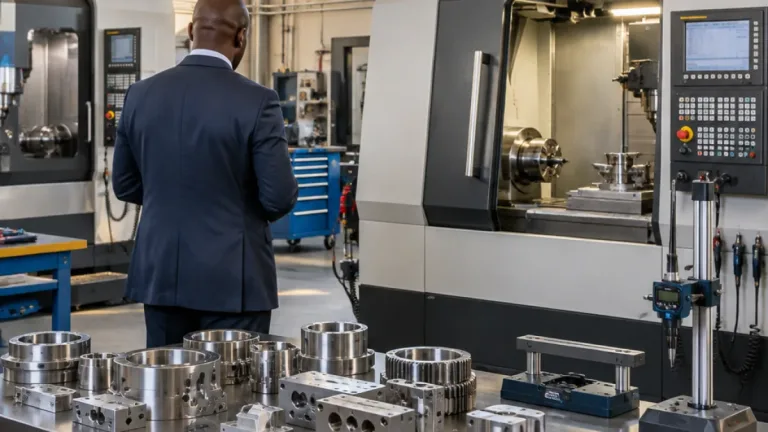
The President linked this challenge to patterns seen in other sectors. He referred to large components brought into the country for renewable-energy projects and said some of those products could potentially be manufactured locally. The comparison was used to underline the need to examine what South African companies can supply around major technology investments.
| Investment area | Expected local opportunity |
|---|---|
| Computing infrastructure | Skills, operations and supporting industries |
| AI development | Local products, innovation and technology ownership |
| International partnerships | Market access, enterprise growth and job creation |
| Supply chains | South African suppliers and new businesses |
A test for policy and implementation
The call places the focus not only on attracting capital, but on how that capital is structured and what it leaves behind. South Africa would need investment conditions that encourage technology projects while also connecting them to local procurement, training, enterprise development and industrial capacity.
It also highlights the importance of making the country a place where companies can develop and scale technology, rather than simply install infrastructure. For readers, the practical consequences could eventually include more opportunities in AI-related work, stronger local technology companies and wider access to advanced digital services. Those outcomes, however, depend on whether the proposed investment can be converted into sustained skills, businesses and productive capacity.
Ramaphosa said South Africa’s objective should be to become a developer, producer, innovator and owner of technology. The challenge now is to turn that ambition into partnerships and policies that give local people and companies a meaningful role in the AI economy.