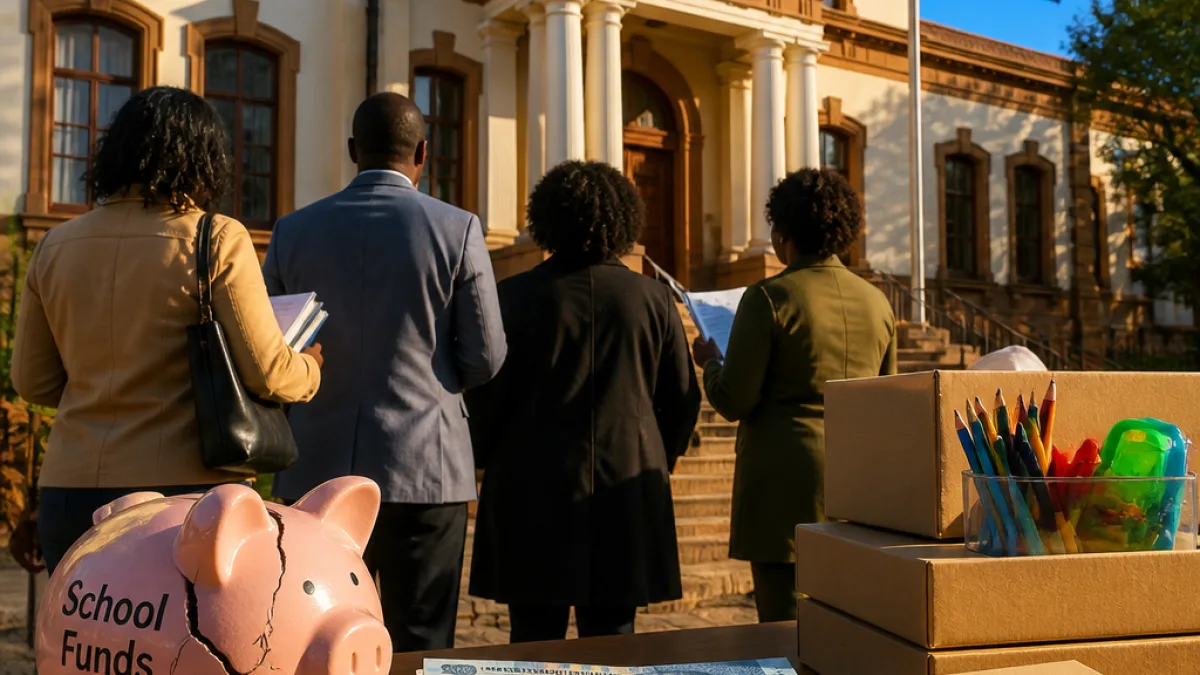
The Department of Basic Education (DBE) has withheld a R637 million infrastructure grant to the Eastern Cape amid concerns about dilapidated and leaking classrooms in the province, News24 reported. The move places increased pressure on already strained school communities across the region, including on the Wild Coast where Lumkwana Primary School has been photographed with a badly damaged classroom roof.
What was withheld and why
According to the News24 report, the DBE did not release the infrastructure payment after finding that some school buildings in the province are in a poor state of repair. The decision follows inspections and reporting that highlighted crumbling walls, leaking roofs and other structural failures that affect teaching and learning.
The withholding is a remedial action by the national department intended to ensure funds are used for proper, accountable infrastructure delivery. The report includes an image of a damaged classroom roof at Lumkwana Primary School on the Wild Coast, shared publicly by Mercy H Nqandeka on Facebook.
Local impact — classrooms, learners and communities
For many Eastern Cape communities the grant represents vital money that typically pays for roof repairs, new ablutions, fencing and other improvements critical to learner safety and school functionality. Delays or stoppages in those funds can mean:
- continued exposure of learners and teachers to leaking roofs and damp classrooms;
- postponed maintenance leading to higher repair costs later;
- disruption of schooling where classrooms become unsafe;
- heightened frustration among parents, school governing bodies and local residents who rely on visible progress.
School governing bodies and principals often carry the immediate burden of managing hazard mitigation when maintenance budgets are exhausted. Withholding funds from the province therefore risks shifting pressure back to already stretched school communities.
Accountability and the division of responsibilities
Under South Africa’s education framework, provincial education departments are primarily responsible for the maintenance and upgrading of school infrastructure, while the DBE allocates conditional grants and monitors compliance. When national departments withhold funds it is generally to enforce compliance with standards, improve project management or require corrective measures where funds have been misused or where inspections reveal unacceptable conditions.
Stakeholders concerned about infrastructure delivery consistently point to long-standing problems: administrative backlogs, slow procurement, contractor performance, and challenges in oversight at local level. Withholding a grant is a significant administrative escalation intended to secure commitments from provincial authorities to rectify faults and demonstrate proper governance.
What this means for parents and learners now
Parents and caregivers whose children attend affected schools face immediate uncertainty. Practical steps households and communities can consider include:
- requesting formal updates from school governing bodies about repair plans and timelines;
- raising concerns with the district and provincial education offices to seek clarity on what corrective action is being taken;
- documenting hazards (photographs, dates, written records) that can be shared with officials to support prioritisation;
- engaging parent forums to co-ordinate collective follow-up with education authorities.
Broader context
The Eastern Cape has for years reported a significant maintenance backlog in school infrastructure, particularly in rural and former homeland areas. While many schools have benefited from upgrades and new classrooms in some districts, others remain vulnerable to weather damage and ageing structures. Delays in funding and administrative disputes between national and provincial departments have in the past translated into slow delivery of urgent repairs.
The DBE’s decision to withhold the R637 million grant is likely to prompt public scrutiny of how provincial systems manage infrastructure projects and the steps they will take to meet DBE conditions for the release of funds. Parents and communities will be watching for concrete timelines and visible progress on repairs, especially at schools where learners currently attend classes under substandard conditions.
News24’s report includes photographic evidence of a damaged classroom at Lumkwana Primary School on the Wild Coast (photograph credited to Mercy H Nqandeka/Facebook), underscoring the urgency of infrastructure intervention in parts of the province.
| Issue | Immediate consequence |
|---|---|
| Withholding of R637m grant | Delay to province-wide maintenance and upgrades |
| Damaged classrooms (eg Lumkwana) | Unsafe learning environments; urgent repairs required |
Parents, school leaders and community groups are awaiting responses from provincial education authorities about corrective measures and a timetable for the release of funds. The DBE’s conditions for unlocking the grant will determine whether repairs proceed swiftly or remain stalled amid further administrative processes.