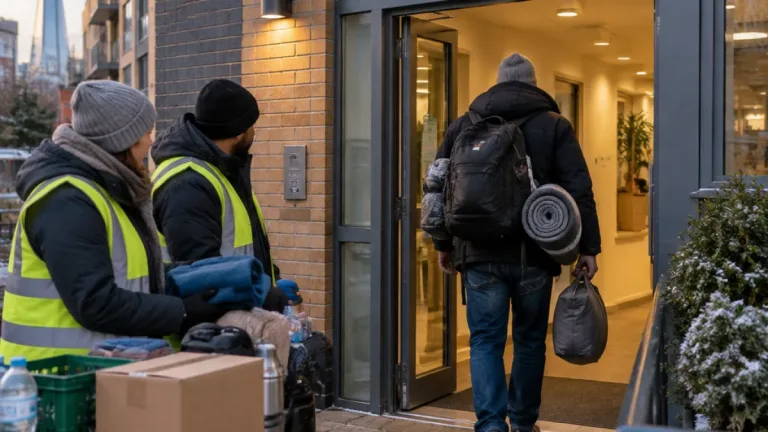
Former rough sleeper speaks out
A former rough sleeper has described Dudley’s housing support workers as the people who helped keep him alive, as campaigners challenge proposed changes to services provided through the council’s housing team.
Wayne Bird spent three years living on the streets after losing his parents’ home and experiencing problems with alcohol. He said support workers helped him move away from rough sleeping and access assistance at a point when he was vulnerable and without stability.
“I wouldn't be here. I would be dead.”
Mr Bird said he had been sleeping in doorways before a friend made contact with people who could help. He credited the service with supporting him through addiction and with helping him when he had lost his home, money and direction.
Support described as more than accommodation
The account highlights the practical work carried out around a housing placement. Council staff arranged for outreach worker Steve Buck to support Mr Bird, who has difficulty managing money. His housing worker appointed Mr Buck to take responsibility for paying bills, while a homeless worker investigated which benefits he could claim.
Mr Buck said that, without this intervention, Mr Bird would have had no income. He also described a marked improvement in his health after accompanying him through a period in which he had been close to death. Mr Bird had previously been brought out of a coma, according to Mr Buck.
The support described in the case therefore involved more than finding somewhere to stay. It included help with addiction, benefits, household payments and continuing contact with a worker familiar with the person’s circumstances.
- Three years: the period Mr Bird said he spent on the streets.
- 39 frontline jobs: the number Unison says could be lost under the proposed changes.
- Petition: launched by campaigners seeking to stop the changes.
Union warning over proposed changes
Pressure is building on Dudley Council to reverse the plans. Campaigners have described the proposals as cuts that could cost homeless people their lives, while the trade union Unison says they would remove 39 frontline roles. The union has also raised concern that higher-paid managers are being recruited at the same time.
The claims have placed the future of direct support under scrutiny. For people dealing with homelessness, addiction or difficulty managing money, the dispute is not simply about staffing structures. It concerns whether help will remain available from workers able to build trust and respond to problems before they become emergencies.
| Issue | What the source says |
|---|---|
| Proposed change | Dudley Council housing support services are facing changes described by campaigners as cuts. |
| Employment impact | Unison says 39 frontline jobs are at risk. |
| Public response | A petition has been launched against the plans. |
Mr Bird’s experience has become a central human example in the campaign. He said support workers helped him when he was “vulnerable, down and out”, while Mr Buck said his health had improved significantly and that people were astonished by the change.
The council’s group director for housing and assets, Kathryn Jones, said the wellbeing of tenants, particularly those relying on additional support, would remain a priority. The source material does not set out the full detail of the council’s position on the proposed staffing changes.
As the petition gathers support, the argument in Dudley is focused on what happens to people who may have no other route into housing, benefits or recovery. For Mr Bird, the workers now facing uncertainty were the link between life on the streets and a safer, more stable future.