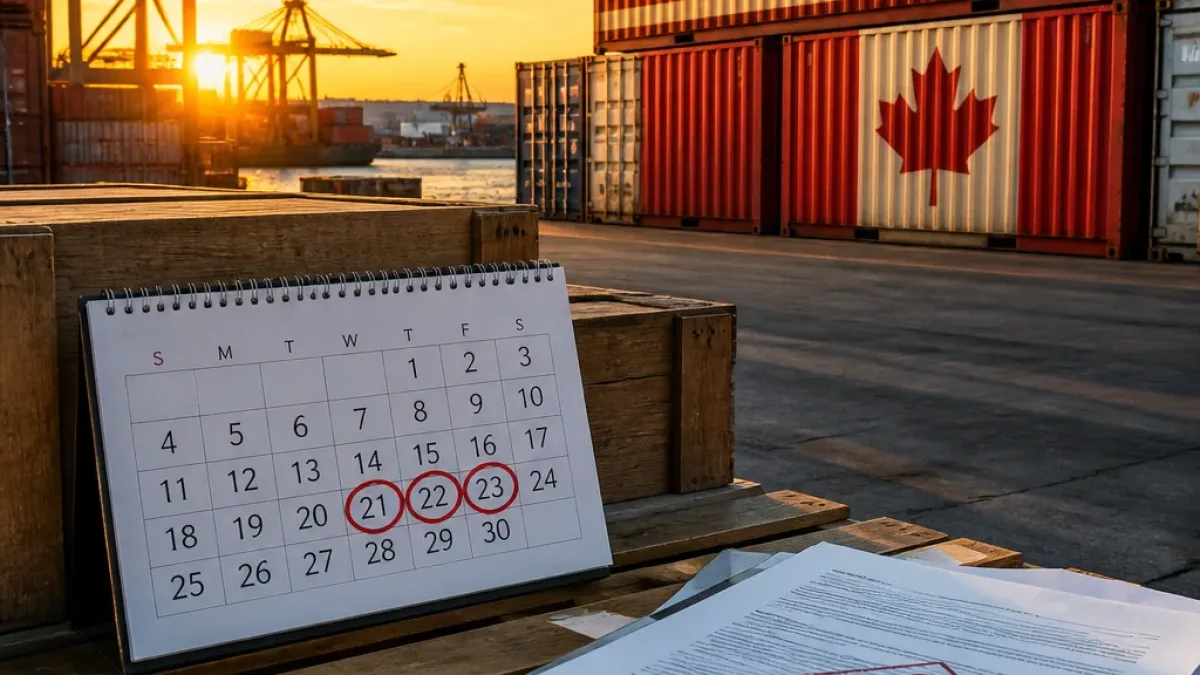
U.S. President Donald Trump said Sunday he expects the prolonged trade dispute with Canada to be resolved "pretty soon," remarks that come after Washington modified levies on some Canadian goods and Ottawa responded with reciprocal measures. The comments, delivered at a rally in Port Huron, Michigan, underline how the dispute has become a live political and economic issue on both sides of the border.
Diplomacy stalled, tariffs multiply
Trade talks between the two countries have been strained since the Carney government walked away from formal negotiations in August, following what Ottawa characterised as unreasonable last-minute demands from the United States. In response, Washington imposed tariffs on billions of dollars' worth of Canadian goods; Ottawa enacted retaliatory tariffs on American products.
"Canada has been ripping off the United States for years, OK? For years. And I had to do it. We'll have that settled pretty soon. They're willing to give us anything at this moment,"
At the same event, the U.S. president said Canada was "willing to give us anything at this moment," signalling a belief in imminent movement toward settlement.
Shifting U.S. tariff posture and political timing
In recent days the administration in Washington altered its tariff regime: it announced it would lift some of the previously applied 50 per cent tariffs at the end of the month while simultaneously adding duties on dozens of other products — notably including items described as Canadian "garbage and sewage." That change followed a request from Republican Senator Susan Collins of Maine, a state along the Canada–U.S. border that has been particularly affected by the trade measures.
The dispute is resonating in U.S. domestic politics. With the midterm elections less than two weeks away from the date of the remarks, trade policy has factored into tight races and has placed extra pressure on timing and negotiation tactics.
Economic and policy consequences
For Canada, the tariff exchange poses several nationwide implications: damage to exporters facing higher costs or restricted market access; pressure on supply chains that cross the border; and political strain that complicates diplomatic negotiation. The walk-away from talks in August halted formal channels, meaning future progress will depend on renewed diplomatic engagement or shifts in U.S. policy.
- Negotiations: Formal talks were halted in August after last-minute U.S. demands prompted Canada to withdraw.
- Tariff actions: Washington imposed tariffs on billions of dollars in Canadian goods; Ottawa retaliated with tariffs on U.S. products.
- Recent adjustments: The U.S. moved to lift some 50 per cent tariffs at month-end while adding duties on dozens of other items, following a request from Senator Susan Collins.
The government in Ottawa did not immediately respond to a request for comment on the president's latest statements.
Summary of recent measures
| Actor | Action | Scope / Note |
|---|---|---|
| United States | Imposed tariffs; later modified some measures | Tariffs on billions of dollars in Canadian goods; some 50 per cent tariffs to be lifted at month-end; new duties on dozens of products including garbage and sewage |
| Canada | Enacted retaliatory tariffs | Levying tariffs on U.S. products in response to U.S. measures |
The coming days will be closely watched by exporters, provincial governments and industry groups, who have already felt the effects of higher costs and market uncertainty. Any further movement in Washington's tariff policy, or a return to formal negotiation, would materially affect the economic and political landscape for cross-border trade.
As the situation evolves, Ottawa faces the challenge of protecting Canadian interests while seeking avenues to reopen constructive dialogue with its largest trading partner.