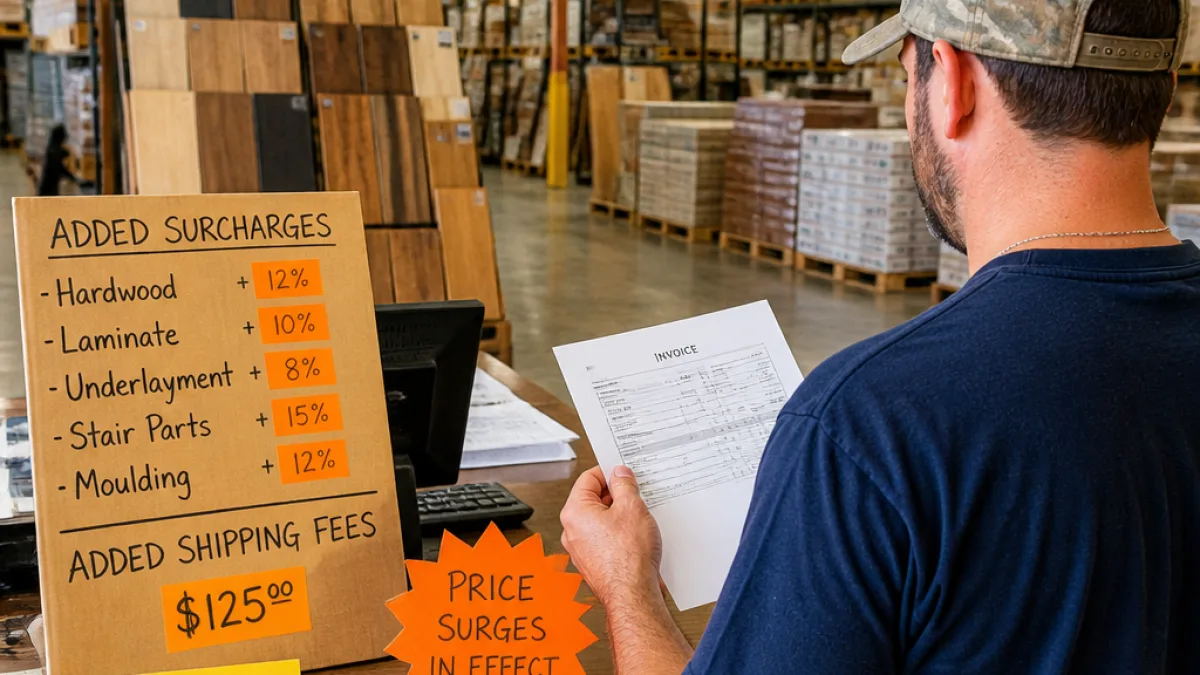
The Trump administration’s revision of U.S. tariffs announced Friday threatens to erase a significant portion of Canadian hardwood flooring exports and imperil jobs across related industries, executives and industry representatives say.
Jean‑François Dufresne, president and CEO of Preverco, a major Canadian hardwood flooring producer, told reporters the changes amount to an immediate and severe hit: “Overnight, we’re losing 25 per cent of our business,” he said, adding there is no practical way for producers to absorb or pass on the new duties.
“Overnight, we’re losing 25 per cent of our business. There is no way that we can pass those tariffs, and there is no way we can absorb them. So essentially, that business is gone overnight.”
Scope of the tariff change
Officials said the U.S. administration removed several products from its previous targeted list and replaced them with new items subject to tariffs. Among the products newly affected are shampoos, soaps, certain paints, cocoa products, carpets and wood products that include flooring.
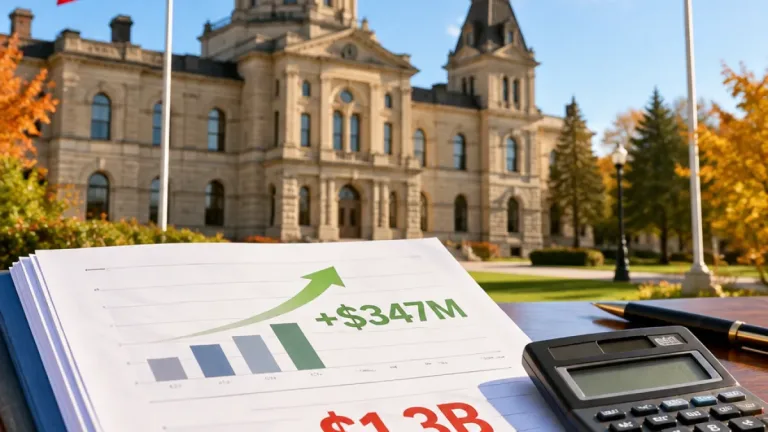
Industry representatives noted the move reshuffles U.S. tariff exposure rather than increasing the overall dollar value covered by measures: one trade official cited about $3.4 billion of products being added and roughly the same amount being removed. But for individual sectors — such as flooring — the consequences are concentrated and immediate.
Regional ripple effects
Producers warn the loss of the U.S. market would cascade through supply chains. Dufresne said the impact would reach sawmills, lumber harvesters and the small communities that depend on those employers.
- Manufacturers: Hardwood flooring companies face an acute loss of export demand to the United States.
- Sawmills and loggers: Reduced orders from flooring producers would lower demand for processed and raw lumber.
- Local economies: Towns that host mills and plants could lose ancillary business — from retail to services — if operations slow or close.
“The flooring industry represents many thousands of jobs,” Dufresne said, describing a chain reaction in which job losses at producers would quickly translate into fewer jobs at sawmills and in lumber harvesting, with broader effects on local businesses.
Immediate prospects and industry concerns
Industry leaders emphasised the abrupt nature of the change. Unlike measures tied to specific trade disputes or targeted antidumping cases, these tariff adjustments were described by producers as unexpected and unrelated to any actions by their sector.
That unpredictability compounds the problem: flooring exporters say they have limited alternative markets for their products and little ability to reconfigure shipments or pricing quickly enough to offset the sudden U.S. tariffs.
| Metric | Value |
|---|---|
| Estimated loss of business for flooring producers | 25% |
| Products added to U.S. tariff list (approx.) | $3.4 billion |
| Products removed from U.S. tariff list (approx.) | $3.4 billion |
Trade officials framed the adjustments as largely a swap — an equivalent value of goods removed and added — but industry stakeholders emphasised that equivalence at the aggregate level does not prevent acute harm to specific sectors.
For the flooring sector, which depends heavily on the U.S. market, a sudden tariff barrier could mean orders delayed or cancelled and inventories stranded, with payrolls and mill operations bearing the immediate cost.
What’s next
Companies and trade associations will likely press federal and provincial governments for assistance or remedial measures. The pace of immediate job losses will depend on how quickly buyers react, whether companies can redirect sales to other markets, and whether governments offer mitigation or adjustment support.
For now, flooring executives say the outlook is stark: with a quarter of business at risk, the industry’s concerns extend beyond factory floors to the broader communities and supply chains that depend on cross‑border trade with the United States.